Robert Volhard: Some time ago, Stylepark celebrated the 20th anniversary of serien.lighting with you. To mark your 40th anniversary this year, you presented a very special exhibition at the Museum of Applied Arts in Frankfurt am Main. How does it feel to look back on four decades of success?
Jean-Marc da Costa: It feels great! It’s a wonderful honour to be invited by such a museum. It was also a fantastic challenge to bring together, within an exhibition concept, things we’d never before combined in this way. The basic idea came from Manfred and aims to treat all products from our company’s history – our ‘children’, so to speak – with equal respect in a museum setting, whether successful or not. To achieve this, we further developed our display system: it consists of delicate frames to which floors, walls and ceilings can be attached, and which we have arranged in a grid.
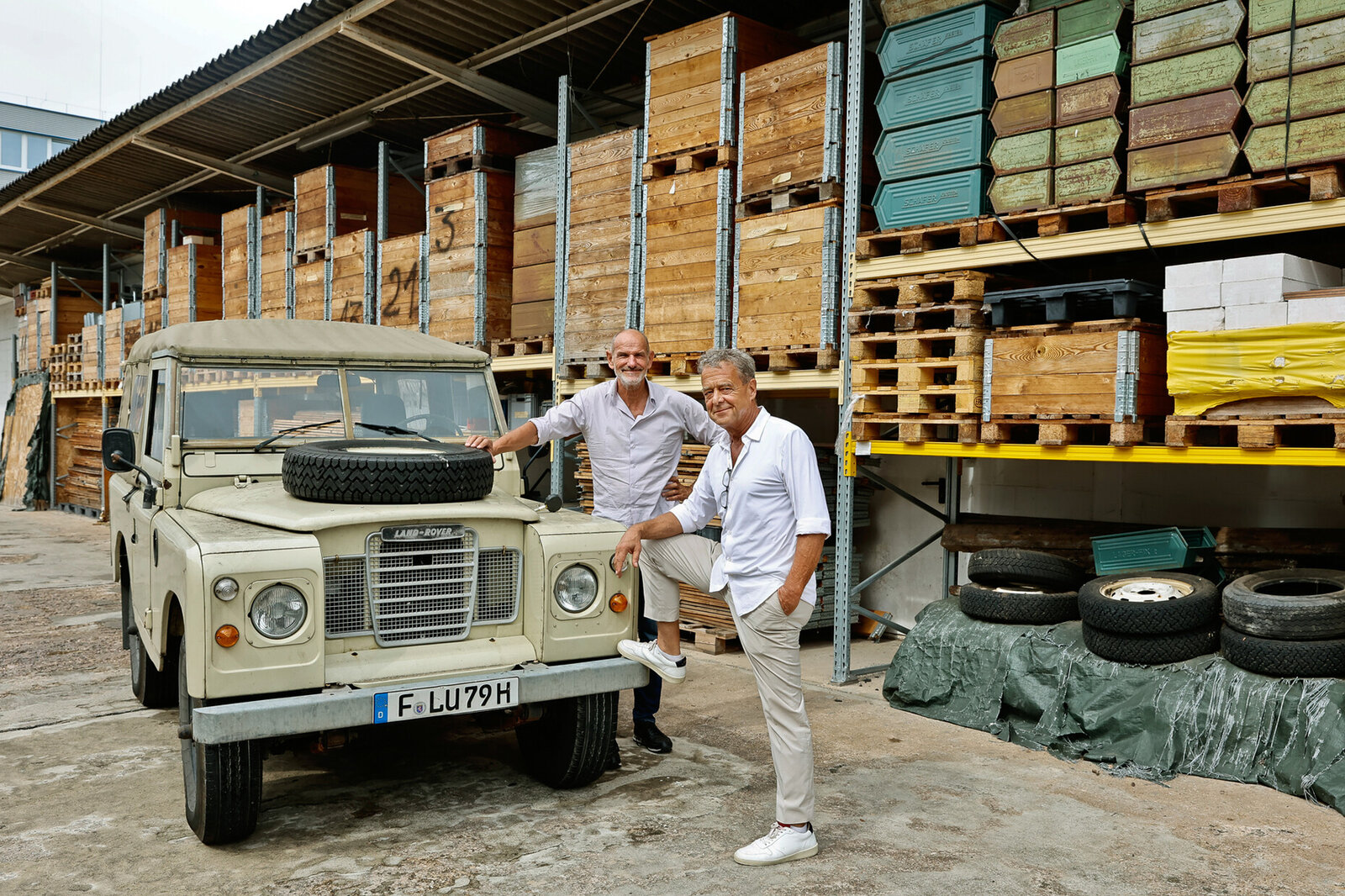
Robert Volhard: Let’s talk about the early days. I find it very impressive that you had the courage to set up a business whilst you were still studying at the HfG in Offenbach.
Manfred Wolf: Even back then, it was clear to us that this would be a long-term project and would run for at least twenty or thirty years. We therefore don’t find it particularly surprising that we’ve worked together for so long, but rather that we’ve survived all the technical developments that were unforeseeable. Banks, for instance, asked us to repay loans because they didn’t expect us to manage the switch to LED. So it’s wonderful that we’ve overcome these hurdles and have now been able to take the time to dig everything out for the exhibition. The next step is to produce a book, a catalogue raisonné featuring the products of the last forty years, so that this knowledge isn’t lost at some point. Only we can do this properly.
Franziska von Schumann: Where did that entrepreneurial confidence come from?
Manfred Wolf: From my father and my grandfather. They simply carried on doing what they’d always done. Why should they stop?
Jean-Marc da Costa: We didn’t give it a second thought and were extremely confident that it was the right path. What’s more, both of them had experience that stood us in good stead. As a schoolboy and student, I’d already earned money trading at flea markets. That meant I’d already had contact with traders and later had no qualms about approaching them with our products. Quite simply, with something good in my hand, I was our own sales representative.
Manfred Wolf: We knew we had to start at the very top, with the leading shops. The first was Stoll, a member of the CI Association, through whom we came into contact with the association.
Franziska von Schumann: Jean-Marc, your father was an architect. Manfred, you ‘had’ to work in your grandfather’s metal workshop, where he made fittings for bags and suitcases. And those premises then served as your starting point. To what extent did those circumstances shape you into who you are today?
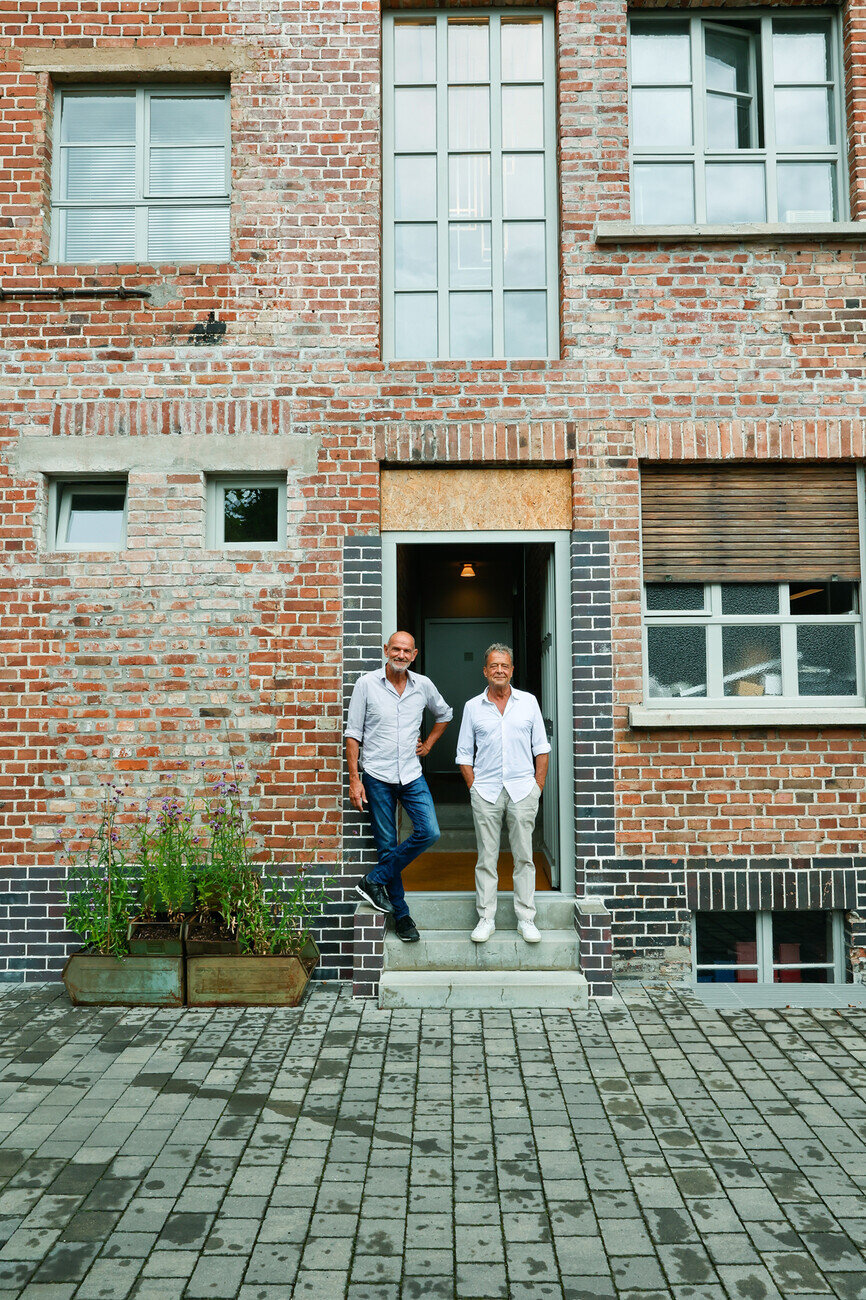
Manfred Wolf: By the age of twelve, I was already ‘my father’s slave’, as I’ve sometimes put it. My mother then cleverly sent me to a boarding school at fifteen so that I could get away from here. But these workshops, with all their machinery, were of great use to us in the beginning. As my father used the electroplating equipment during the day, we could only start in the evenings from 8 pm and then spent the nights electroplating. As a result, we were already used to a heavy workload in the early years.
Jean-Marc da Costa: At times, production was very frustrating. We’d stamp, weld and assemble a small batch of 100 pieces, and then electroplate them. If a mistake happened during that process, the whole batch was ruined. There were major setbacks, but we learnt a great deal from them, for example about metalworking and surface treatment.
Robert Volhard: The ‘Lift Suspension’ was created in the 1980s, but didn’t follow the trends of the time. Instead, it brings to mind Mies van der Rohe or the Bauhaus and its stylistic elements. Did you consciously decide to go against the spirit of the times, or where did the design idea come from?
Manfred Wolf: The “Lift” was inspired by the materials my father had lying about here – this round bar and the sheet metal. It’s all still in the cellar.

Franziska von Schumann: Generally speaking, one would say that your design language is rather purist, apart perhaps from the "Poppy" luminaire. How do you generally decide on the design language for serien.lighting?
Manfred Wolf: We’ve always been quite minimalist. Even the "Lift" isn’t entirely purist; whilst it is minimalist, strictly speaking it’s playful. We were and remain enthusiastic about Italian design of the 1960s, such as Castiglioni’s “Toio” with its exposed transformer. The fan I designed in 1982 also had an exposed motor. This concept of exposing components continues to interest us to this day. Alongside the influence of Italian design seen in the shop windows of Frankfurt and Milan, there was naturally a strong focus on the Bauhaus during our training at the HfG Offenbach.
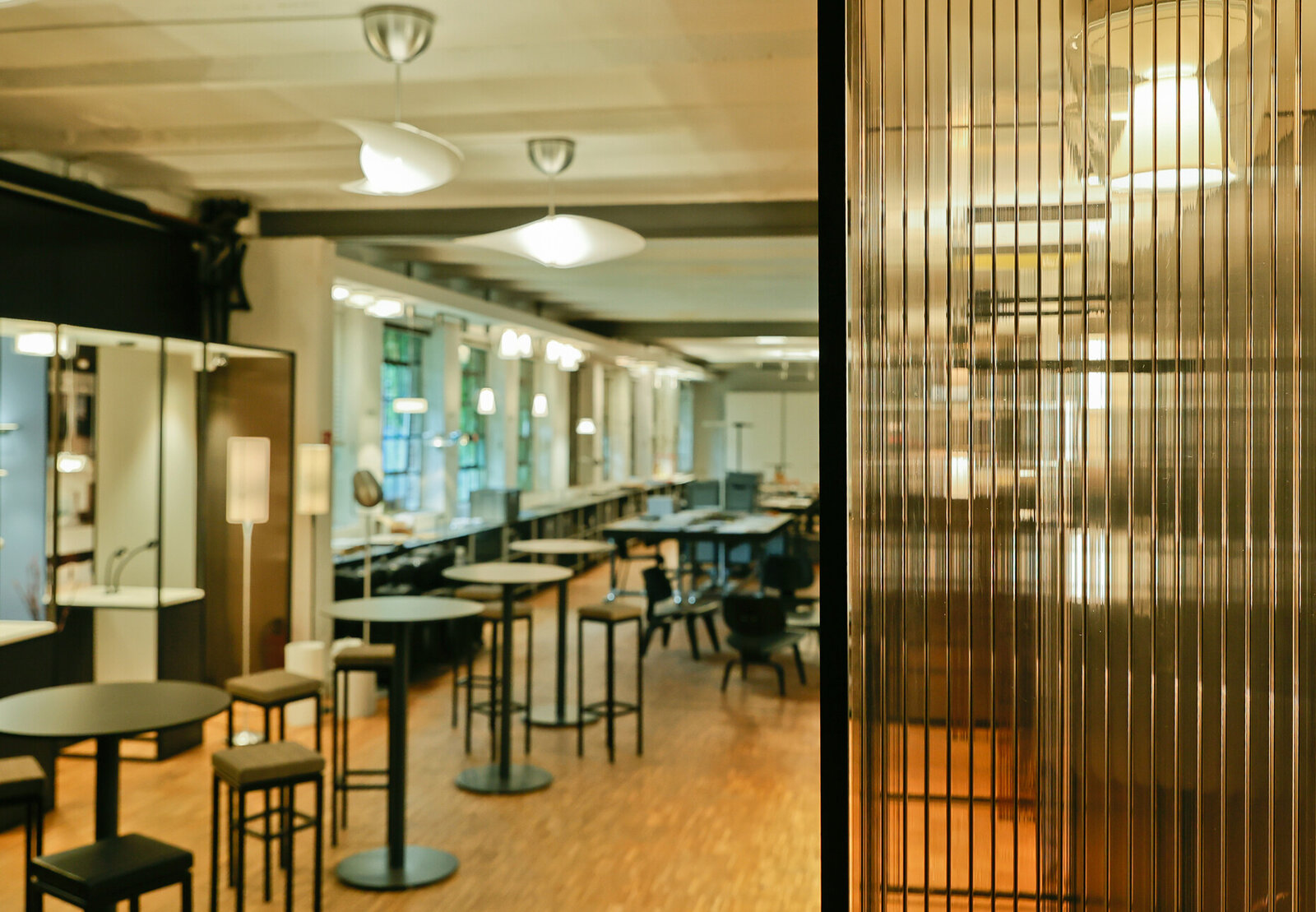
Franziska von Schumann: Why have you decided to stay at this location over the years?
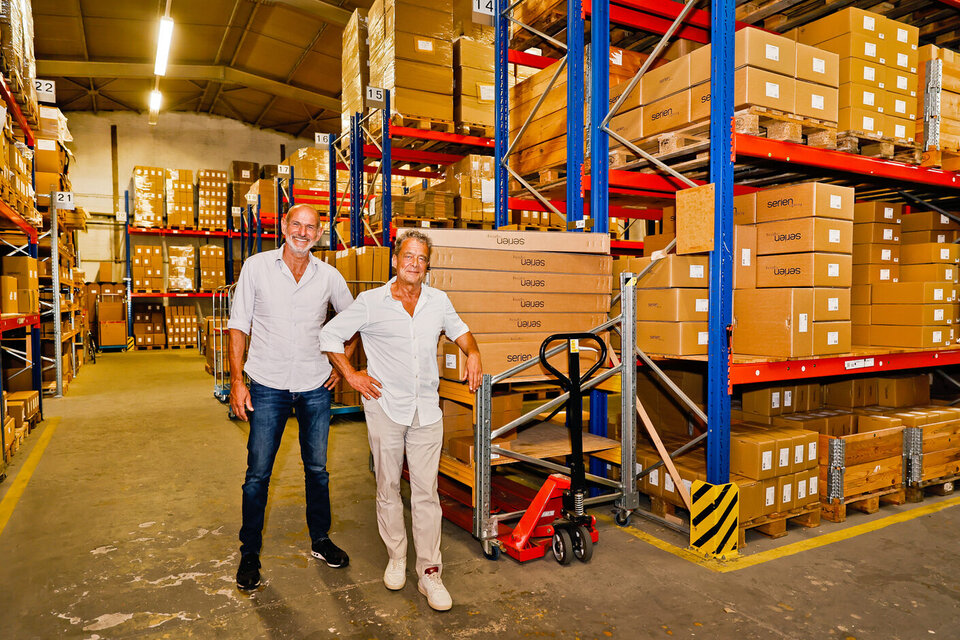
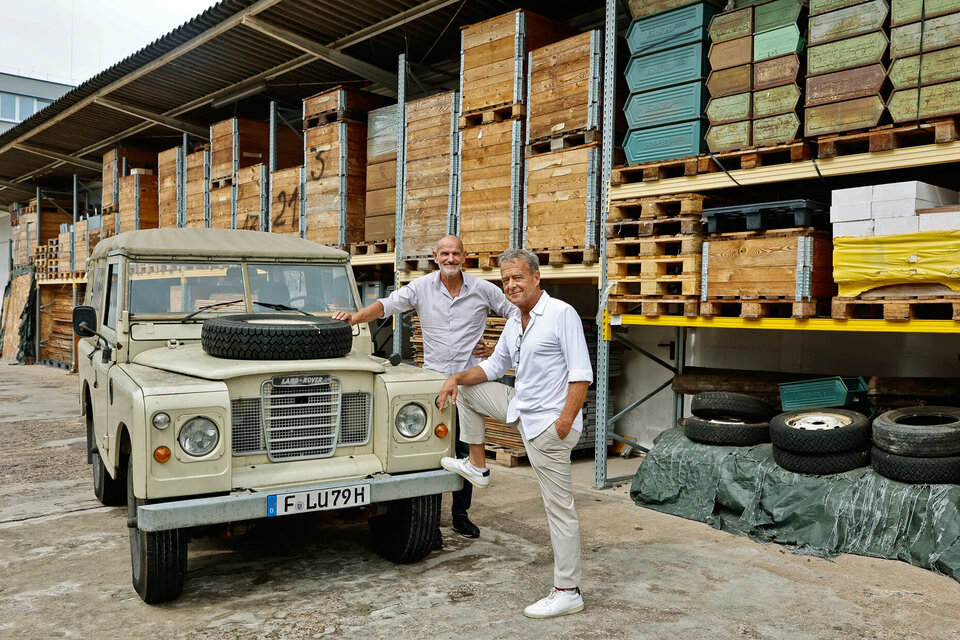
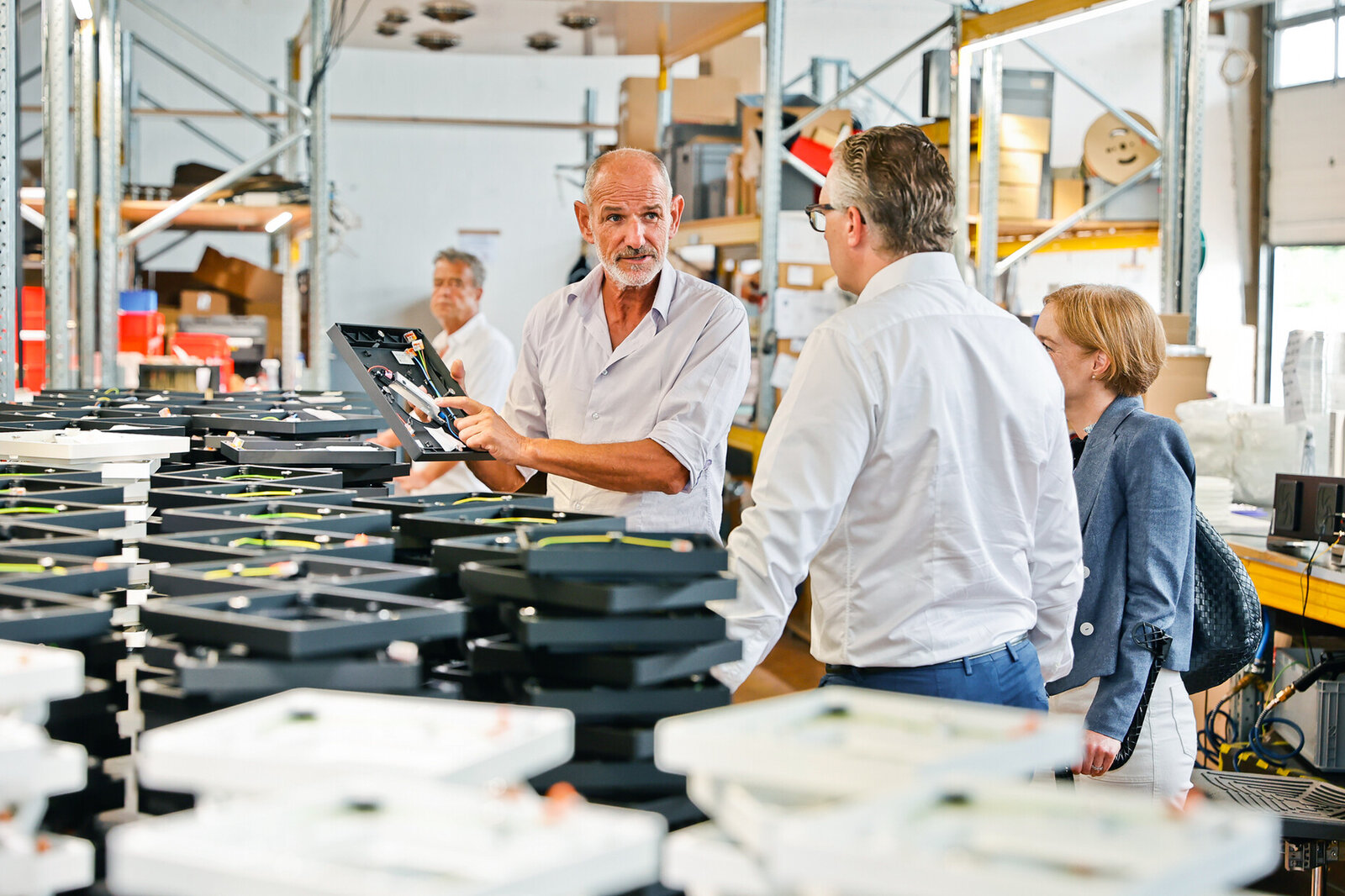
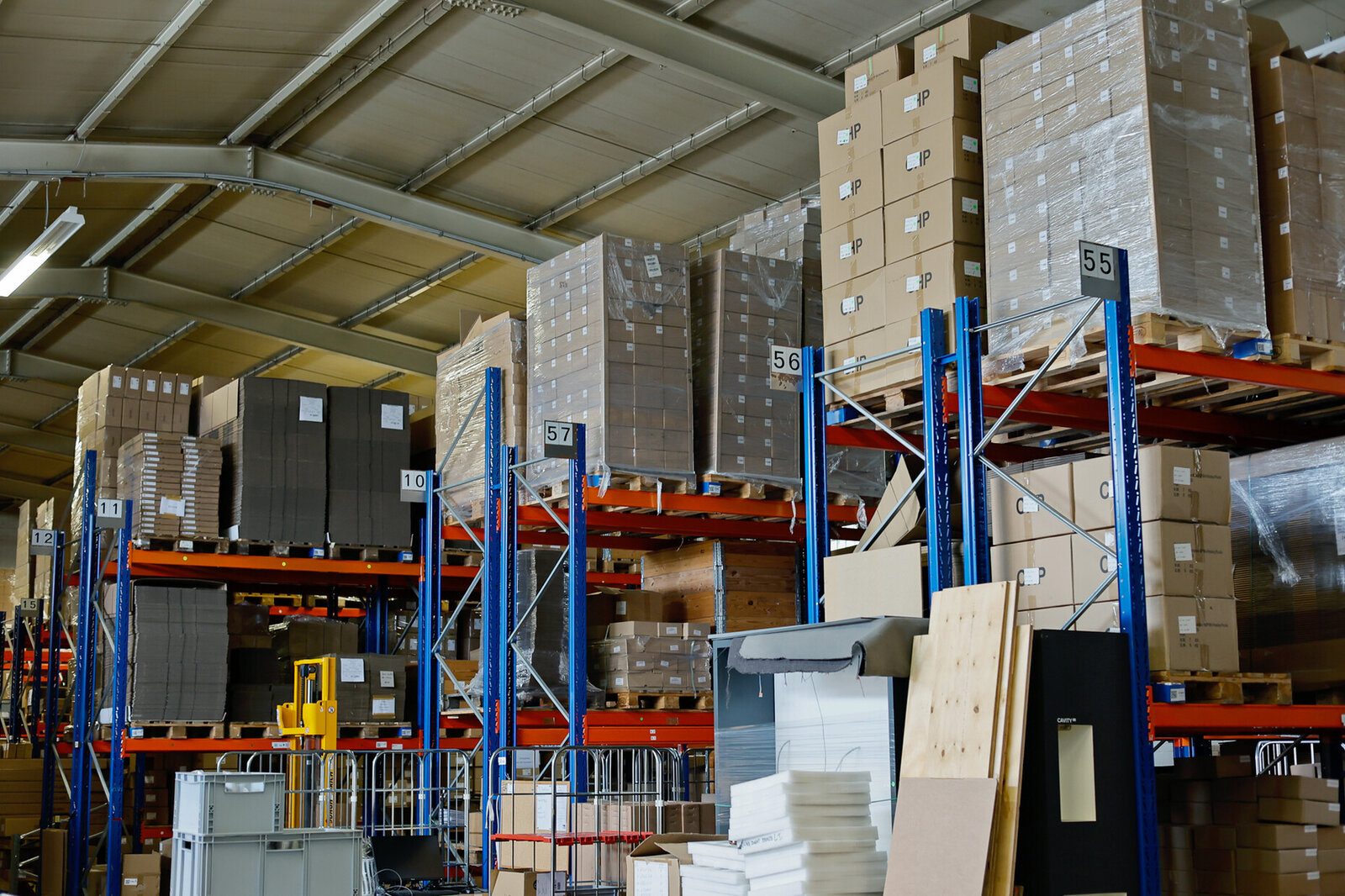
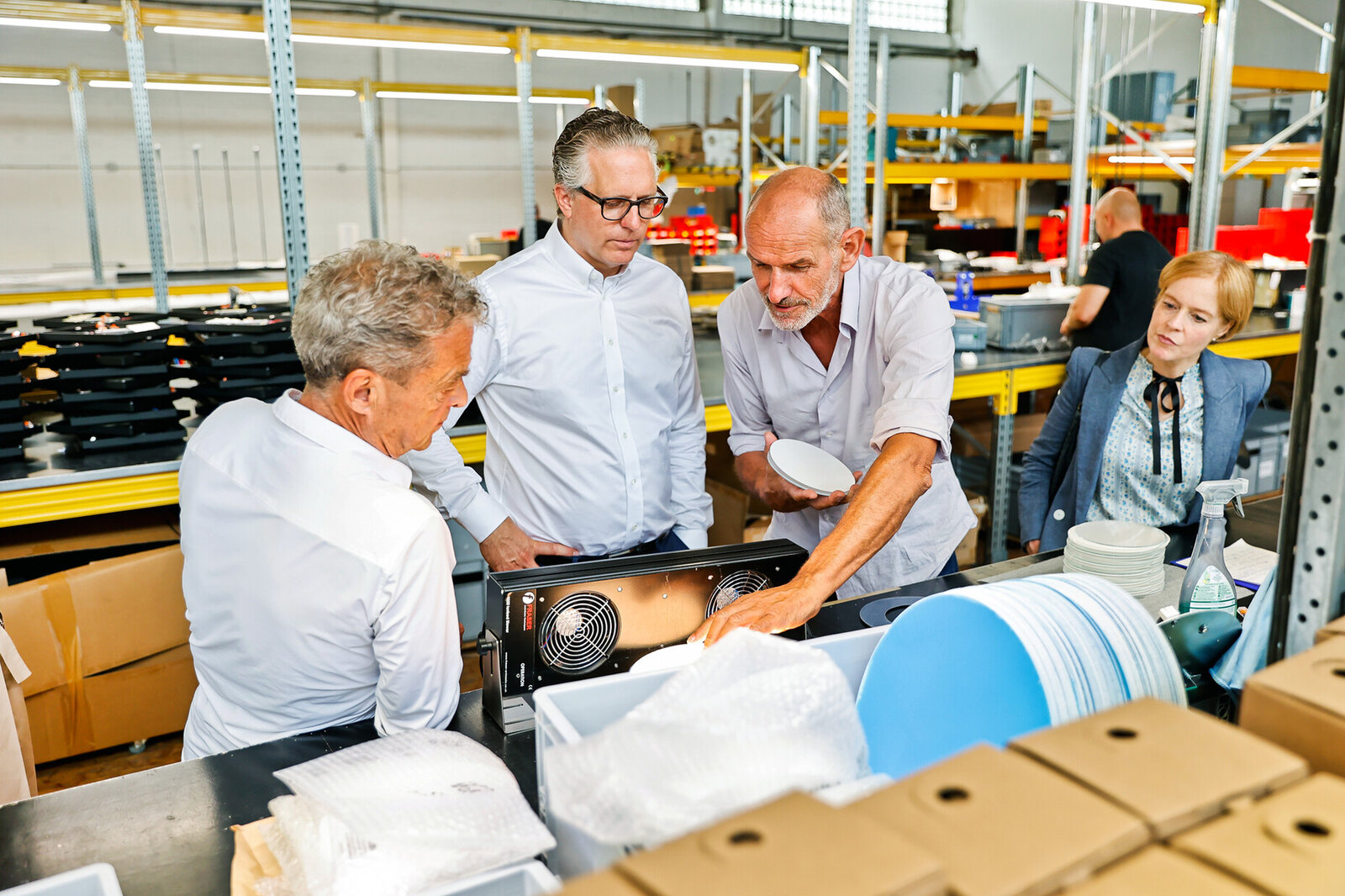
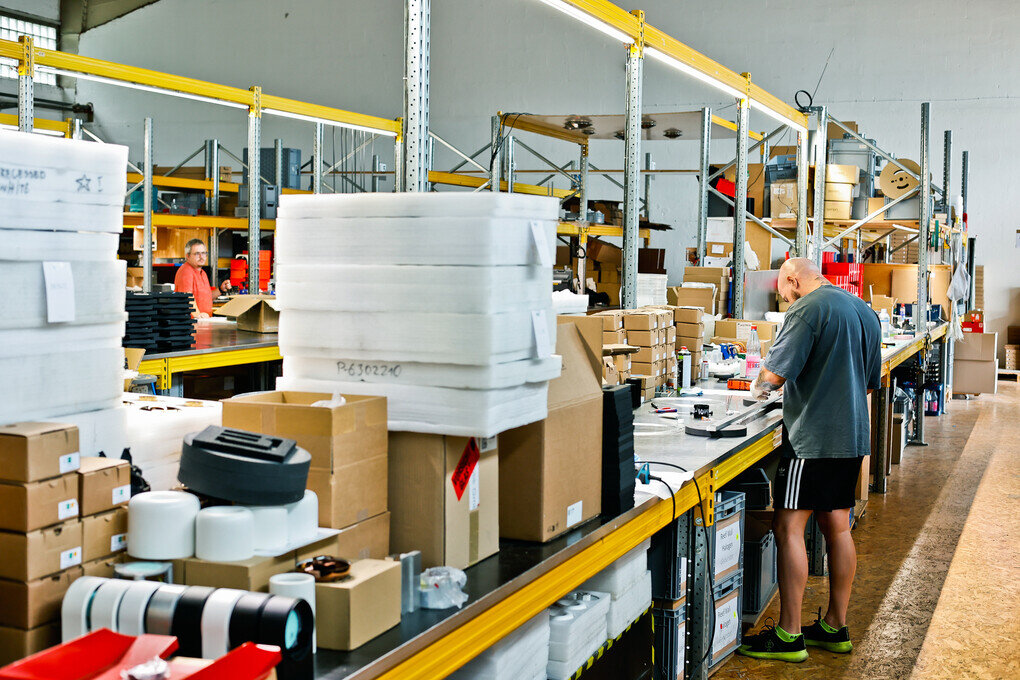
Manfred Wolf: We actually have two sites: this one houses product development and the entire administration, including sales, accounting and marketing. Plant Two is a large rented warehouse in the industrial estate. That’s where final assembly, quality control and general sampling take place, and it’s also where our goods are dispatched from. Given the size of our company, it didn’t make sense to outsource everything. Basically, I’m glad that we’ve grown only very moderately and have been able to keep all processes within our structure here – that way, we have everything under our direct control. My son works in the same building in order processing, so I’m immediately aware of any complaints we receive. This means we always stay on top of things and remain conscious of our responsibility for the products we sell.
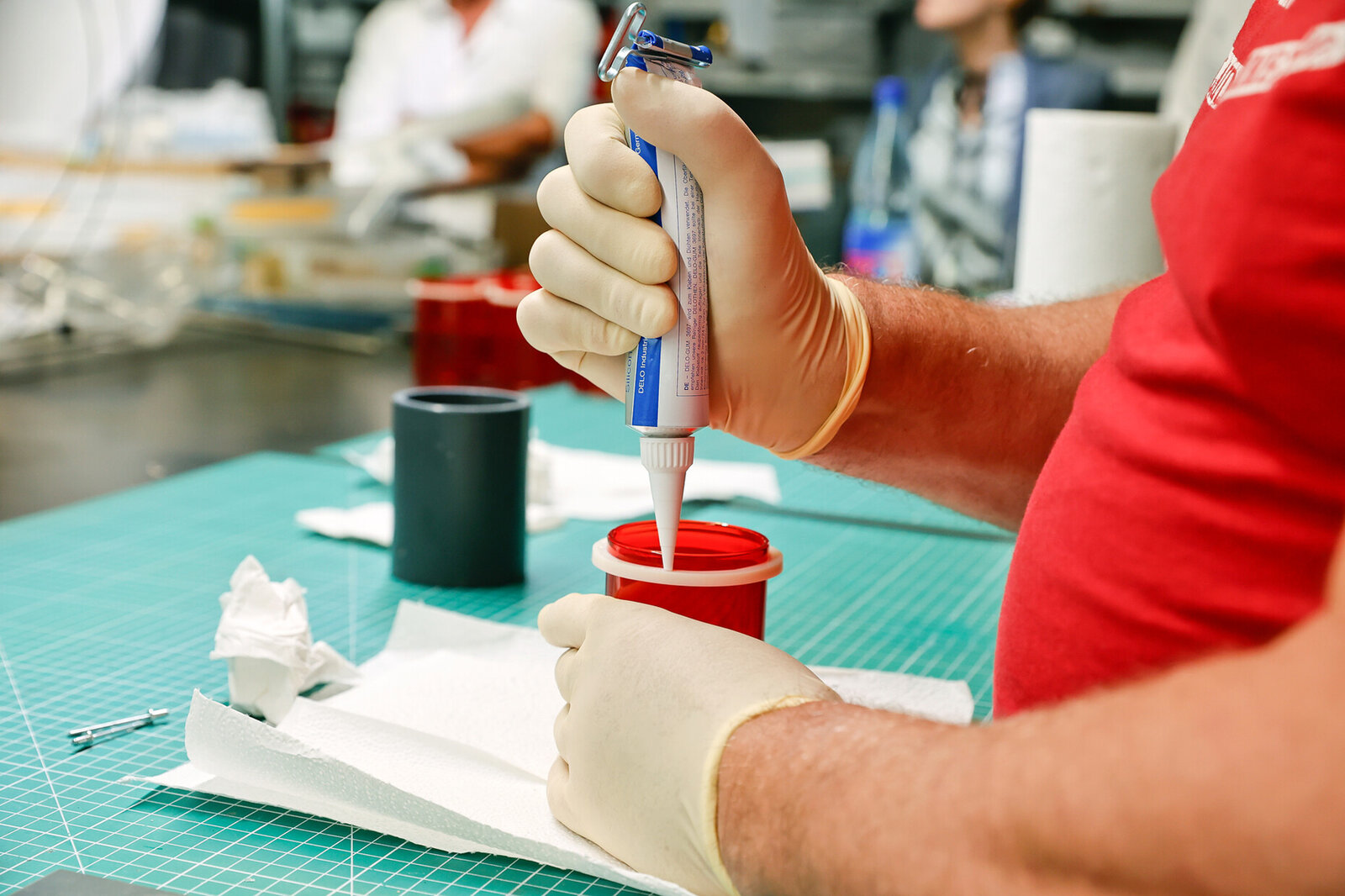
Robert Volhard: Being so closely involved with the product also enables you to create bespoke designs. In collaboration with architects, you develop project-specific luminaires or variations on your standard products for hotels, libraries, churches, synagogues and hospitals.
Manfred Wolf: One of the advantages of on-site production is that we can get involved as designers. It is certainly unique that, as owners, we have also been designers throughout this long period. If we were managers, everything would be different: the company would certainly be bigger, there would have been more activity in sales, we would be more active abroad, and the focus would be on a different kind of quality.
Jean-Marc da Costa: And if, for example, we’d taken on investors – which is a common practice in companies – things would certainly be very different, more inflated.
Manfred Wolf: That’s often where the problems stem from: the investor wants something different from the designer. But of course we face such necessities too, and then I take on the investor’s role and say that the market doesn’t seem ready for a particular design yet. This sometimes leads to disagreements, and as our designer Yaacov Kaufman, with whom we’ve worked a lot, always says: “Manfred, I have to tell you: designers like to design.” That’s certainly true, and we thought the same way at the start.
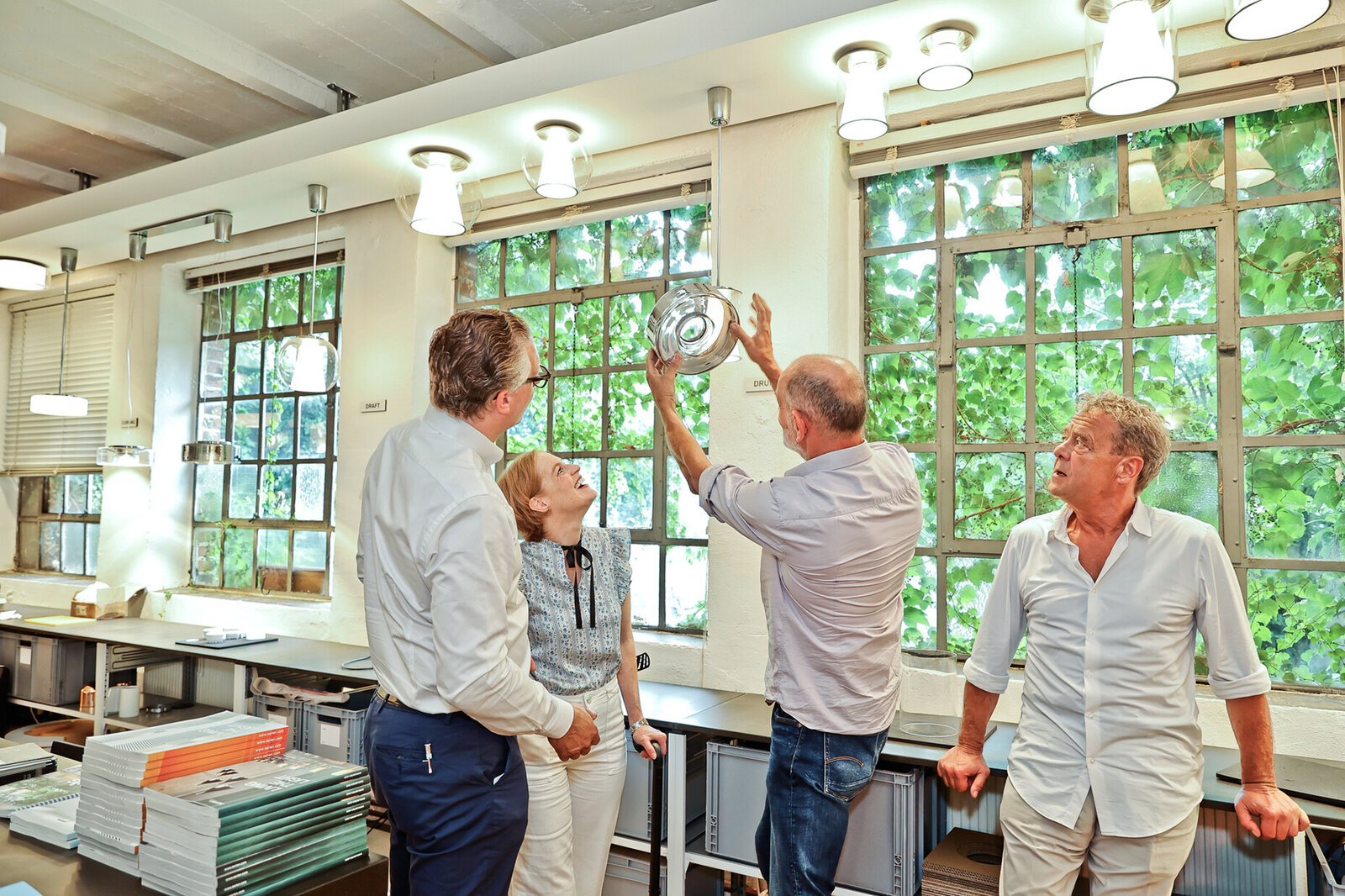
Robert Volhard: As well as Yaacov Kaufman (“Propeller”), you’ve collaborated with Ulrich Beckert, Georg Soanca-Pollak, Peter Thammer (“Poppy”) and Uwe Fischer (“Annex”), amongst others. What’s it like for you to work with external designers, and vice versa?
Jean-Marc da Costa: The more competent the partners are, the better the collaboration. Communication takes place on an equal footing, and that improves the development processes. We always wear the dual hat of designer and entrepreneur, but we now make the decision on whether to produce a new product from an entrepreneurial perspective. That’s why we produced more flops in the past. Today we are much more strategic and professional in such decisions, and we focus on products where we are fairly certain they will sell. That is also one of the reasons for our current stability. I would love to do more design work again; in that respect, bespoke commissions are always refreshing.
Franziska von Schumann: When does a commission involving bespoke designs become so exciting for you that you decide to take it on?
Manfred Wolf: Generally speaking, we always work with the same architectural firms. We’ve now become specialists in synagogue lighting, which is why we’re contacted time and again. Having fitted out eight synagogues to date, there is no one who has lit more synagogues with religious artefacts than we have. We would be ideally suited for more projects, but we don’t have the structure for it. Although they are interesting and great fun, they are not financially lucrative. For example, we are currently renovating the synagogues in Darmstadt and Heidelberg, both of which date from the 1980s. As part of our service, we are converting the chandeliers to LED, which earns us virtually nothing, and we propose further lighting solutions that fit the concept – that’s when it becomes economically viable.
Robert Volhard: Your products are repairable, and you’re able to make the transition to LED – sustainability at its best.
Manfred Wolf: I actually received an email just today: over 30 years ago, two “Lift” lights were purchased, and now they flicker from time to time. “Can you help with that?” I was able to explain where the problem was coming from. The lights are now being sent to us. I recently had four of them here from Hamburg – now they’re as good as new. I really enjoy repairing them!
Franziska von Schumann: Where do you see the current challenges in the market?
Jean-Marc da Costa: Consumer behaviour has changed completely: one crisis follows another. This is weighing on the mood and dampening the desire to spend. Nevertheless, there are many people who still have sufficient funds.
Manfred Wolf: On top of that, the next generation is doing things completely differently. They don’t want a well-kept home, but as little clutter as possible. So why lug a floor lamp around with you?
Franziska von Schumann: You didn’t attend Light + Building last year. How important were, or are, trade fairs to you? What impact did the period of COVID-19 restrictions have?
Jean-Marc da Costa: Generally speaking, attending trade fairs has become less and less important to us and offered poor value for money. Participation costs our small business a lot of money – around a quarter of a million euros. During the pandemic, we decided to cut back on that. To round things off, we sent out a positive signal and took part one last time as a premium design brand at the October 2022 edition of Light + Building. Since then, we have been maintaining customer loyalty through in-house exhibitions.
Robert Volhard: What are your plans for the company over the next few years – your goals, hopes and aspirations?
Jean-Marc da Costa: I think we’re on the right track and will continue along this path, striking a balance between enjoyment and stable financial results, for the next five years or so. We’re not actively looking to sell the company, but that will probably be on the cards one day.
Manfred Wolf: If business picks up significantly again, I’d love to produce a few more beautiful designs, regardless of whether we sell them or not.
Franziska von Schumann: How have you both managed to combine friendship and work for so long?
Jean-Marc da Costa: I compare it to a marriage that has perhaps gone beyond good and evil. It’s important to make sure you treat each other with respect and don’t cross certain boundaries.
Manfred Wolf: We share a common commitment. It was clear to both of us from the very start: we’re going to see this through together.