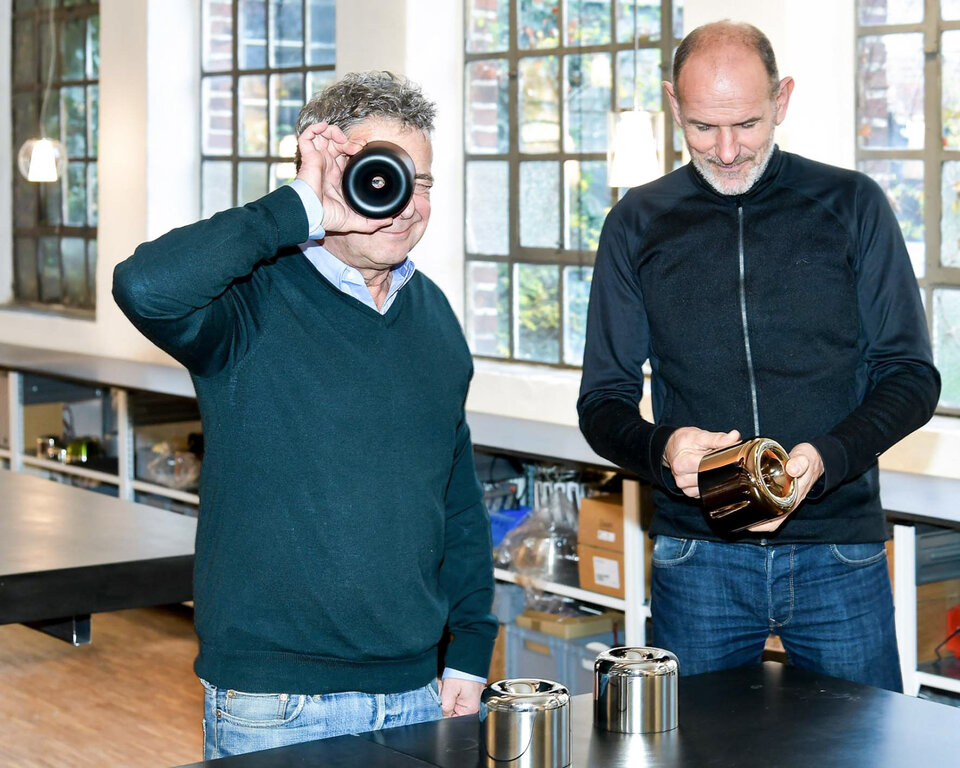

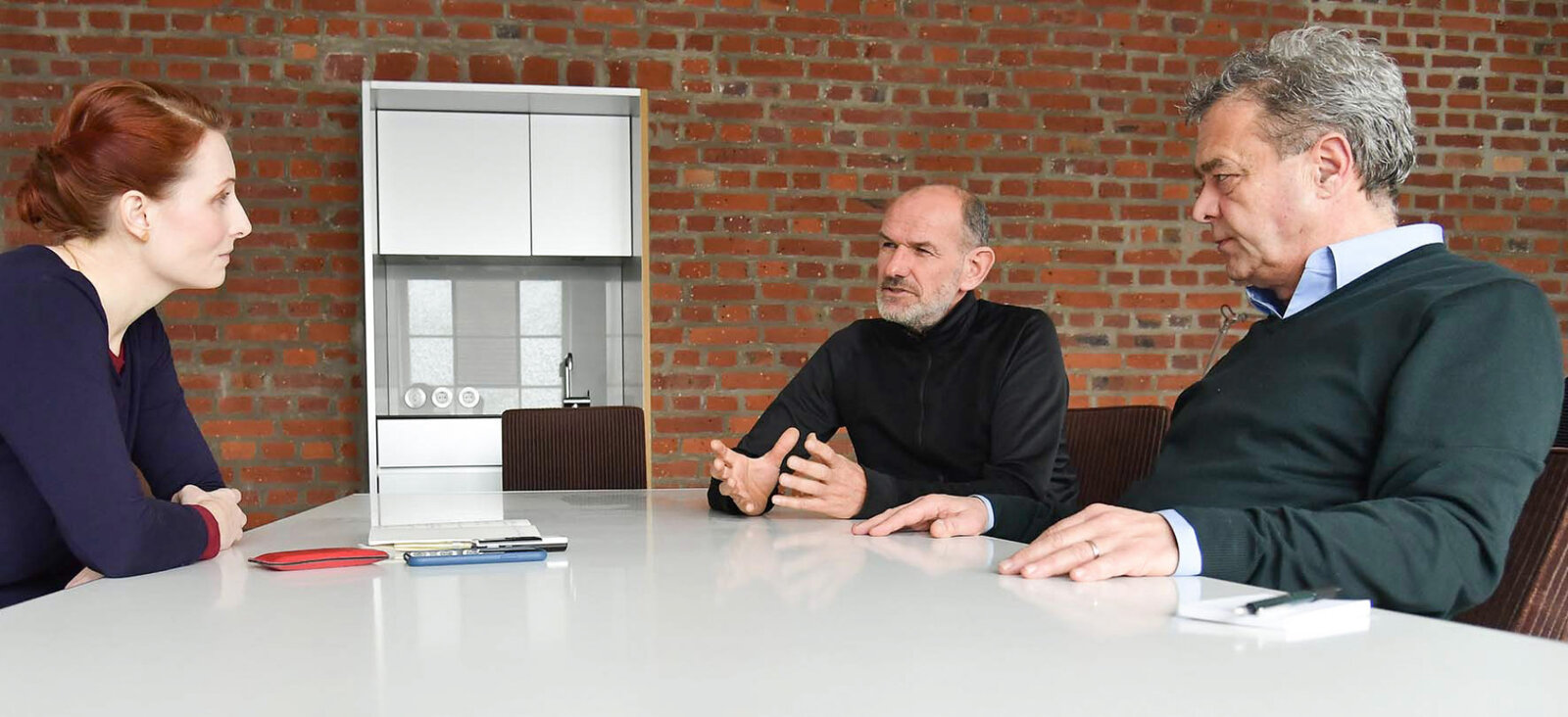
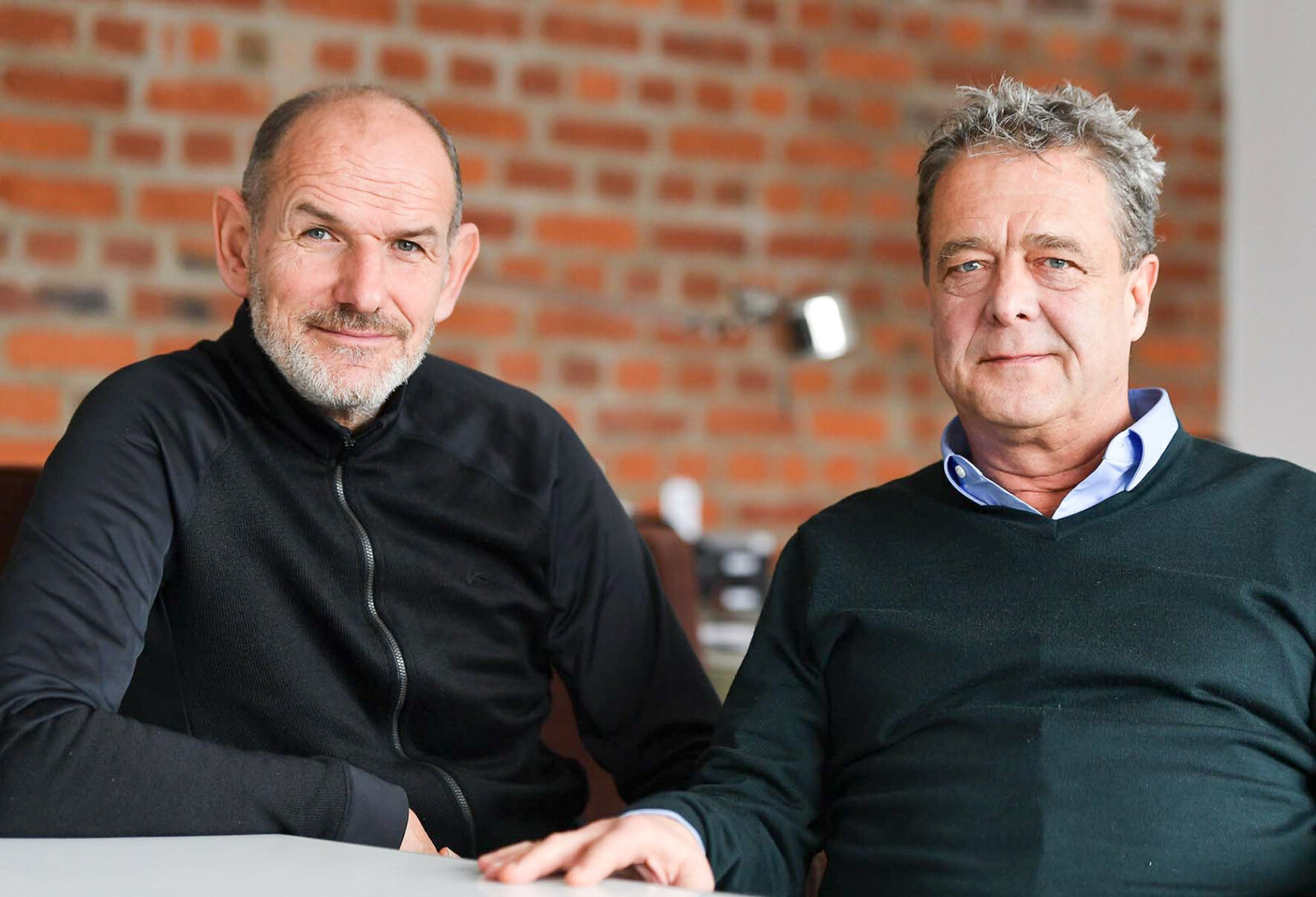
The roots of serien.lighting lie in the 1980s: Manfred Wolf and Jean-Marc da Costa met whilst studying design at the Offenbach University of Art and Design. Both had independently decided to design a lamp – and their shared fascination with light quickly led to a friendship.
Their respective experiences complemented one another as they embarked on their joint venture: Jean-Marc da Costa, influenced by his father’s profession as an architect, brought an architectural understanding to the table. Manfred Wolf contributed his craftsmanship and extensive knowledge of metalworking. As students, they were able to use the workshop where Wolf’s father and grandfather made fittings for suitcases and bags. There, they had the ideal conditions to tinker away at their designs in peace. “We were able to bend, weld and shape metal, and develop our own tooling,” says Manfred Wolf.
Neither of them was short of creative ideas for lighting – designs such as ‘LIFT’, ‘REFLEX’, ‘QUADRAT’ and ‘STATUS’ date from this period. Minimalist, aesthetic luminaires that place the focus squarely on function and the light itself. Created in the midst of the expressive 1980s, at the height of postmodernism, they were almost a provocation.
With their bold approach, serien.lighting – then still operating under the name ‘Serien Raumleuchten’ – made a clear statement: chasing trends is not their style. ‘When it comes to whether there is a need for the product or not, I prefer to trust my gut feeling,’ says Jean-Marc da Costa.
It is important not to rush things. The creative and craftsmanship-based process simply takes time to ensure that the end result meets the high standards required of the interplay between technology, design and function.
Da Costa and Wolf have remained true to this conviction – from their breakthrough with an exhibition of their first products at the Martin Stoll furniture store in Cologne during imm cologne 1985, right up to the present day. Today, serien.lighting supplies lighting for international projects with a team of 40 employees. “We have grown slowly but steadily,” sums up Jean-Marc da Costa. The Rodgau site has remained. The rooms in the charming brick building, where Manfred Wolf’s grandfather once worked, have been adapted accordingly: whitewashed walls, plenty of glass and ample space to display the new products.
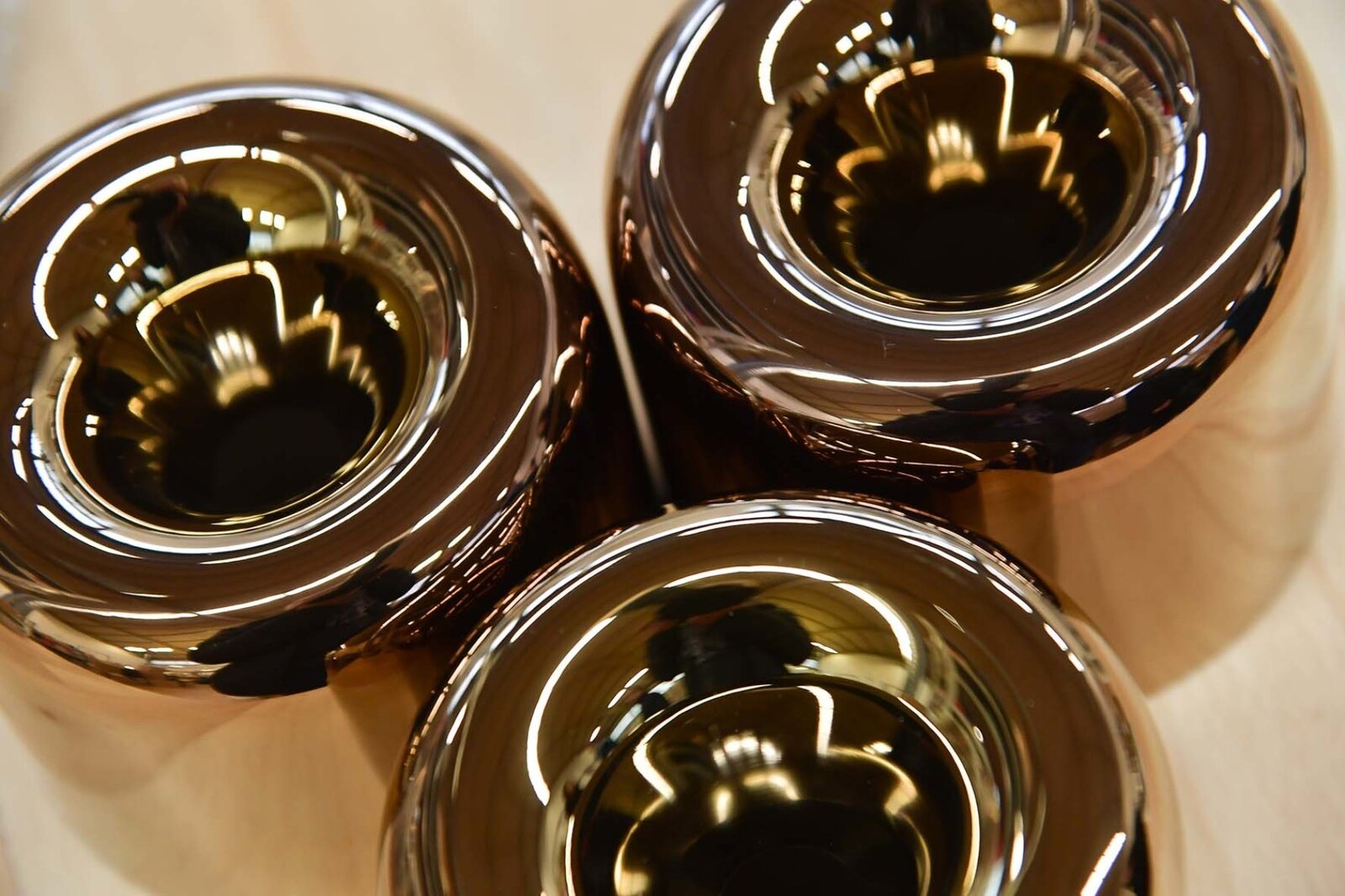
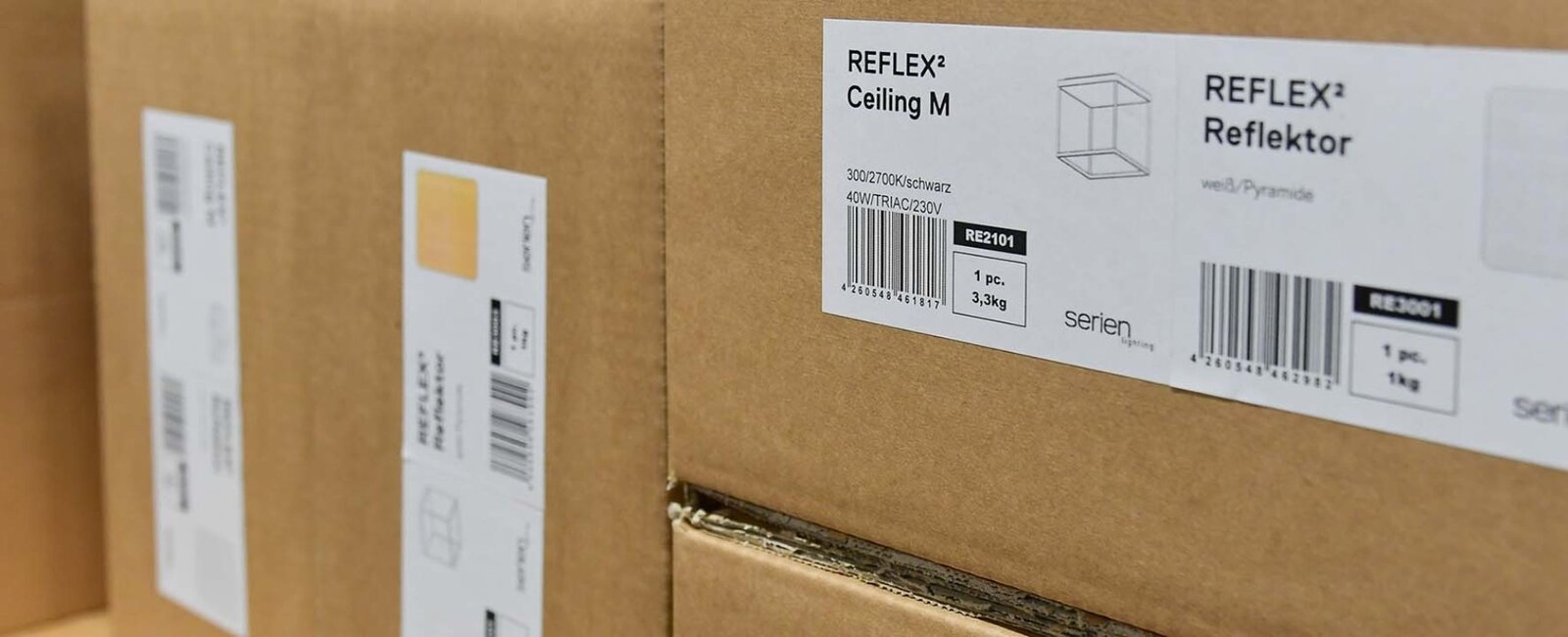
Over the years, two further production and logistics halls were added in Rodgau. The latest addition to the range is “REFLEX²”, a further development of the successful cubic “REFLEX” luminaire, with which serien.lighting first began. The light from the LEDs is directed upwards into the luminaire’s own reflector surface and is reflected back into the room from there, without the light source being directly visible.
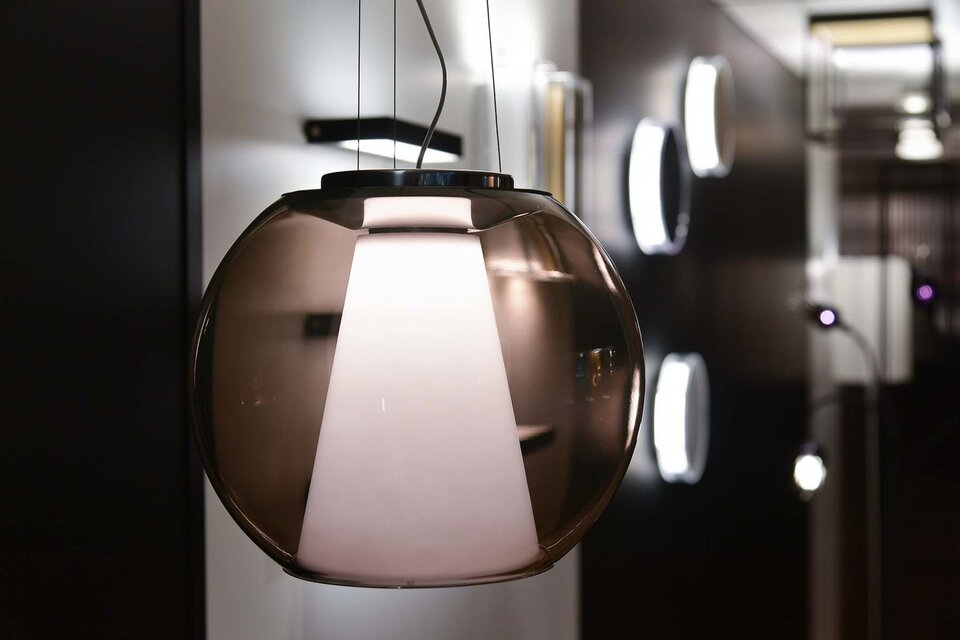
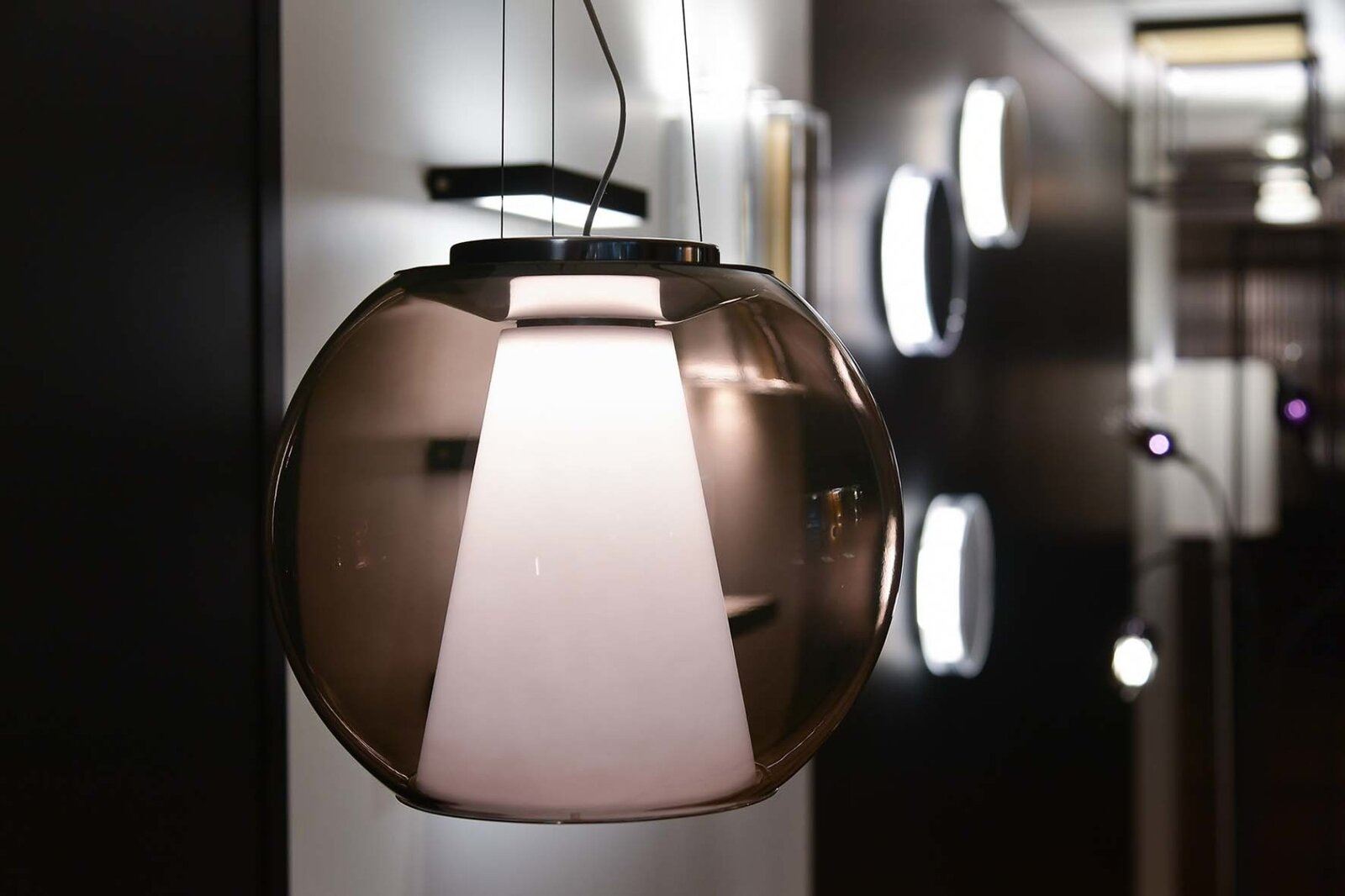
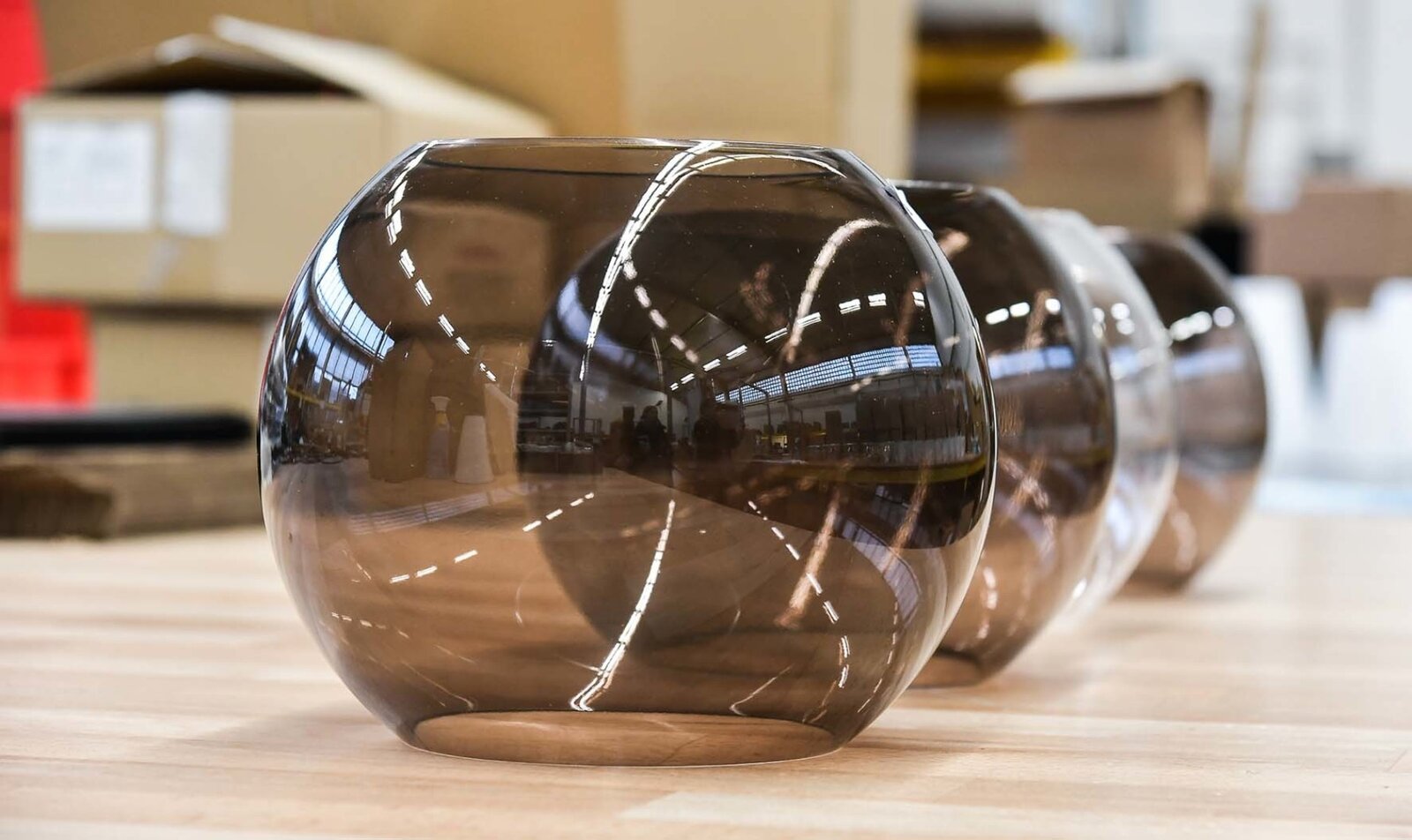
At Light + Building 2020, serien.lighting will also be unveiling floor lamp and wall lamp versions. Another new addition to the range is ‘DRAFT’, whose combination of a hand-blown glass sphere and a conical internal reflector creates an elegant contrast. Here too, the light source is concealed from view, as it is hidden deep within the internal reflector.
Under control
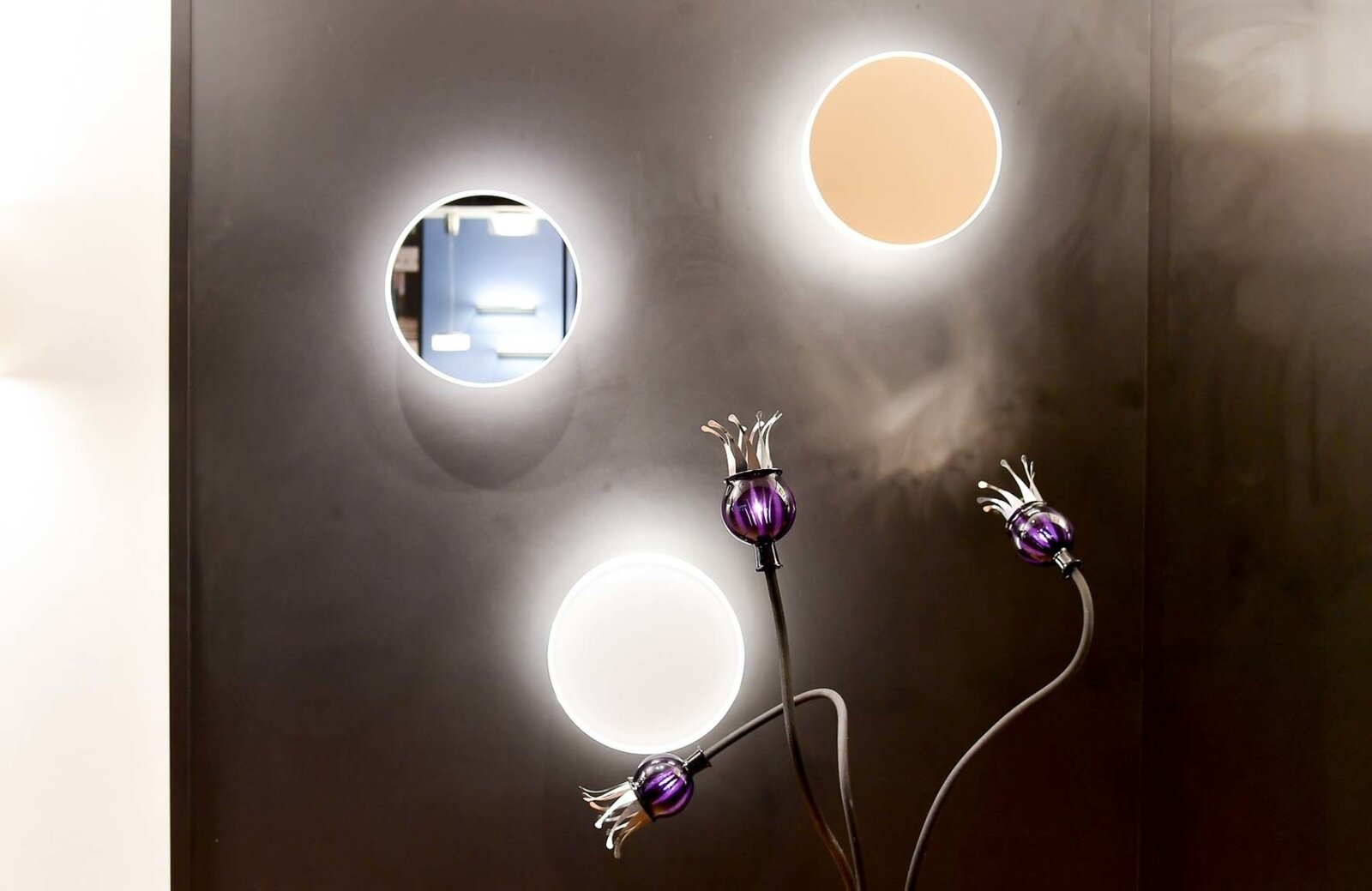
The luminaires from serien.lighting all have one thing in common: they are instantly recognisable. From ‘POPPY’, whose lamp head opens like a flower, to ‘ZOOM’, a scissor-grid construction forming a circle. The inspiration for the ‘ZOOM’ pendant light, which can be adjusted continuously in diameter, came from the scissor-grid of a purse.
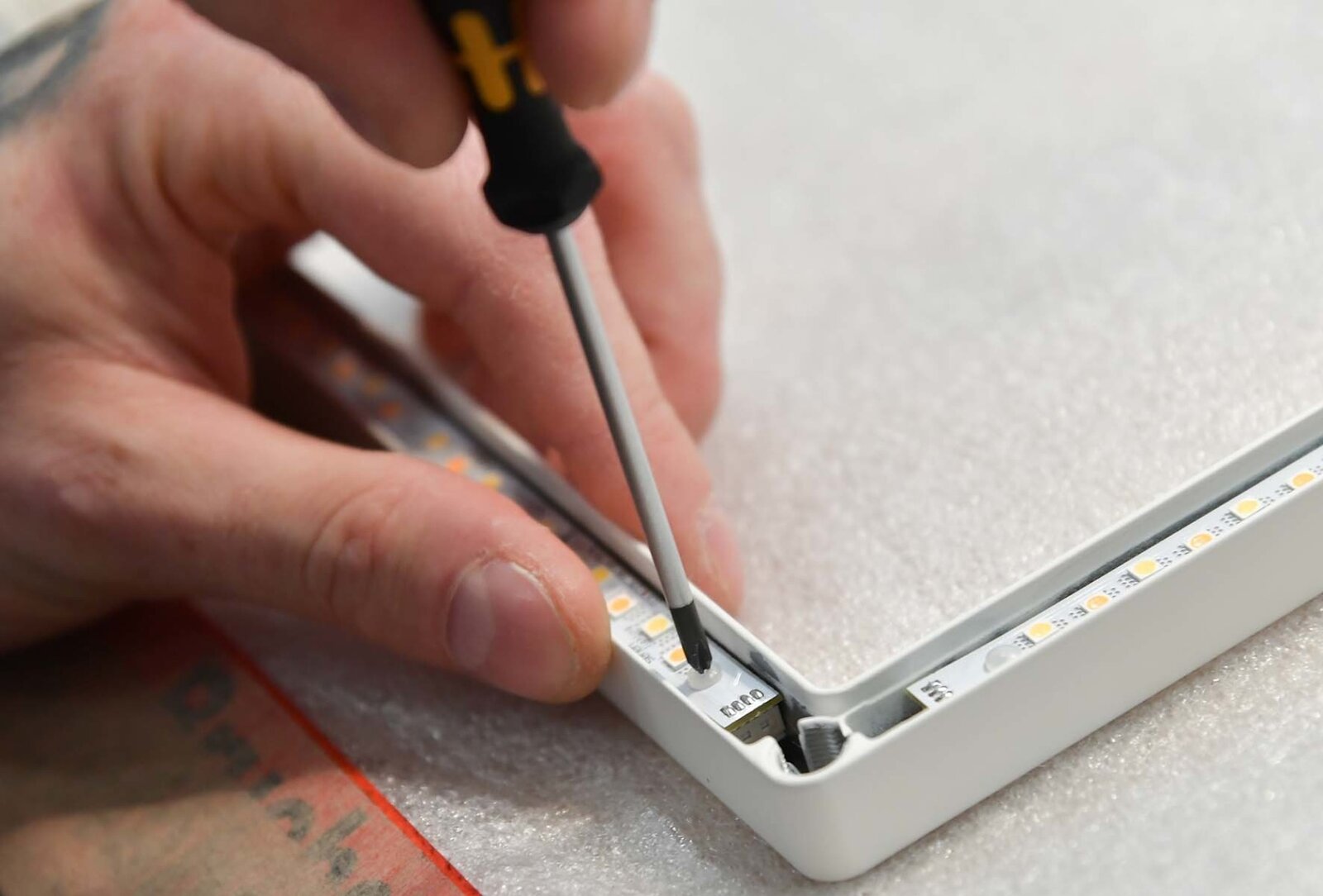
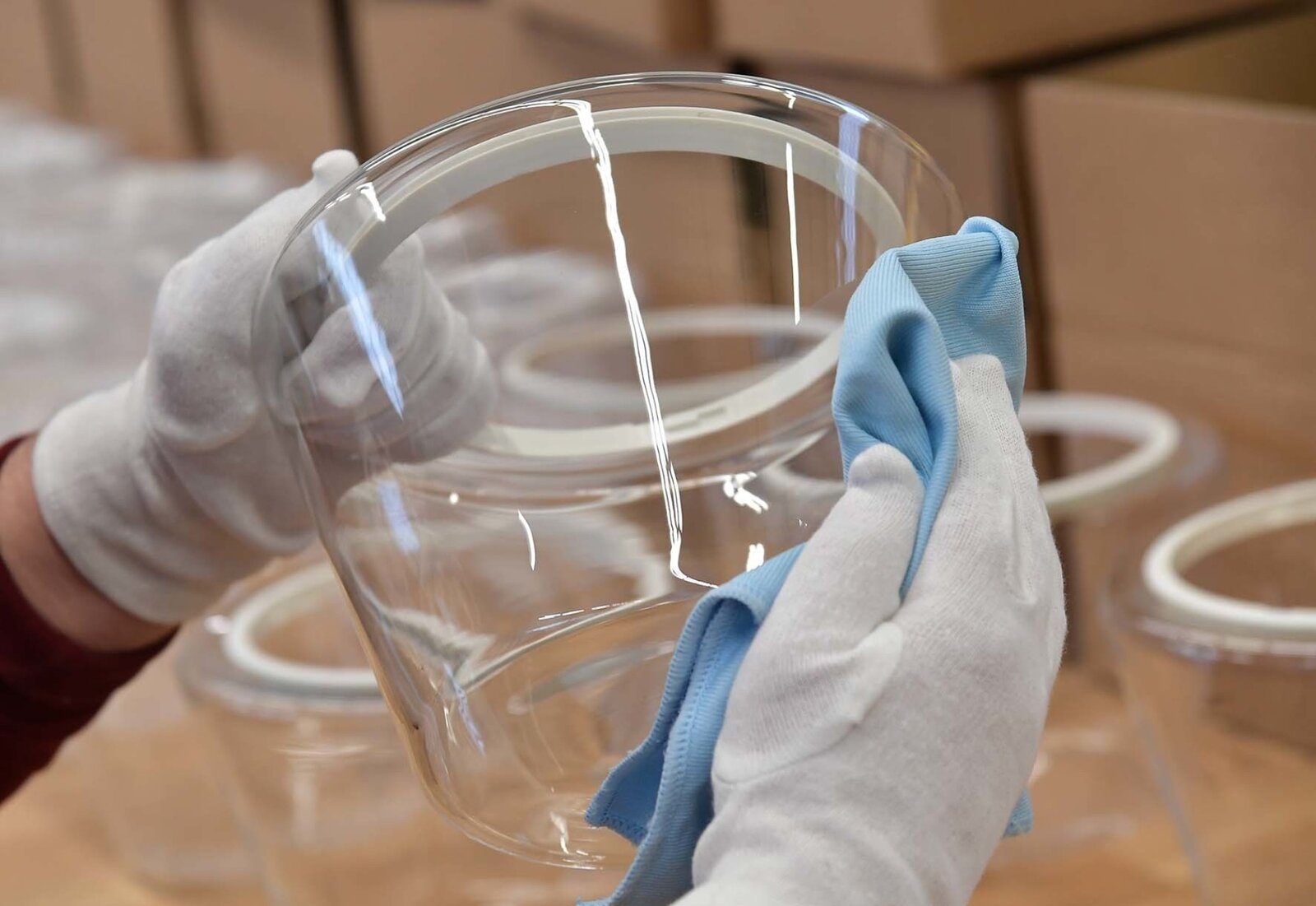
Practical and intuitive – two further hallmarks of serien.lighting’s luminaires. Throughout the creative process, da Costa and Wolf never lose sight of the user, scrutinising every aspect of usability down to the smallest detail. Only once the products have been developed in-house to the point of being ready for series production are they outsourced to selected specialist manufacturers.
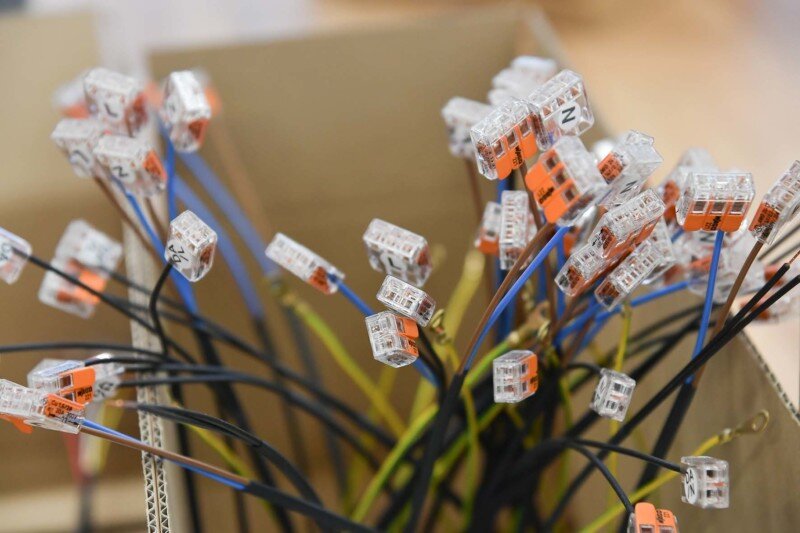
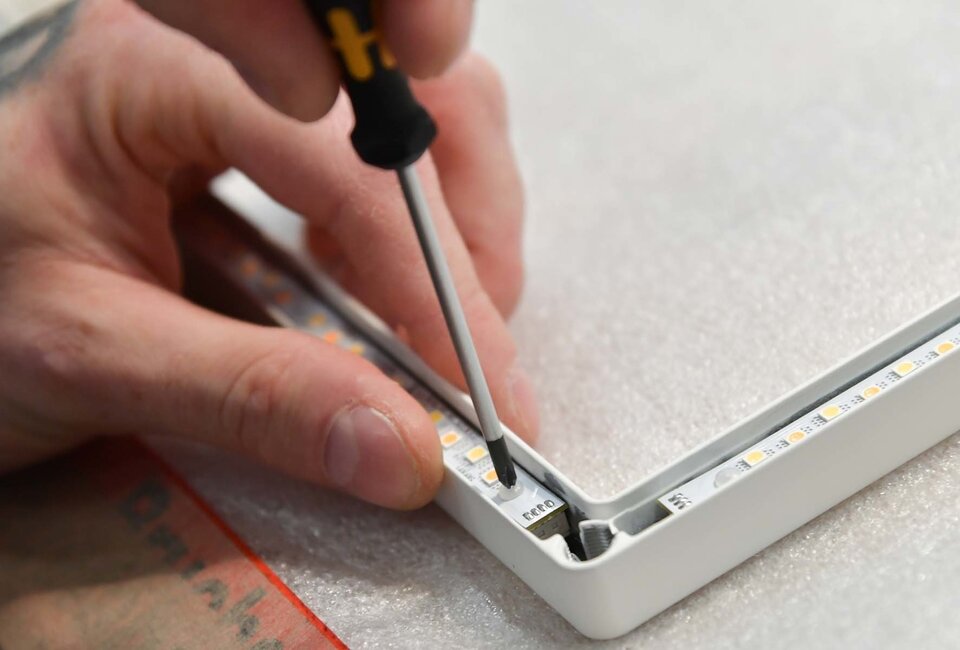
Final assembly and final inspection then take place back at the company’s own premises in Rodgau. Quality control is of the utmost importance to serien.lighting. “We would never outsource that,” says Jean-Marc da Costa. Even when collaborating with external designers such as Benjamin Hopf, Next Space or Yaacov Kaufman, the final serien.lighting touch is important to the pair. “The luminaires should look timeless from day one,” says da Costa. Remaining timeless as times change and challenges grow – that is something serien.lighting has been achieving for over 36 years now. Even though the transition in technology, such as from halogen bulbs to LED lighting, has not always been easy.
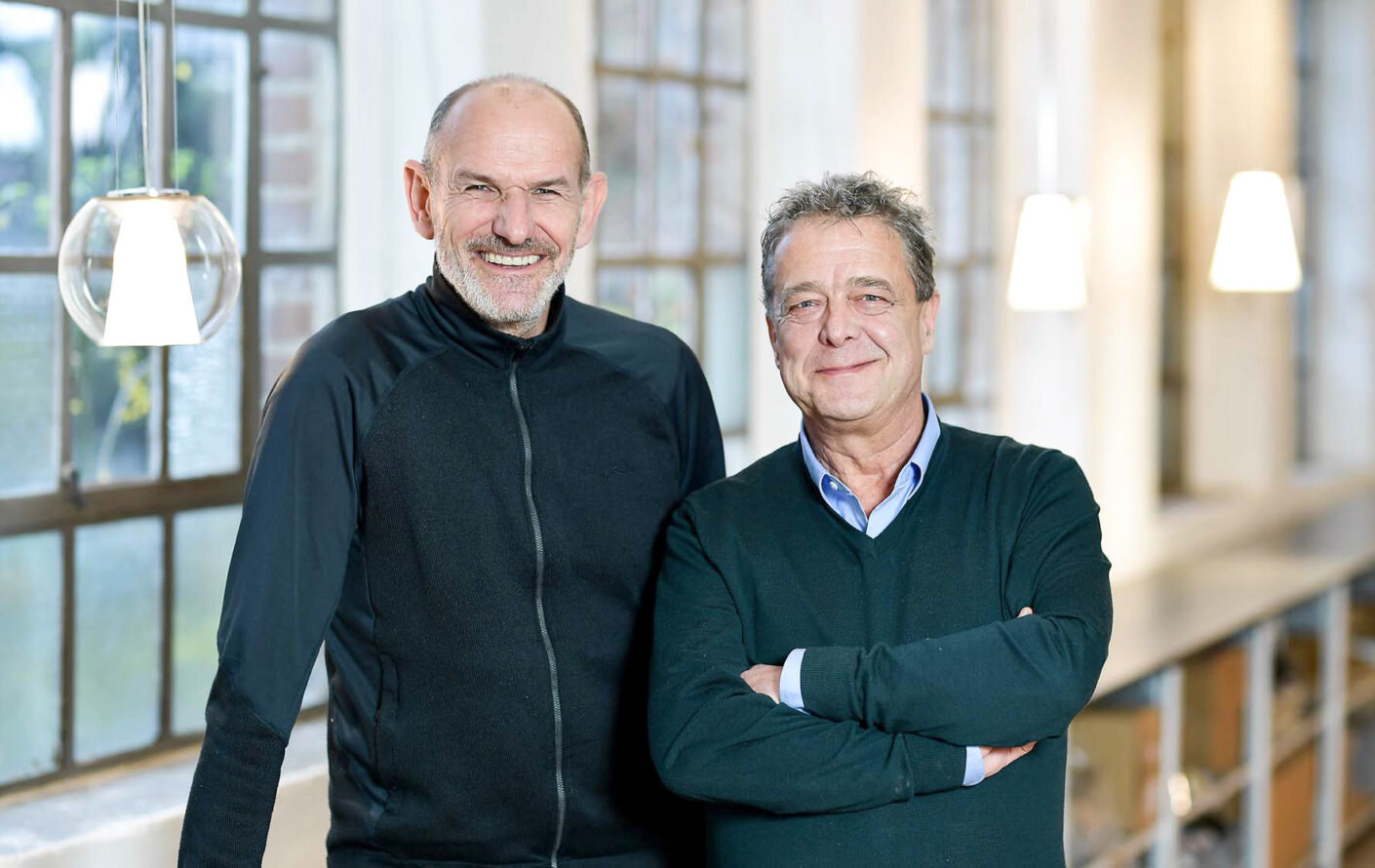
Many of the timeless designs had been created around the light sources, but now extensive technical innovations were required. “The further developments and all new models featuring LEDs must meet the high standards of perfection that people have come to expect from serien.lighting,” said Jean-Marc da Costa.
Expertise in lighting
Thought through to the very last detail without compromise – an approach that works not only for the end customer, but above all for the architects and planners with whom serien.lighting regularly collaborates. The range of projects for which the two product designers have already modified luminaires or developed bespoke solutions extends from restaurants and hotels to universities and banks, and even synagogues and museums.
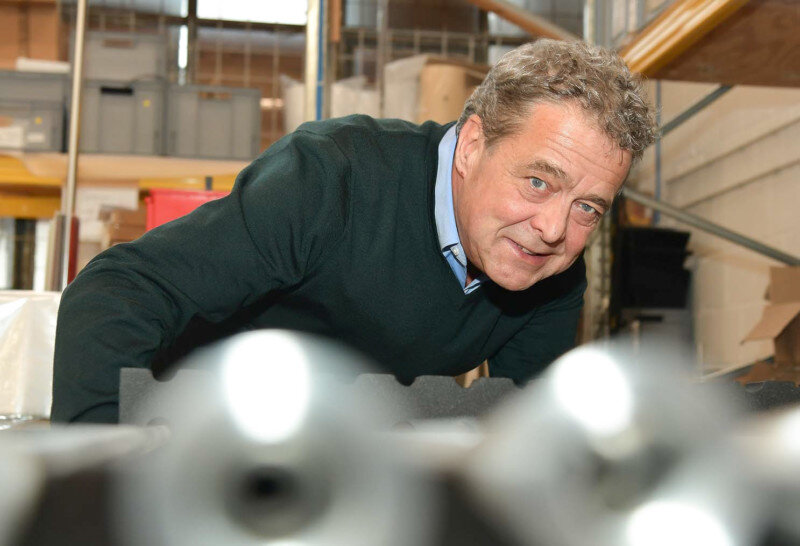
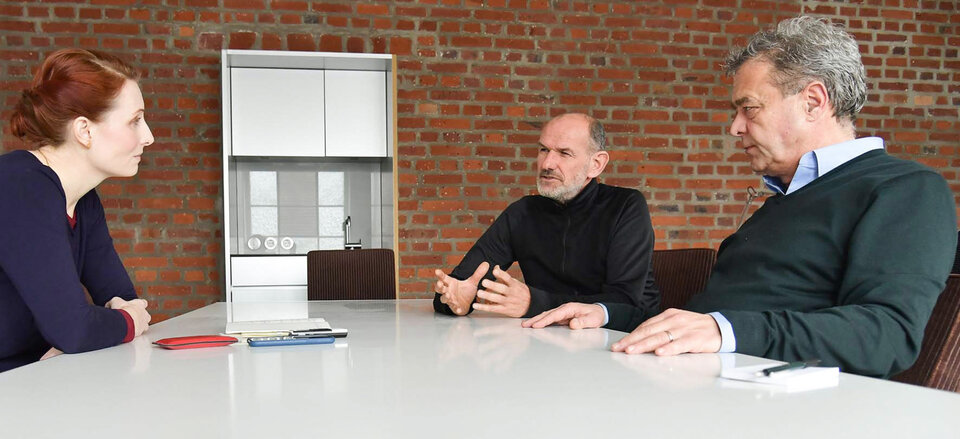
For Jean-Marc da Costa and Manfred Wolf, it is important to communicate on an equal footing. Through dialogue, they aim to spark a creative process that spans the stages from concept development to installation, culminating in a bespoke solution that stands the test of time.
Take the “SNAKE” task light, for example, which, with its sleek design and focused light, has been perfectly tailored to the requirements of the University Library of Freiburg. Thanks to the combination of technical minimalism and high quality, the lights blend harmoniously into a wide range of architectural settings. Take, for example, the Goethequartier in Offenbach, the city’s largest new-build project comprising 327 flats: numerous luminaires from serien.lighting will be part of the scheme – from the stairwells to the bathrooms. “Not decorative objects, but functional design that stands the test of everyday life,” says Manfred Wolf. The durable lighting solutions thus naturally contribute to sustainability. “Despite all the market pressure, we always see every product through to the end so that it remains convincing in the long term,” says Jean-Marc da Costa. For serien.lighting, this includes an intuitive, craftsmanship-inspired control system that remains user-friendly even when incorporating state-of-the-art technology.
With a deep fascination for light and a passion for exploring new approaches, Jean-Marc da Costa and Manfred Wolf are now stepping into a new decade – in keeping with their slogan “Living the light”.
Link to the original article on stylepark.com