
IS IT PAINFUL TO HAVE SPENT 30 YEARS BEING CREATIVE FOR LEUCHTEN?
No, quite the opposite. The creative part, grappling with the design, is exactly what I enjoy most after almost 36 years. What’s nerve-wracking is juggling creativity and entrepreneurship – for instance, dealing with banks or suppliers, which are also part and parcel of being a manufacturer.
HOW GREAT IS IT ON THE OTHER HAND?
I still feel at home in the creative process and in engineering, and I find it rather a shame that, as a manufacturer, you can achieve far less than you’d like. I’d love to let my creative volcano erupt even more powerfully! That’s why we keep designing products for other companies as well.
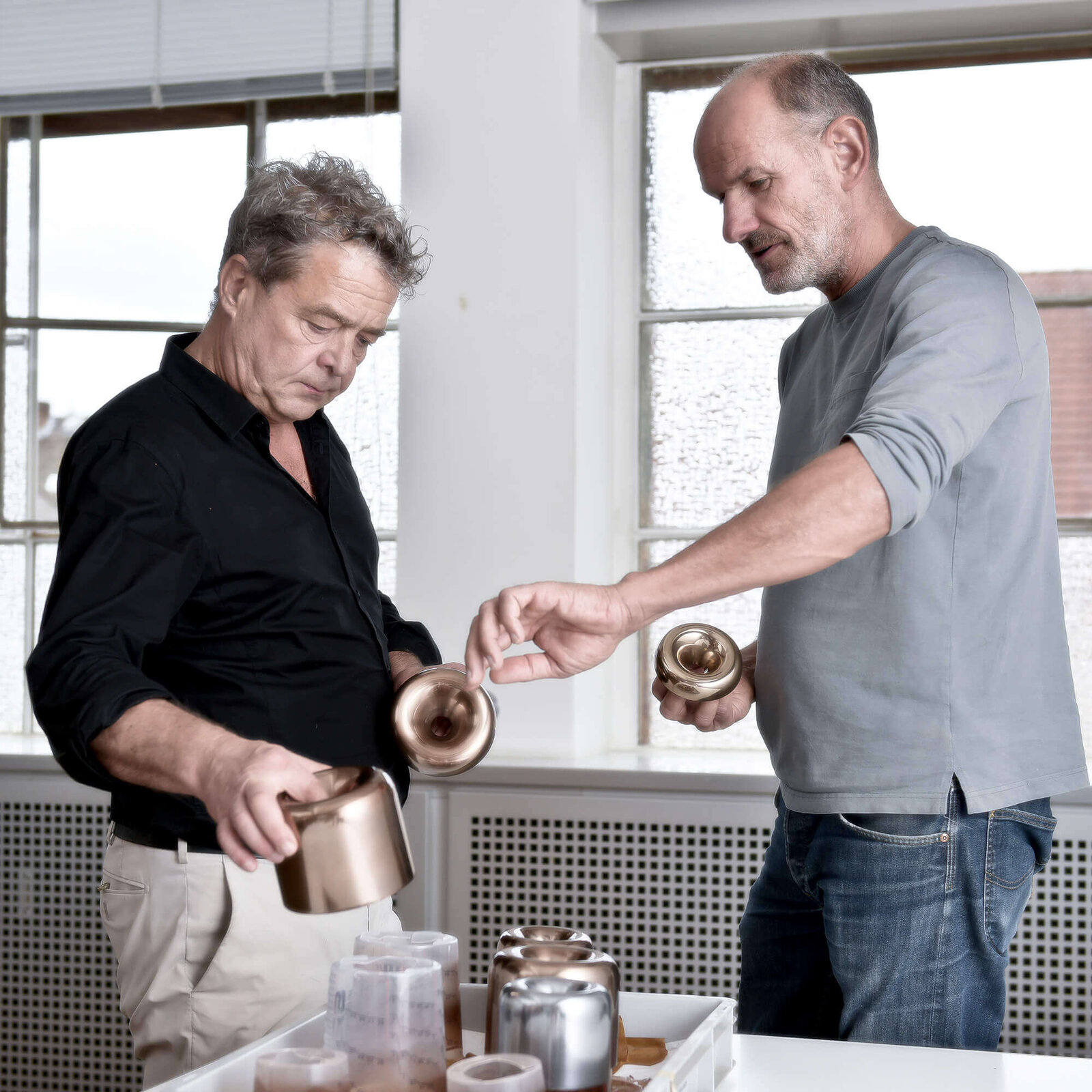
SERIEN.LIGHTING HAS BEEN PART OF VARIOUS TECHNOLOGICAL DEVELOPMENTS. BY THE LATE 1980S, HALOGEN WAS THE STANDARD. HOW DID THAT ERA SHAPE YOU?
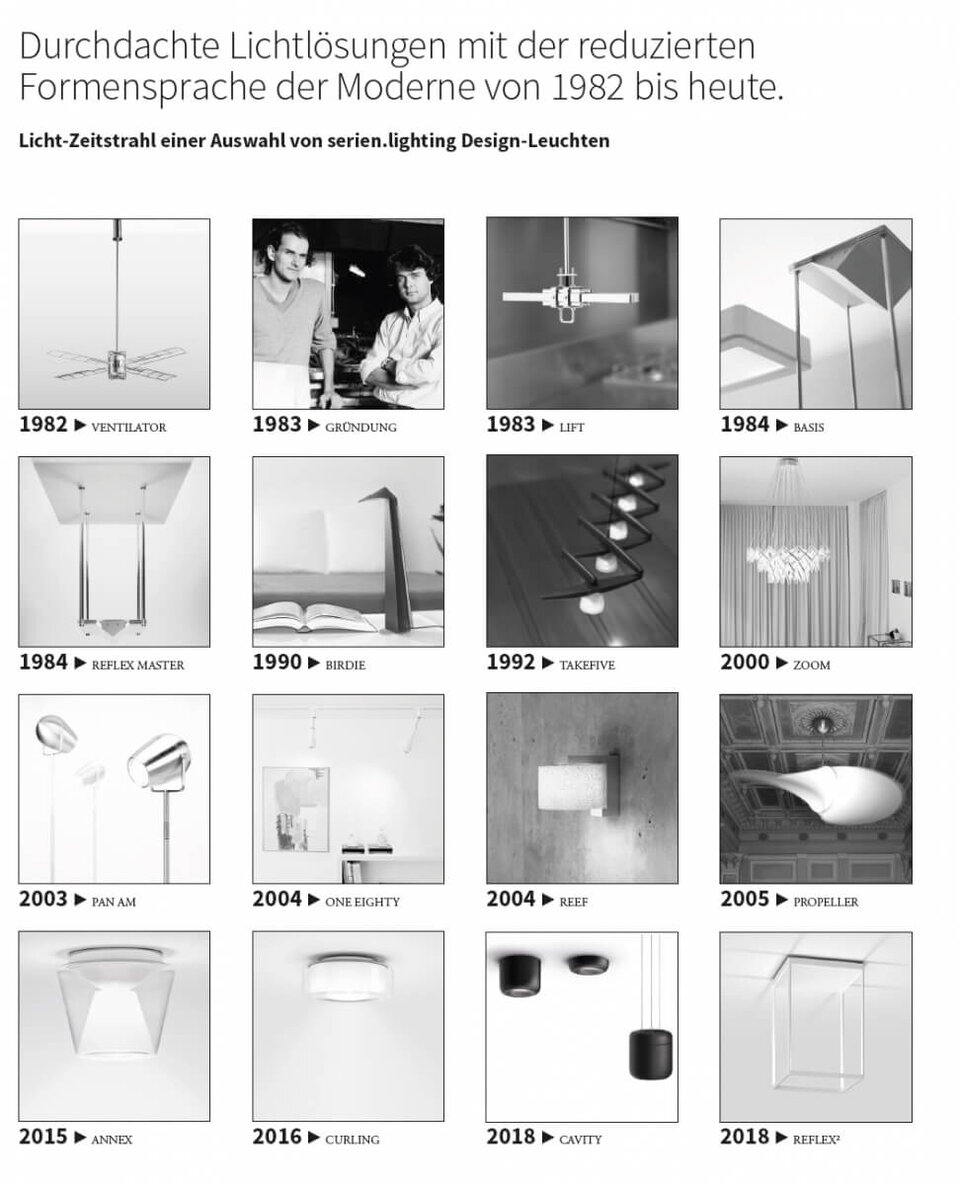
Of course, we are originally children of the halogen era: I still remember well the first halogen luminaires I saw in Milan. They motivated me to approach my own luminaire designs with greater architectural and lighting-technical sophistication. Unlike incandescent lamp designs, the high-performance halogen light source enabled us to create particularly delicate and minimalist designs. We became specialists in dealing with the high temperatures of halogen bulbs and developed technologically sophisticated products such as the SML or the REEF, which we have refined both technically and in terms of form over the years.
COULD ONE SAY THAT THE LED ERA HAS LED YOU TO GREATER CREATIVITY?
Our creative potential was already our greatest strength. However, thanks to the technological possibilities of the LED era, we can now apply our creativity in even more diverse ways. Many things are now possible that were not possible before with incandescent or halogen lamps. It is no longer a case of having to dissipate extremely high temperatures. But our technological and formal expertise has naturally also given us a head start when it comes to LED technology: The focus is now even more on formal reduction, on breaking down massive volumes, and on topics such as light control or refraction, dimming, or the use of lenses. LED technology has opened up a new range of possibilities. And that is precisely why we must take care to ensure that things do not become arbitrary and of inferior quality.
EVERY LIGHTING MANUFACTURER HAD TO LEARN THE ROPES. HOW DO YOU LOOK BACK ON THIS PERIOD OF TECHNICAL TRANSFORMATION? POSITIVELY AND NEGATIVELY?
As a manufacturer, we were obliged to comply with the new EU regulation. That was difficult to manage, but politically it was certainly the right decision. The main difficulty for us as a manufacturer was that, for a long time, we were forced to offer both halogen and LED products in parallel. Over the years, this required maintaining two separate inventories and tying up capital. As long as halogen and LED accounted for a similarly high proportion of turnover, this was more of a commercial challenge than a technological one. It was exhausting, but I view it positively in the long term.
TODAY AND IN THE FUTURE, LIGHT IS CREATED USING LEDs. AT LIGHT+BUILDING, YOU PRESENTED NEW AND IMPROVED PRODUCTS. WHICH ONES WERE PARTICULARLY WELL RECEIVED BY THE PUBLIC?
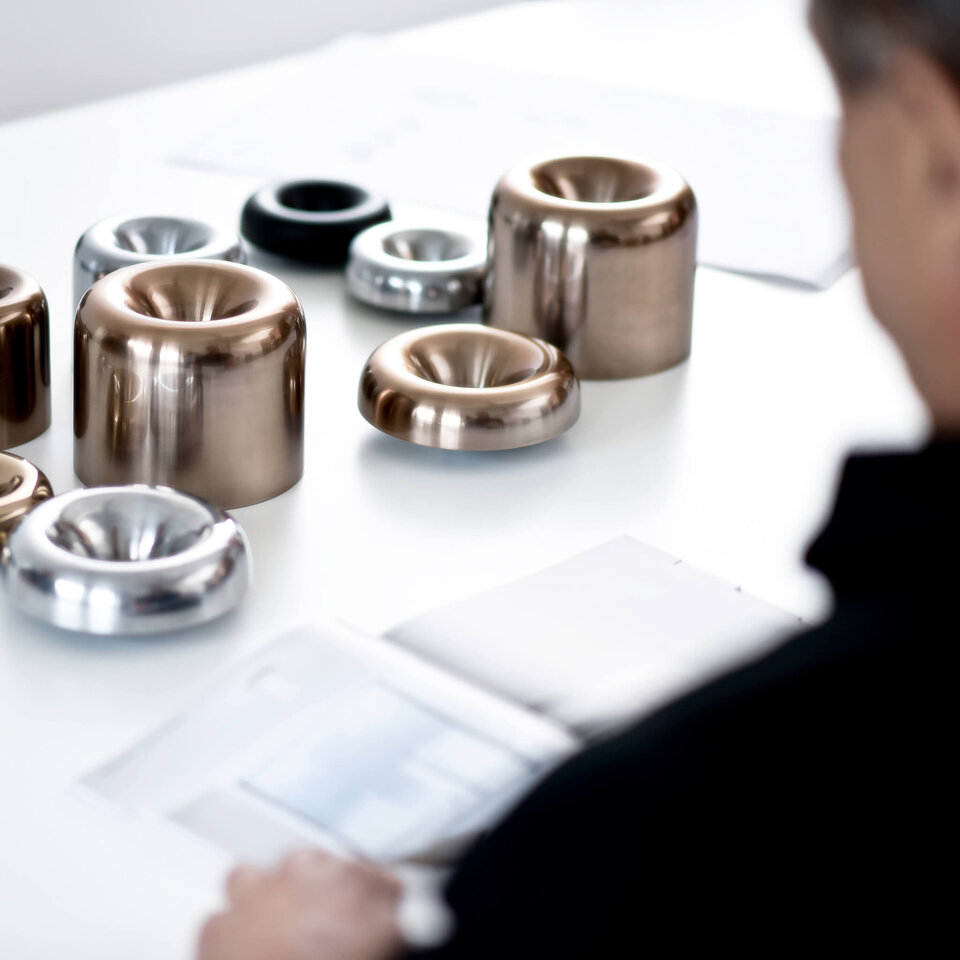
We have never presented so many new products at a trade fair before, and we have never received such consistently positive feedback: the CAVITY, for example, a simple, minimalist yet softly flowing design, was considered by many to be the most interesting luminaire at the fair. The CRIB was received by many as a highly innovative yet attractively priced luminaire. With the SLICE., we have further developed a successful product that meets all the requirements of modern office workspaces and was very well received. And REFLEX., a further development of one of our classics, was extremely well received. For the first time, we also showcased products that were originally developed as customised solutions; due to the positive feedback from L+B, we are now adding them to our standard range and will be delivering them later this year.
WHICH LAMP FROM YOUR COLLECTION IS PARTICULARLY CLOSE TO YOUR HEART?
I still consider the JONES floor lamp to be one of our most successful designs. Together with Prof. Uwe Fischer, who also works for other well-known companies in the furniture industry, we have developed a lamp that uses a clever pulley mechanism to create a synchronised movement. This completely changes the light the lamp emits – from reading light to ambient light and right through to a ceiling floodlight. This is still an outstanding solution for a floor lamp on the market.

GIVEN THE RANGE OF YOUR COLLECTION, YOU CAN’T DESIGN EVERYTHING YOURSELVES. DO YOU HAVE EXTERNAL DESIGNERS WHO WORK WITH YOU? DO THEY COME TO YOU? WHAT CRITERIA DO YOU USE TO SELECT THEM?
We receive many unsolicited designs. Over time, we’ve developed a good instinct for which designs suit us and have the potential to succeed in the market: it’s about a confident approach to the theme of light, a good feel for shapes, colours and materials, and of course it’s also about technical understanding, for example regarding adjustability. Some submissions lead to contacts with whom we would like to collaborate on a long-term basis, rather than simply purchasing a single design. We want to give the collection a broader character by involving external designers, including younger ones. However, all designs still pass through our hands; they go through a sort of design filter at our end and therefore always bear the hallmark of our company.
YOU DISTRIBUTE THROUGHOUT EUROPE, MAINLY IN GERMANY, SWITZERLAND, AUSTRIA, FRANCE AND THE BENELUX COUNTRIES. ARE ASIA OR NORTH AMERICA ALSO RELEVANT MARKETS FOR YOU IN THE FUTURE?
We distribute across the whole of Europe, but focus primarily on the D-A-CH region and the Benelux countries, and we have good trading partners in France. The Mediterranean region plays a smaller role today; we used to have a stronger presence there. Although we have interesting partners from Asia to South America, we do not have a comprehensive, professional distribution network there. We would like to expand this further and thereby achieve an increase in turnover without having to invest further in product diversity. We are therefore certainly interested in partnerships in Asia and America.
DESIGNER LIGHTS ARE EXPENSIVE. HOW SHOULD ONE EXPLAIN TO A POTENTIAL CUSTOMER WHO WANTS TO SPEND THEIR MONEY WISELY THAT IT IS WORTH BUYING SUCH LIGHTS?
I’m not saying that it always has to be expensive designer lighting! With the right approach, you can illuminate your spaces just as well with cheaper lights. However, the lifespan of our lights is truly outstanding, both technologically and in terms of design: many customers are still using our lights after 30 years, and they still work just as well as they did on day one – both technologically and in terms of their lighting effect and aesthetics. Particularly in the commercial sector, it is not just a matter of using the cheapest components, but those that prove their worth in the long term in terms of material quality, energy costs, temperature or lighting effect. Anyone who has been given the wrong advice here has saved money in the wrong place with cheap products and will most likely end up with poor lighting quality in their rooms.
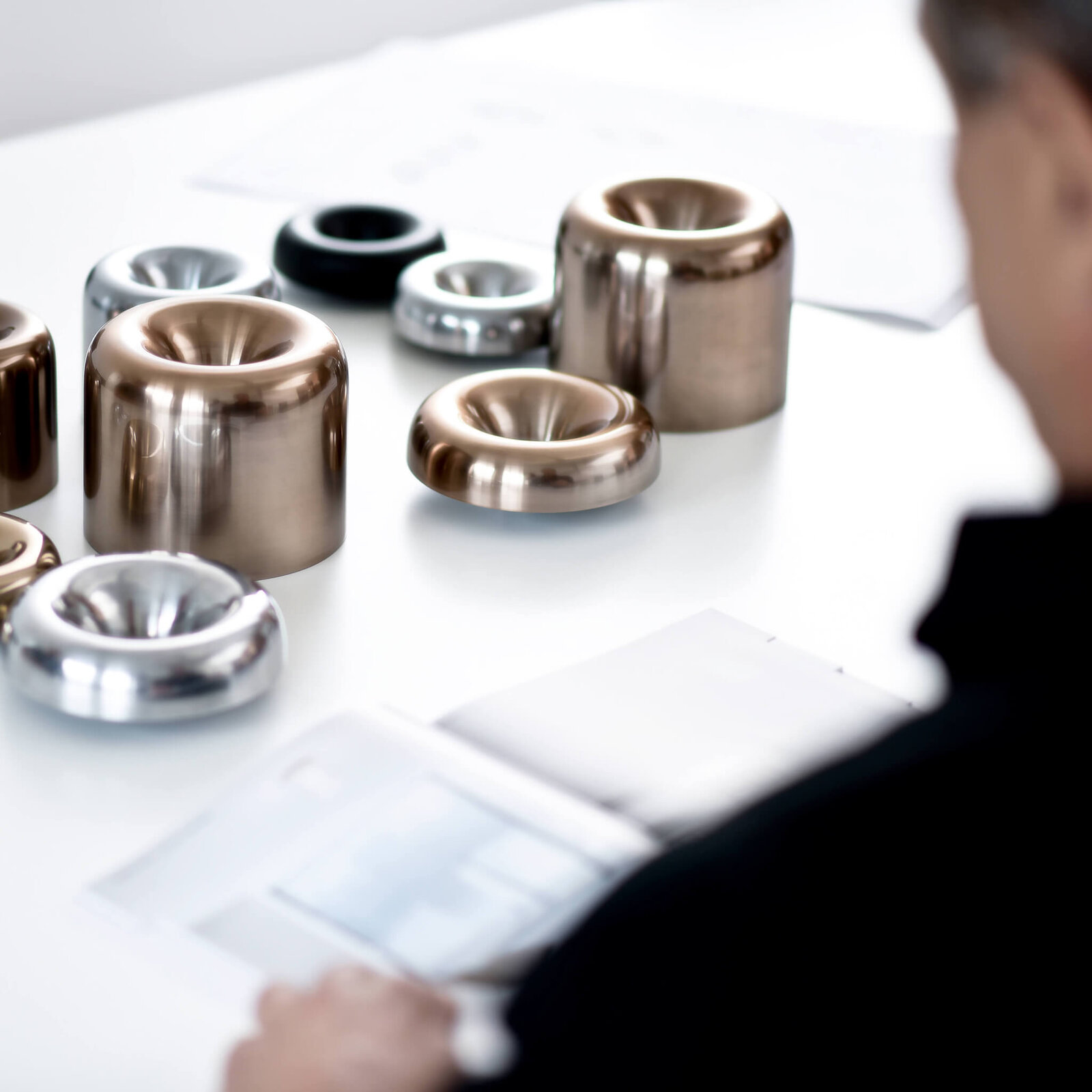
IS LIGHT IN THE HOME JUST LIKE A TIE TO A SUIT?
A tie is a fashion accessory that can emphasise one’s personality or serve as a status symbol. But you can get by just fine without one. An apartment without light, however, is unthinkable: light always has functional, aesthetic and emotional aspects. It can completely define the look of an apartment; it is essential for our well-being and determines our attitude to life. Good lighting in the home is therefore much more than a fashion accessory – it is an essential part of our lives.