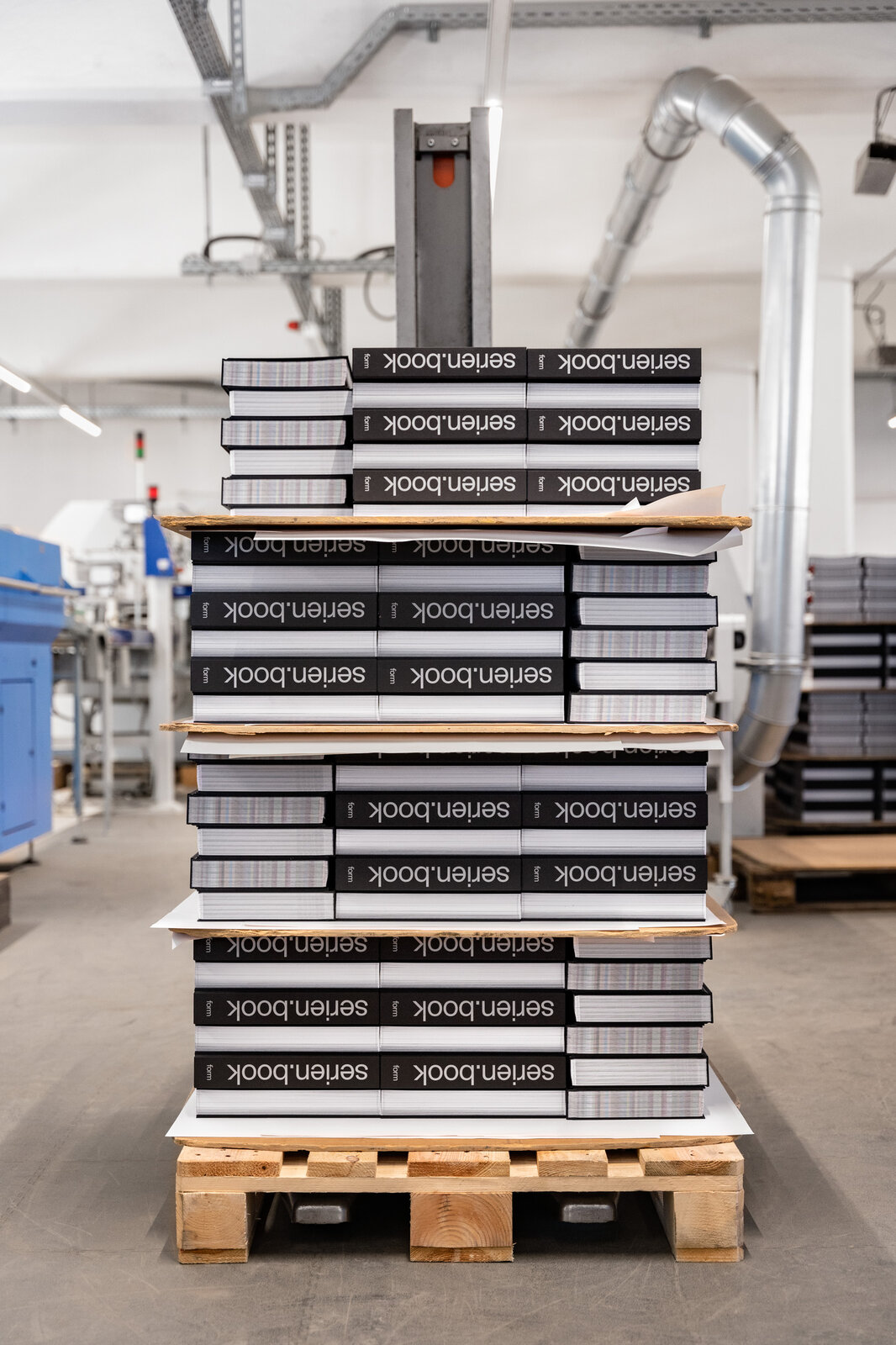
serien.book – Over four decades of luminaire design from Rodgau, Germany

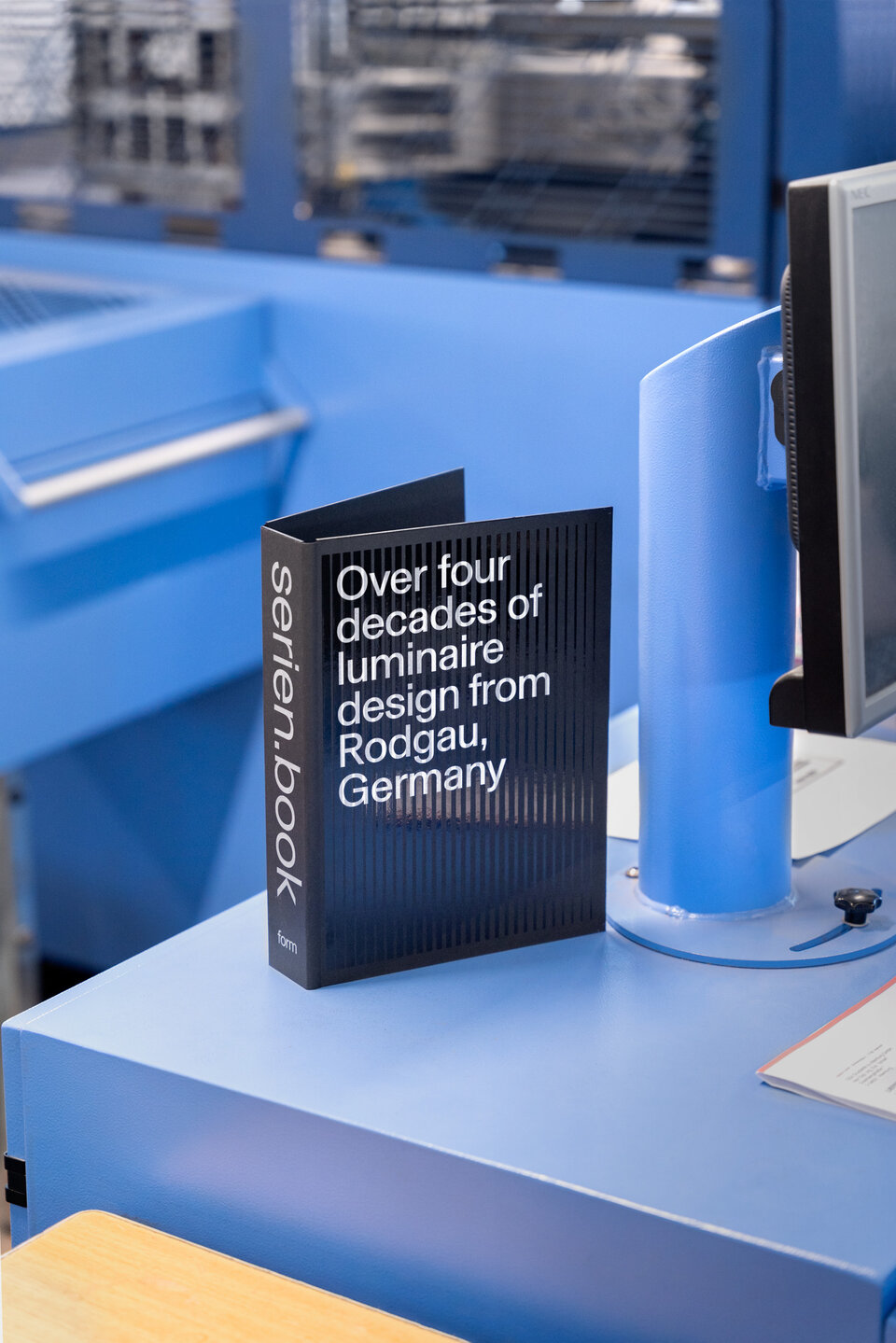
The production of the serien.lighting catalogue involved a combination of unusual materials, specialised printing processes and traditional bookbinding techniques. From the solid-coloured black paper and the separate silver printing to the thread stitching and the hand-finished finishing touches, every stage of production was carried out in close collaboration with the DZA printing works in Altenburg.
production of serien.book @Druckereizualtenburg
Video direction & production: Alex Graeff
Cover photo: @christiandoeller
Sound: Johannes Klingebiel @liveatrobertjohnson
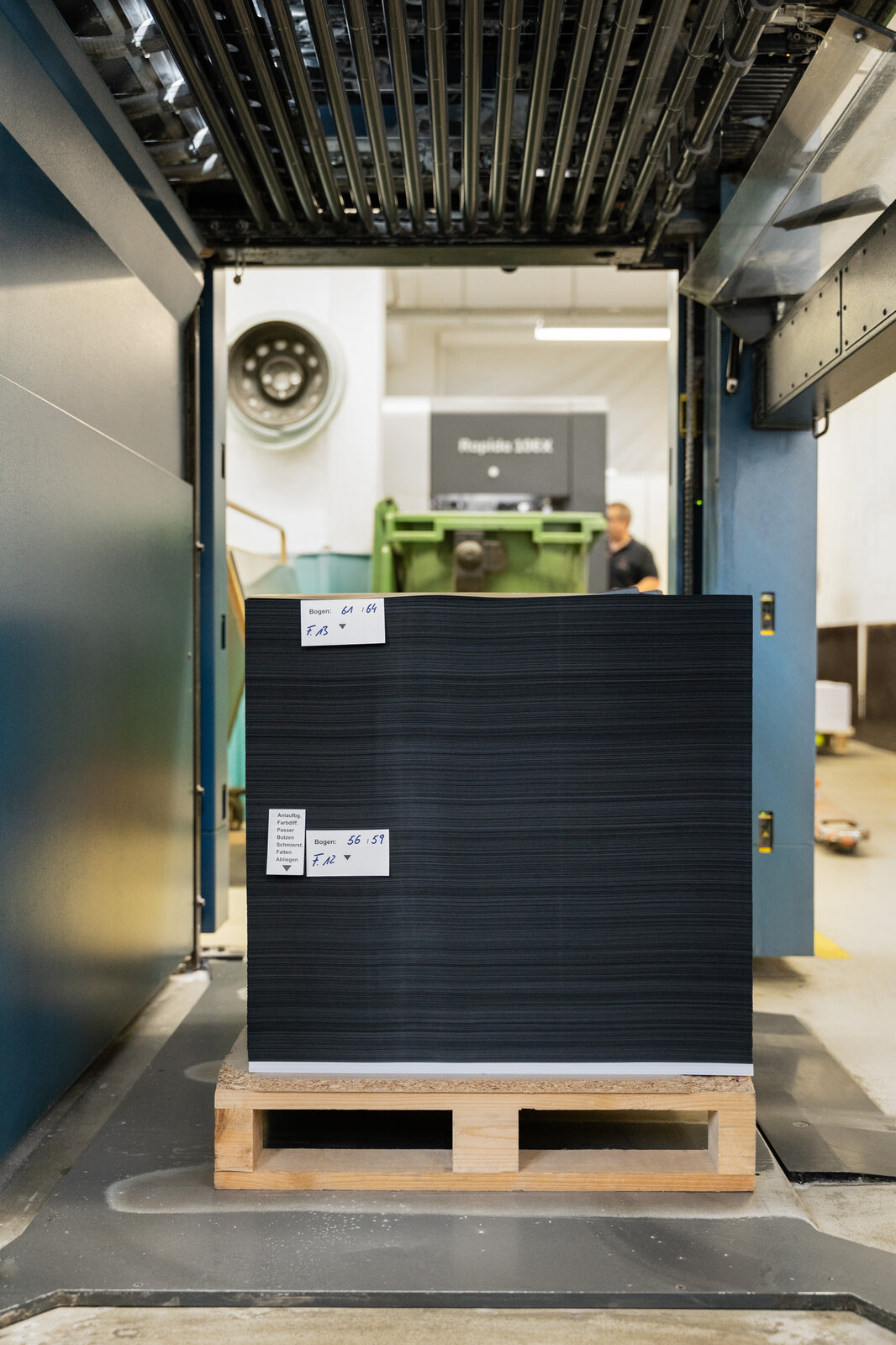
Two different types of paper were used for the book, including a solid-coloured black paper. Unlike paper that is coloured only on the surface, the colour extends all the way through to the cut edges, creating a consistently black appearance throughout.
For the large-format fold-out pages, the required sheet size was not commercially available. The paper manufacturer therefore produced a custom batch specifically for this production.
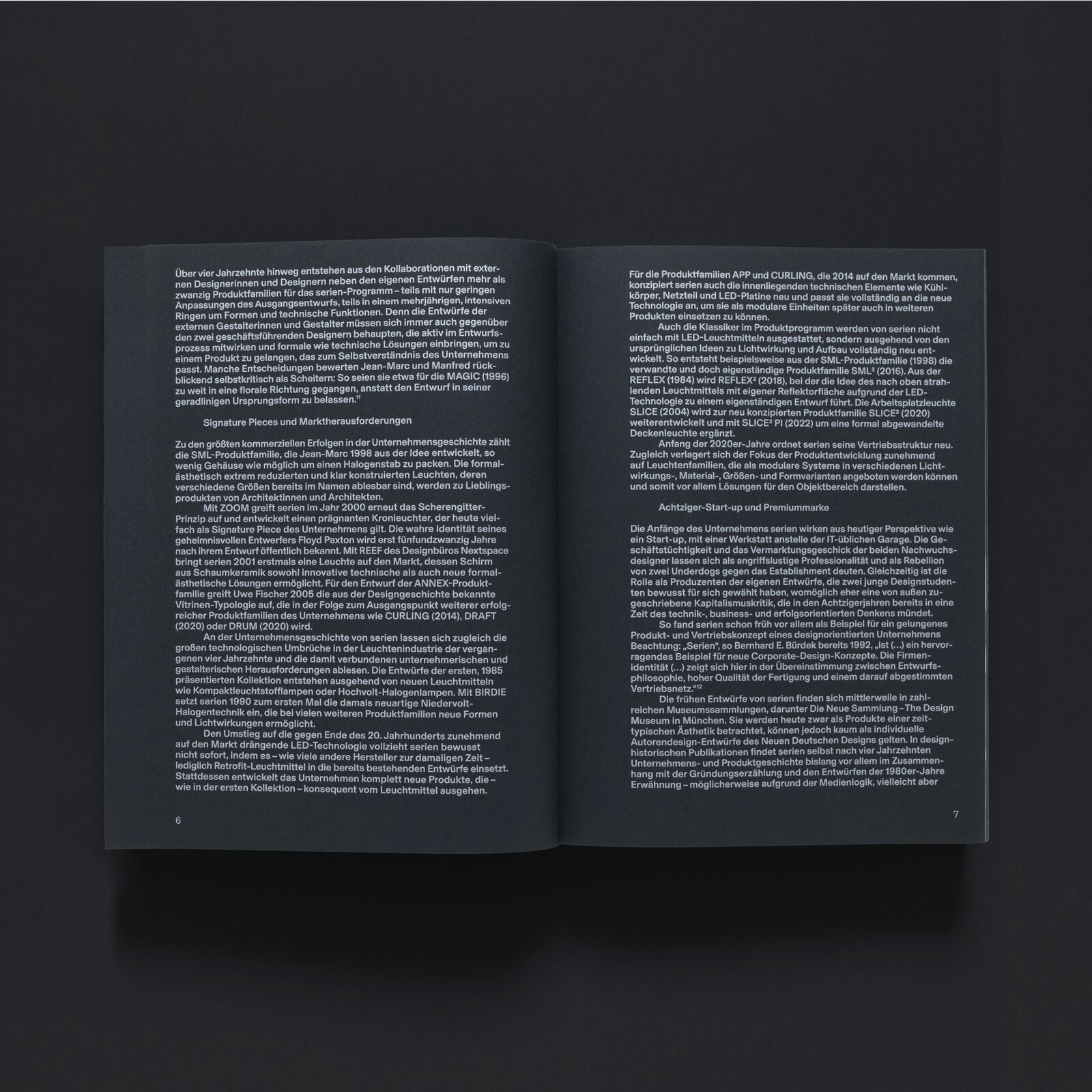
The silver design elements were printed onto the black paper in a separate printing process. The corresponding print data was specifically prepared for this technique.
Separating four-colour printing from silver ink printing allows for precise reproduction of the metallic areas and creates the distinctive contrast between the paper and the printed ink.


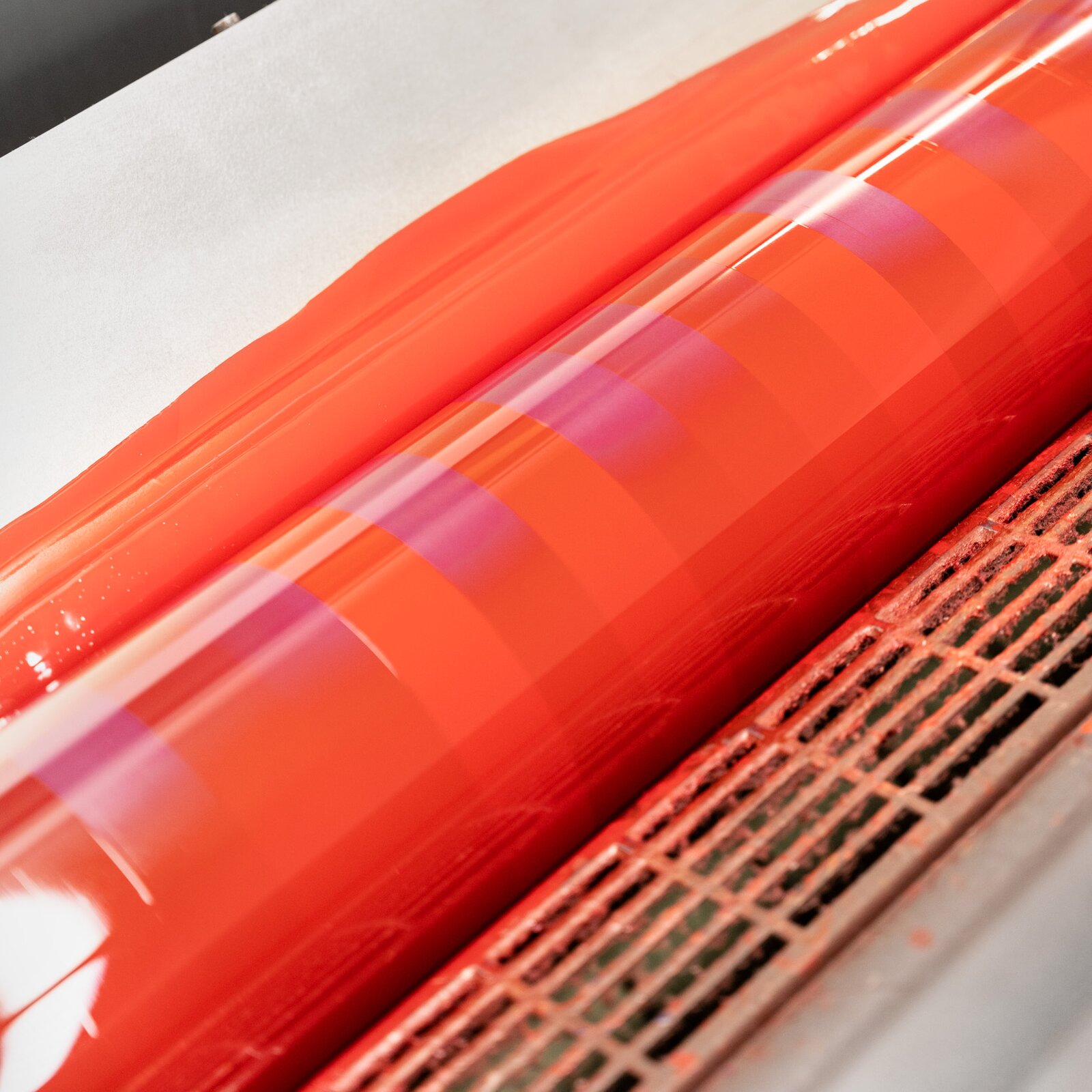
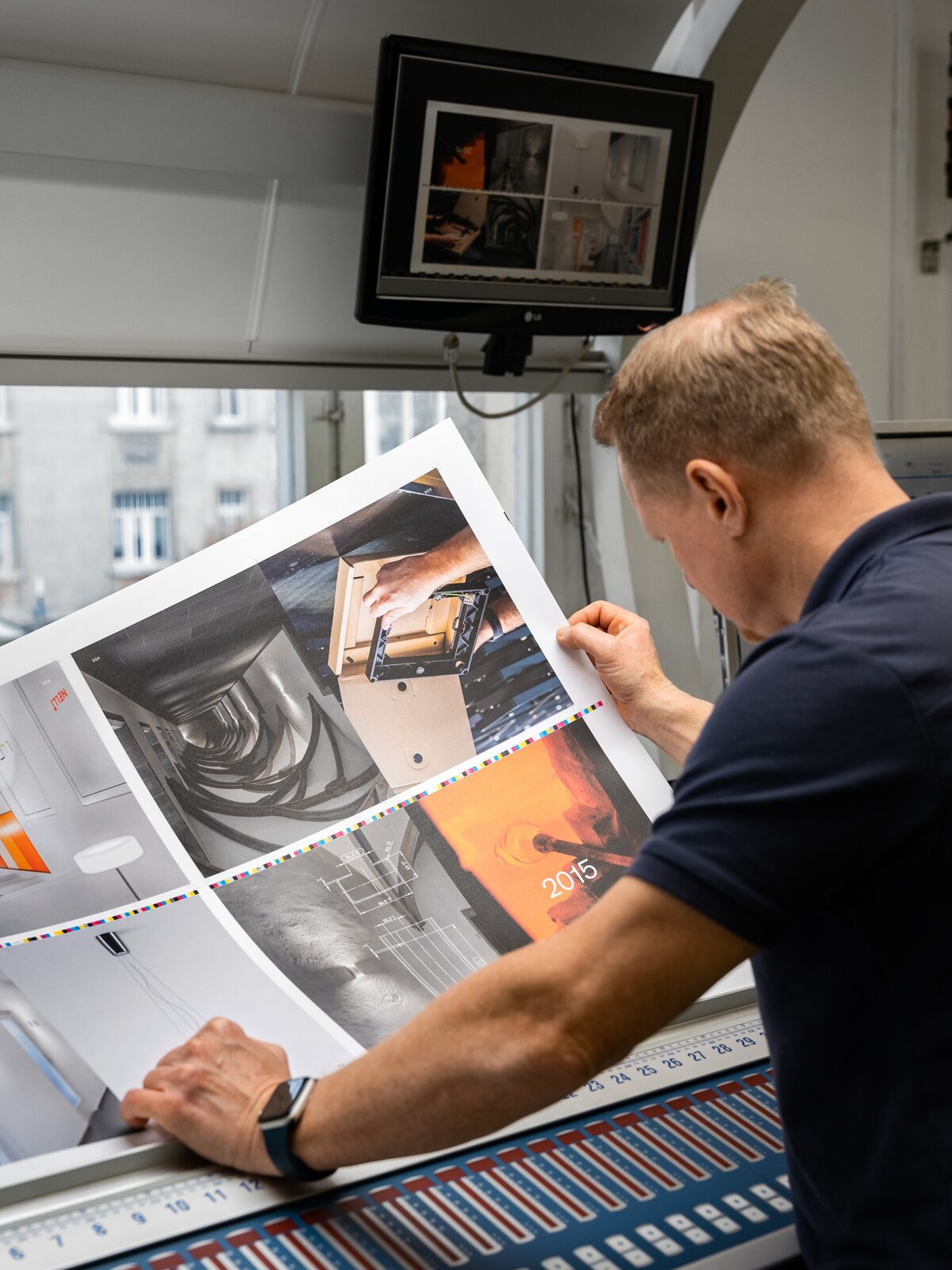
Each press sheet contains 16 pages. At the press console, ink densities are continuously compared against reference proofs under standardised daylight conditions and fine-tuned as required. The full print run only begins once colour reproduction and detail match the proofs precisely.
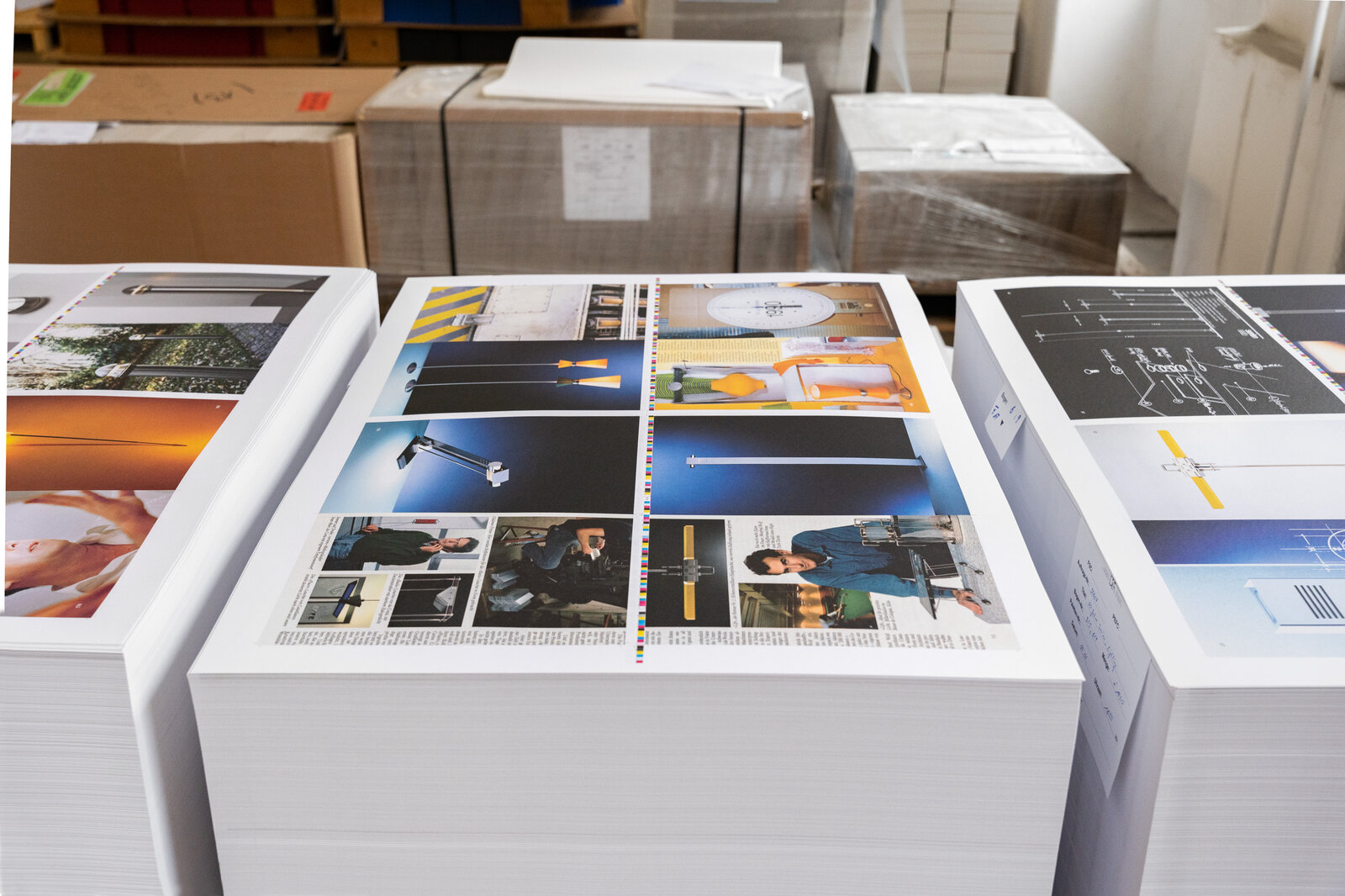
After each printing pass, the press sheets are left to rest for several days before further processing.
Once dry, the press sheets are folded into individual signatures, each typically comprising 16 pages.
After folding, the signatures are loaded into the gathering machine, where they are separated at multiple stations and fed into a transport channel. A conveyor chain collects the folded signatures one by one and assembles them in the correct sequence to form a complete book block.
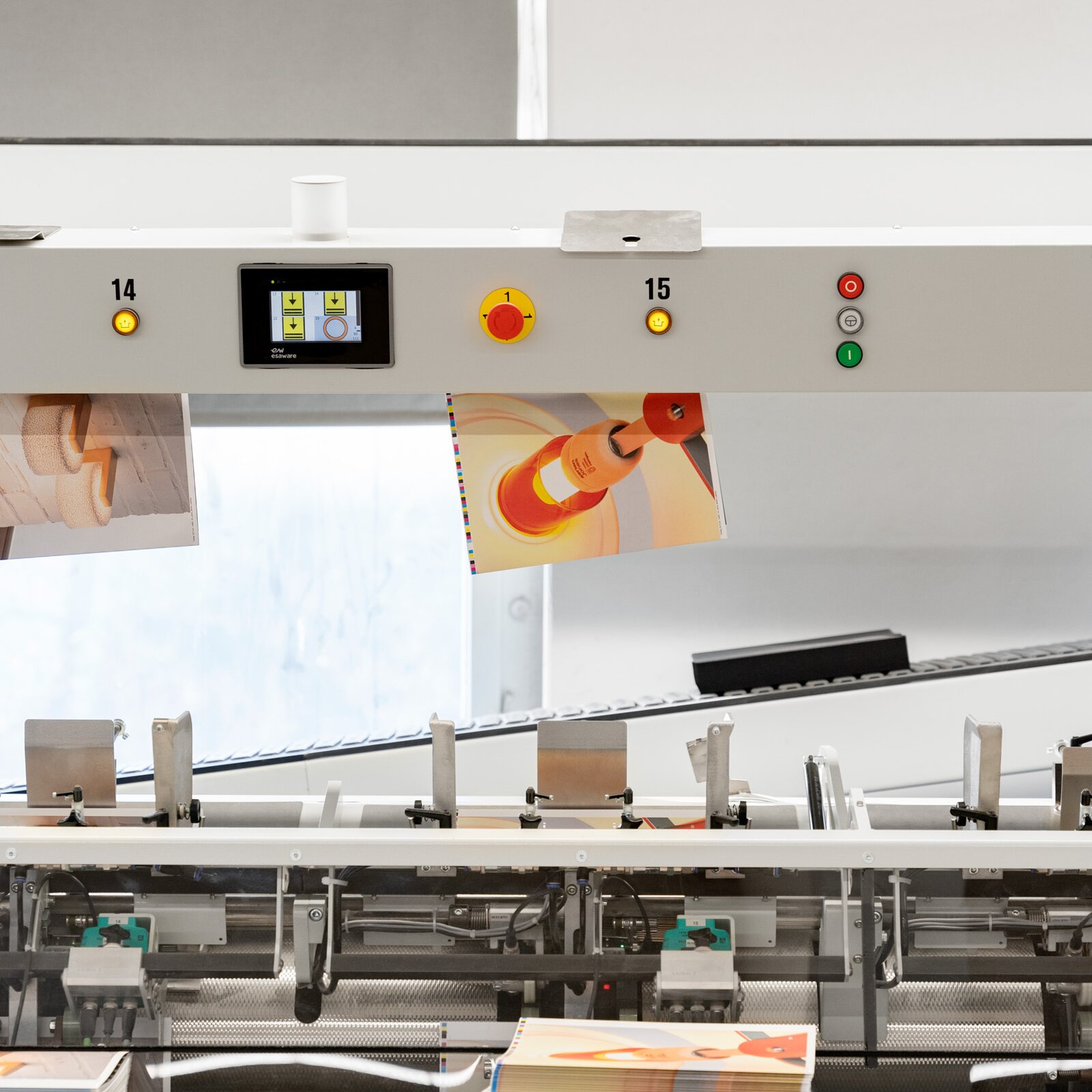
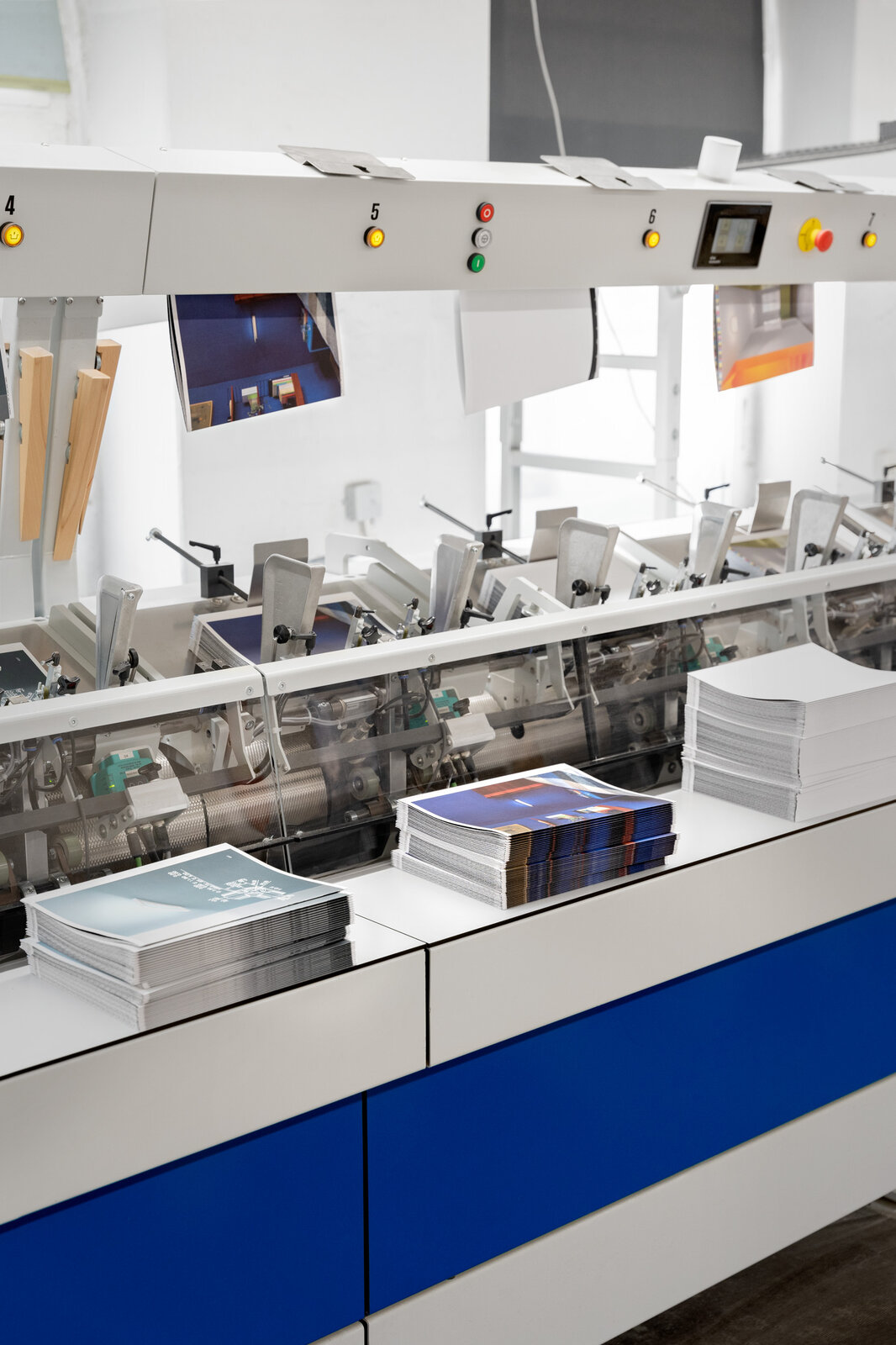
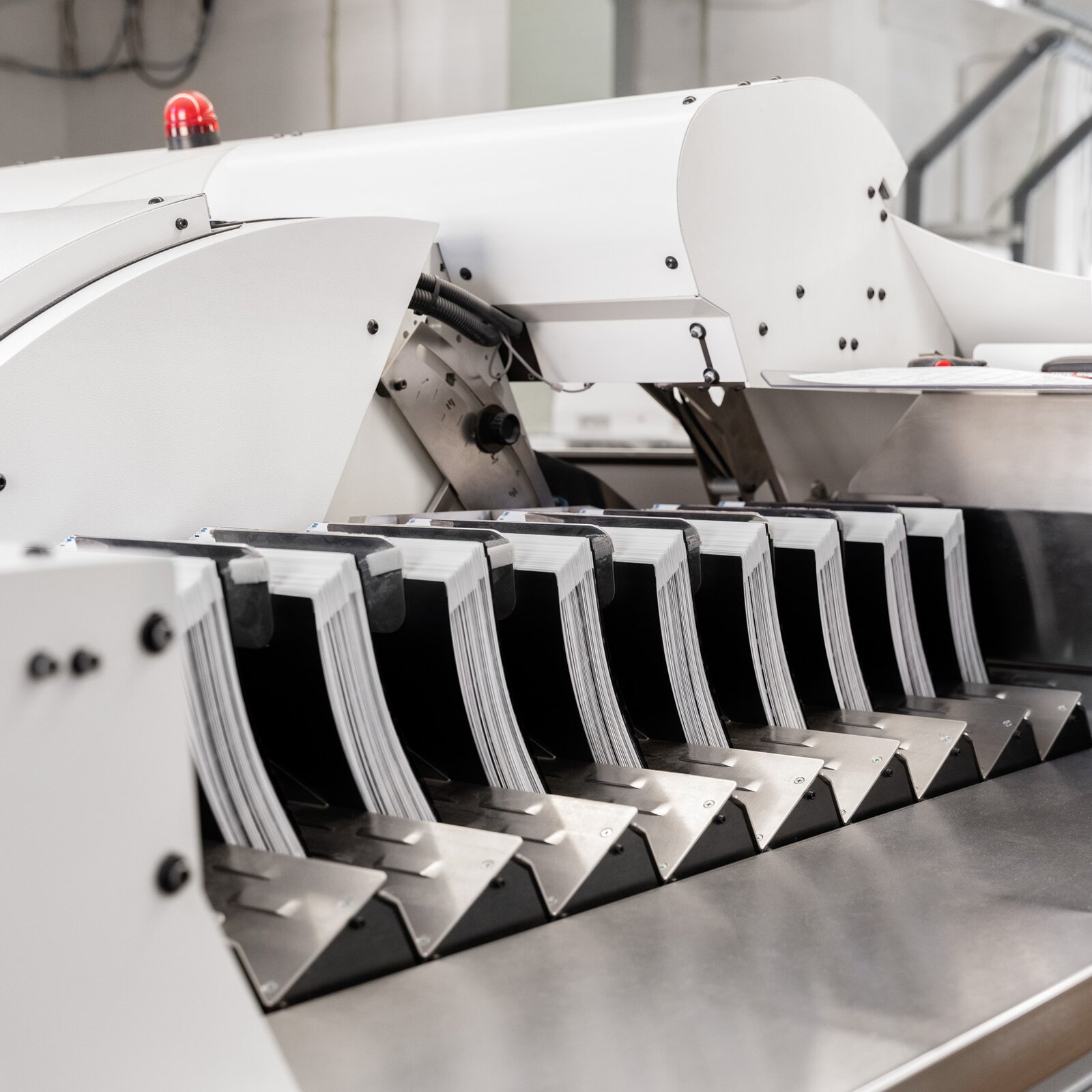
In the shingle feeder, the gathered book blocks are fed into the thread-sewing machine. This type of feeding system ensures that the individual signatures are held under minimal pressure in the magazine, allowing each signature to be removed gently without causing any abrasion to the printed ink.
In the thread-sewing machine, each individual signature is opened at the centre fold. Suction cups and pre-opening devices prepare the folded signatures for the next stage, allowing them to be sewn together precisely with thread.
This binding technique creates a durable connection between the individual signatures and allows the book to open and lie flat with ease.
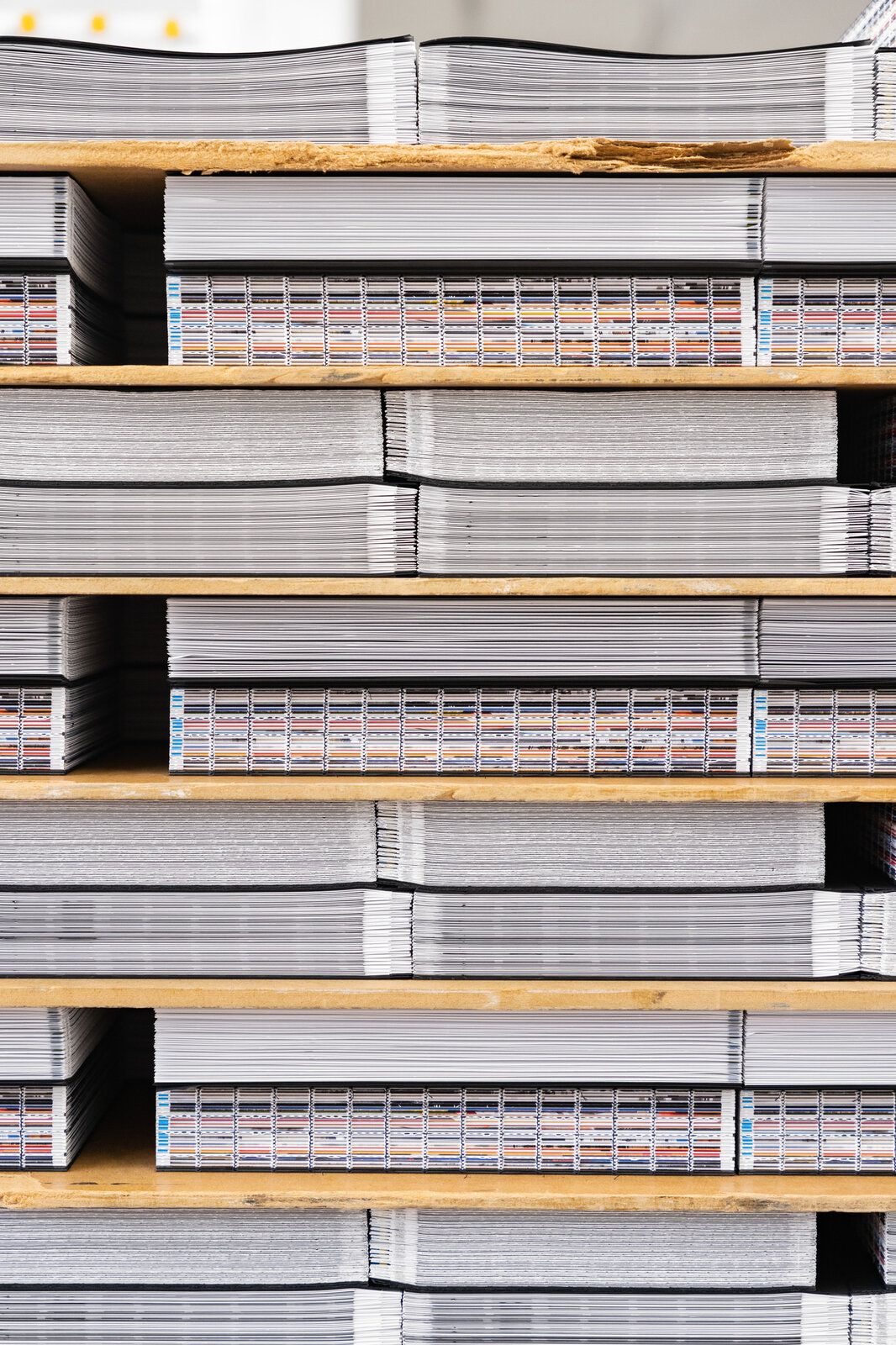
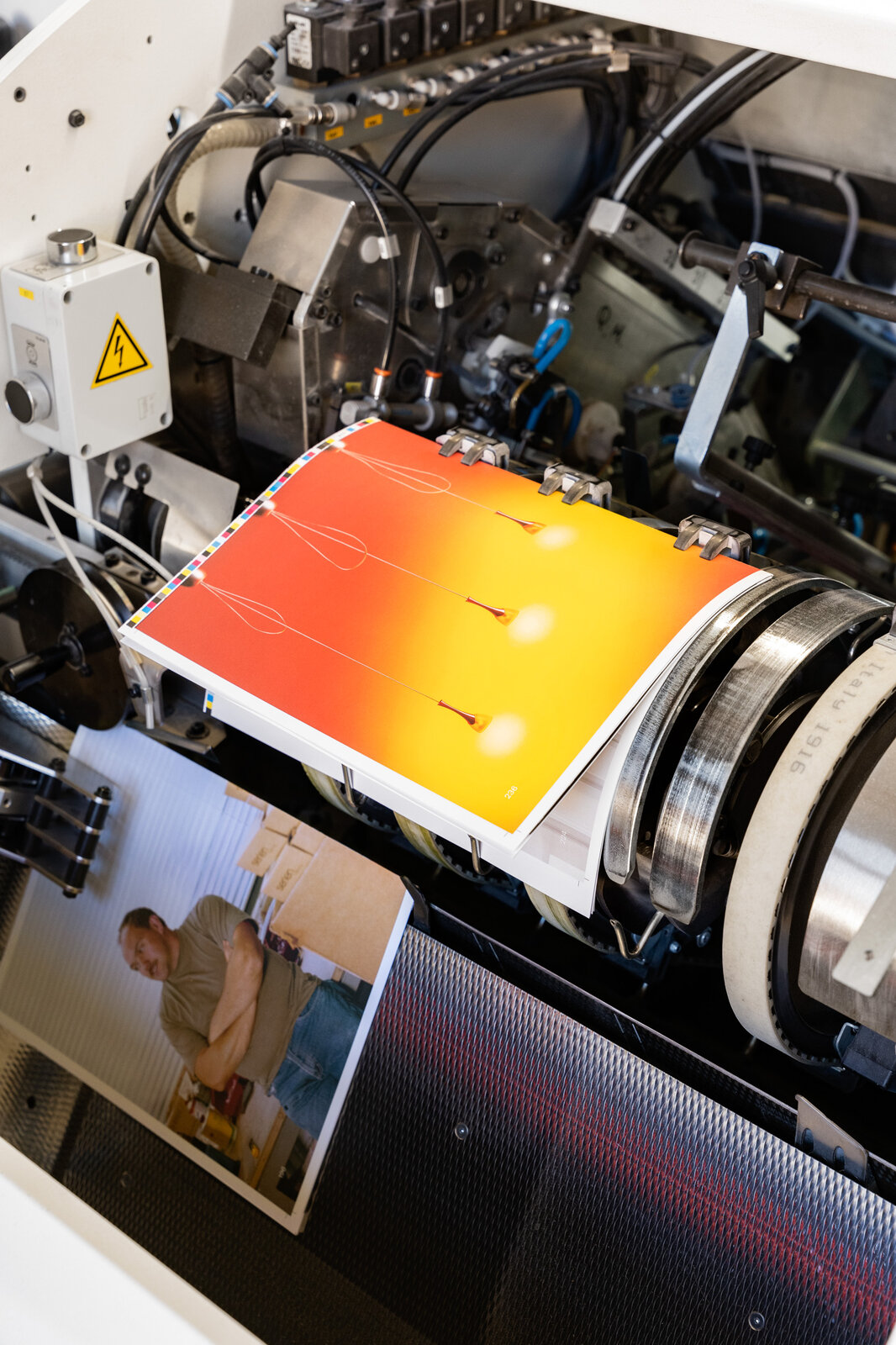
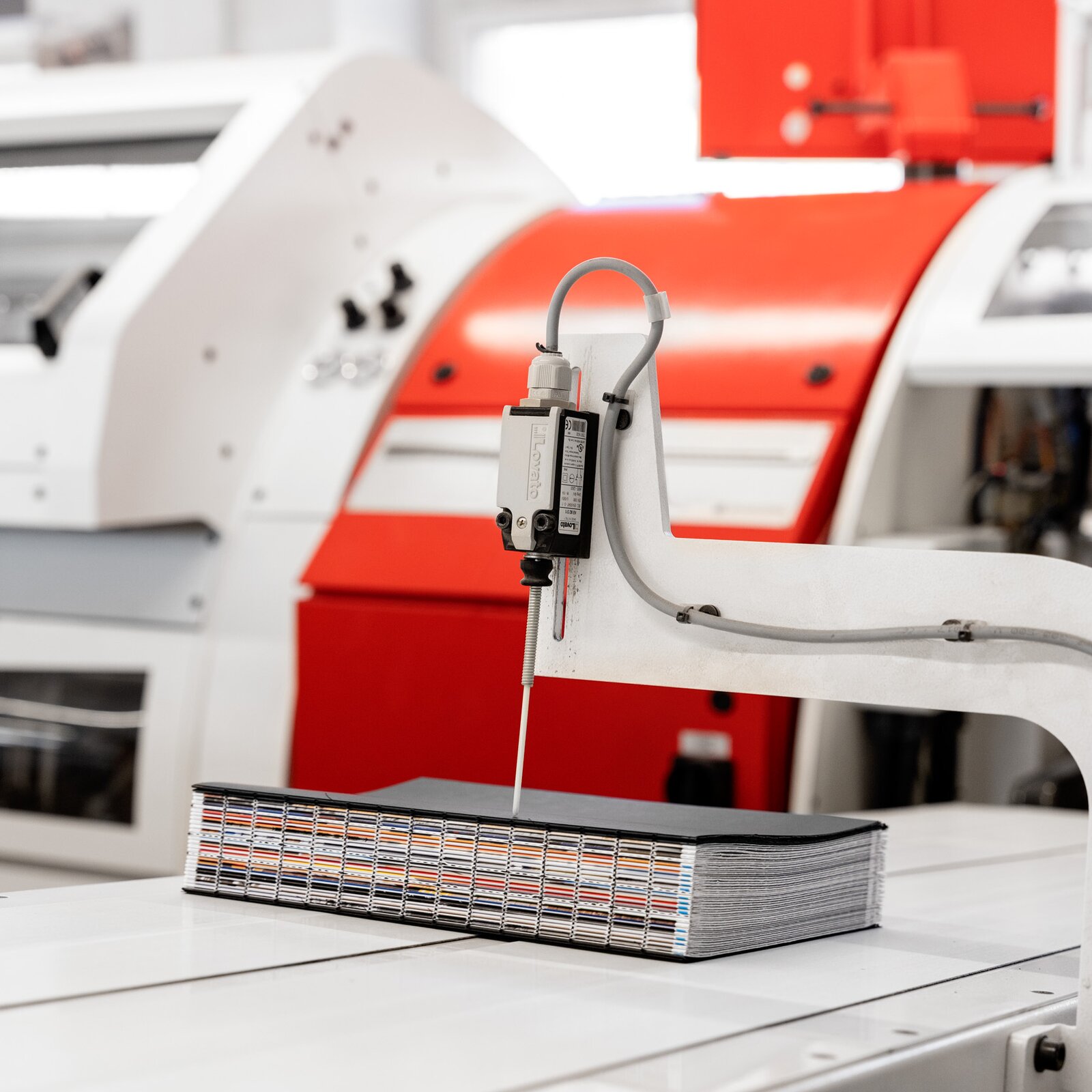
After thread sewing, the signatures form a complete book block. In the next step, the spine is pressed to achieve a uniform thickness along its entire length. This provides the basis for further processing and for subsequently casing the book block into the cover.
After thread sewing, the book block undergoes further processing on the perfect-binding line. Glue rollers apply adhesive to the spine, while side-gluing discs apply adhesive along the sides of the book block. A black cloth spine lining is then applied and pressed firmly onto the spine.
This process provides additional stability to the book block and prepares it for casing into the cover.
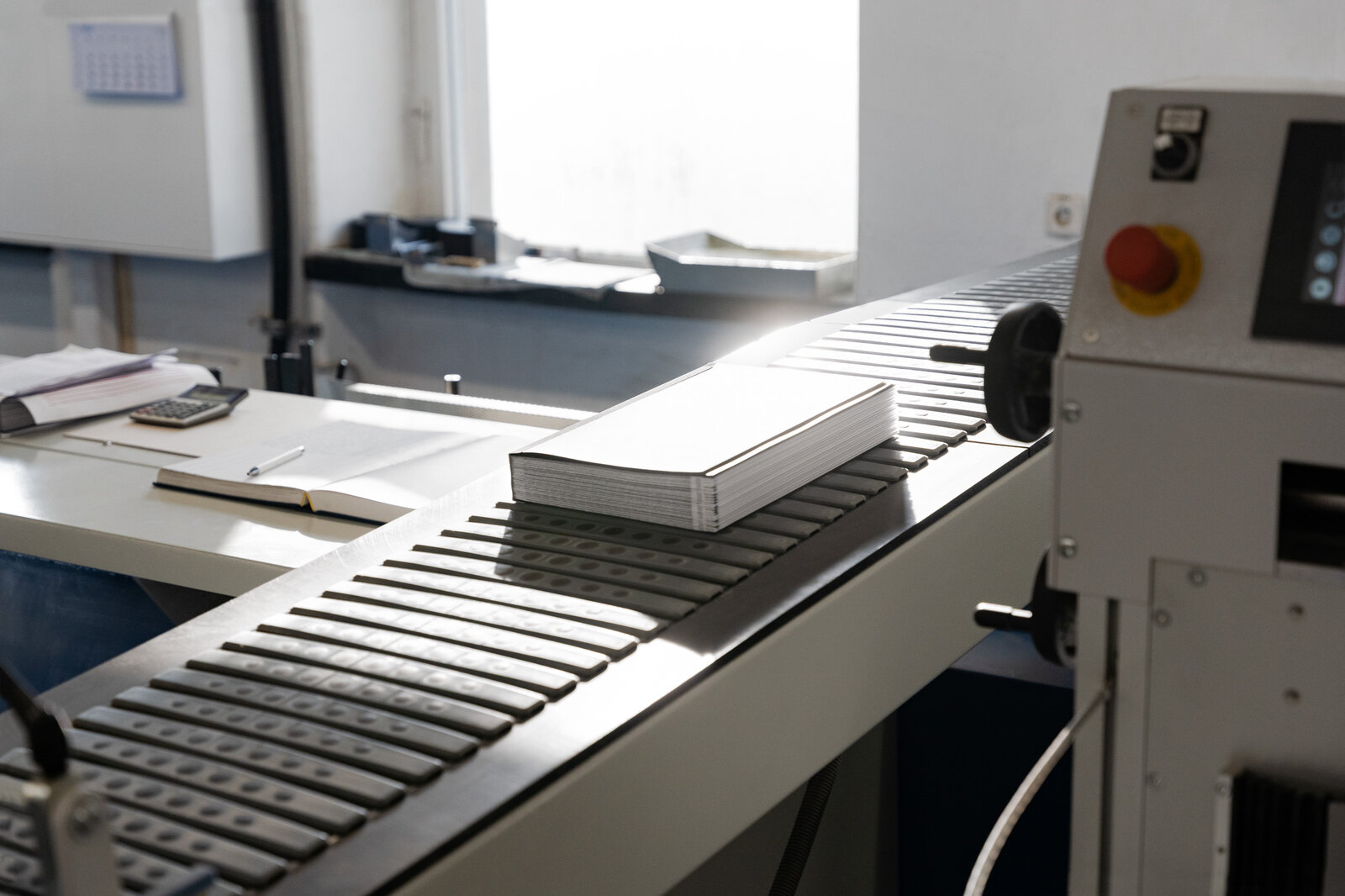
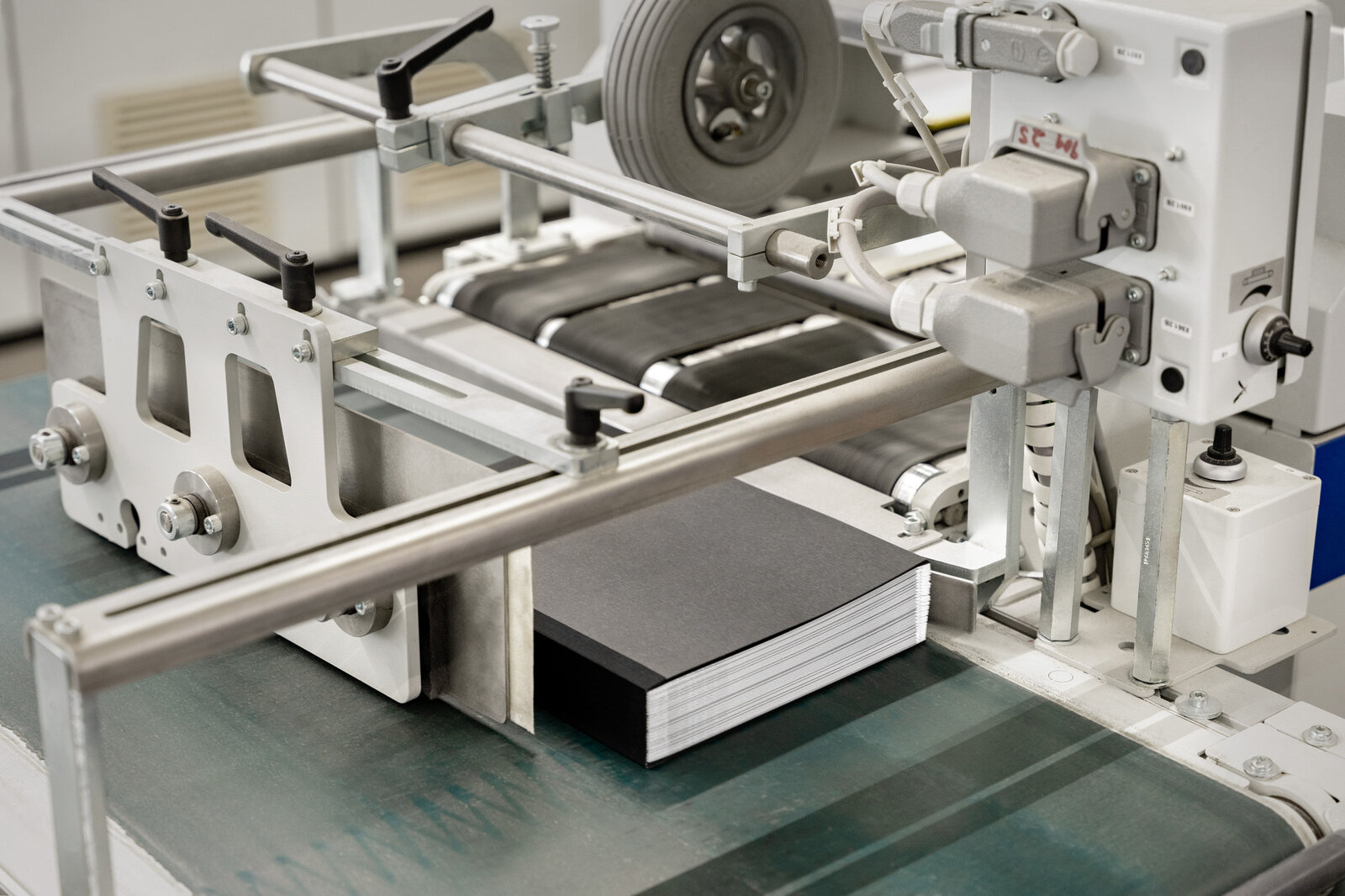
In the three-knife trimmer, the book block is trimmed on three sides to its final format. The precisely cut edges prepare the book block for subsequent casing into the cover and give the book its clean, finished appearance.
The book cover is produced in a separate manufacturing step. Black cover boards are combined with the printed covering material to form the book’s sturdy outer case. For the serien.book, solid-coloured black board was used throughout.
The mirrored inner covering of the case—made possible by three-sided flush trimming—further reinforces the construction and increases its durability.
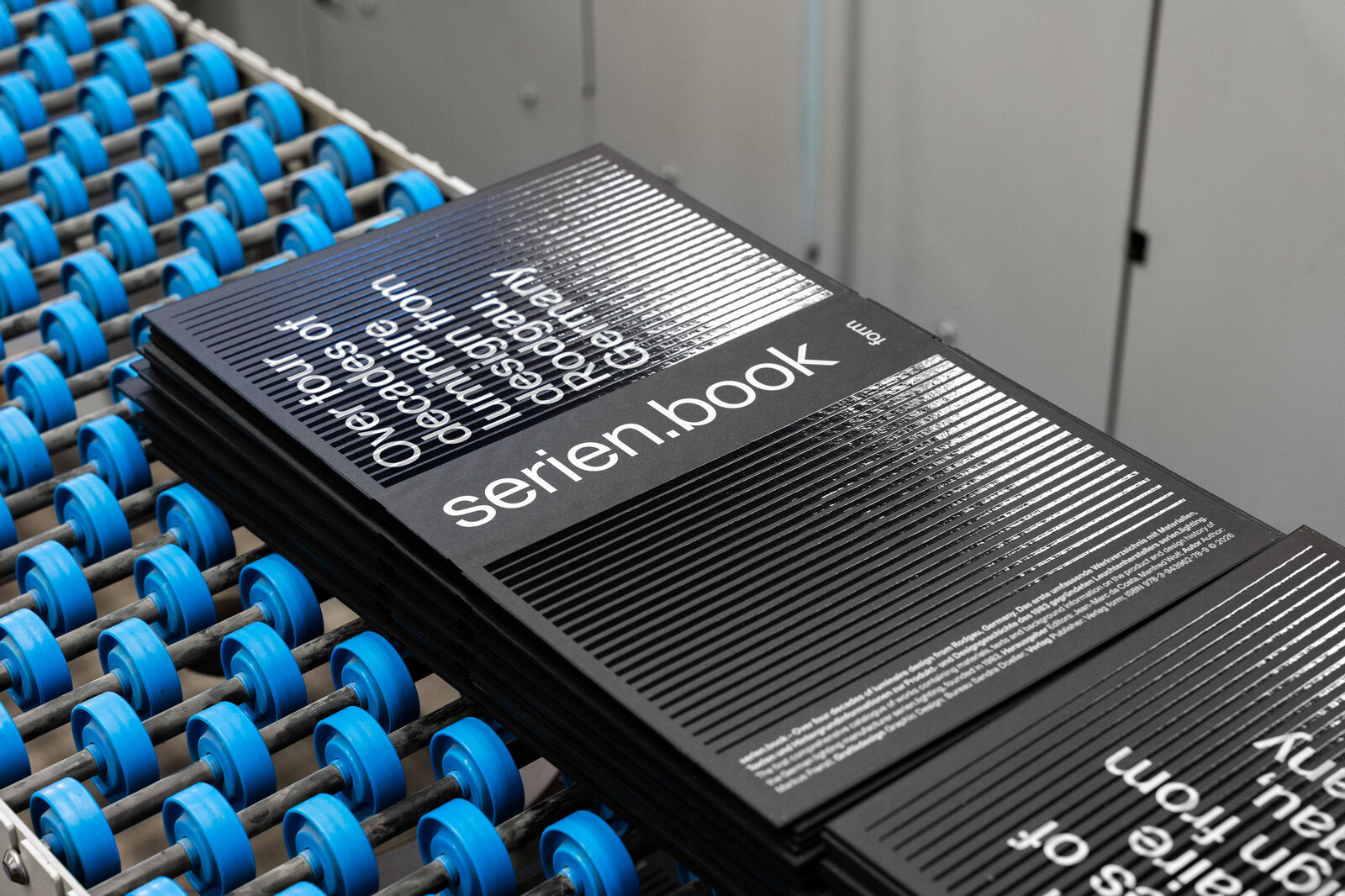
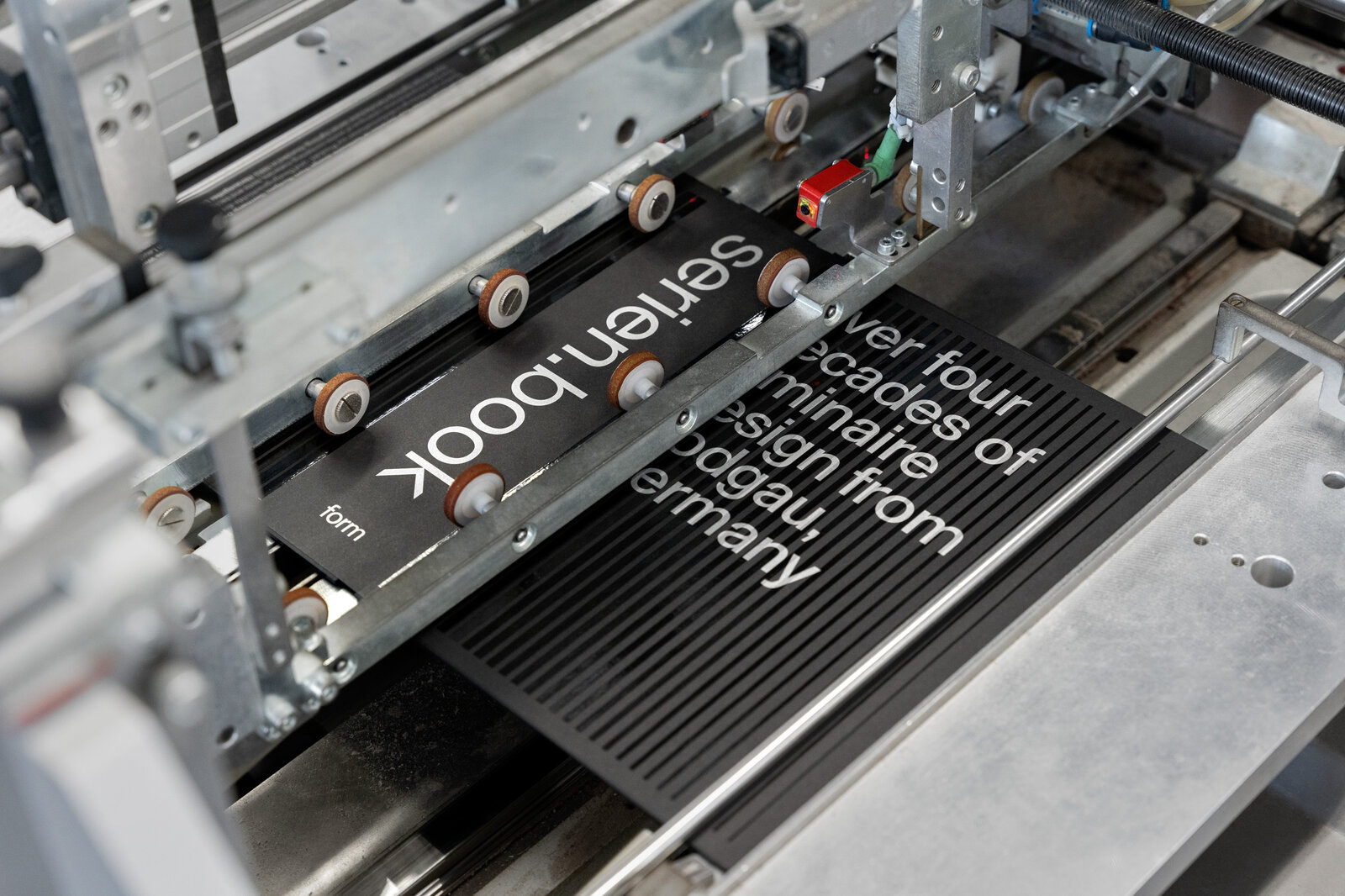
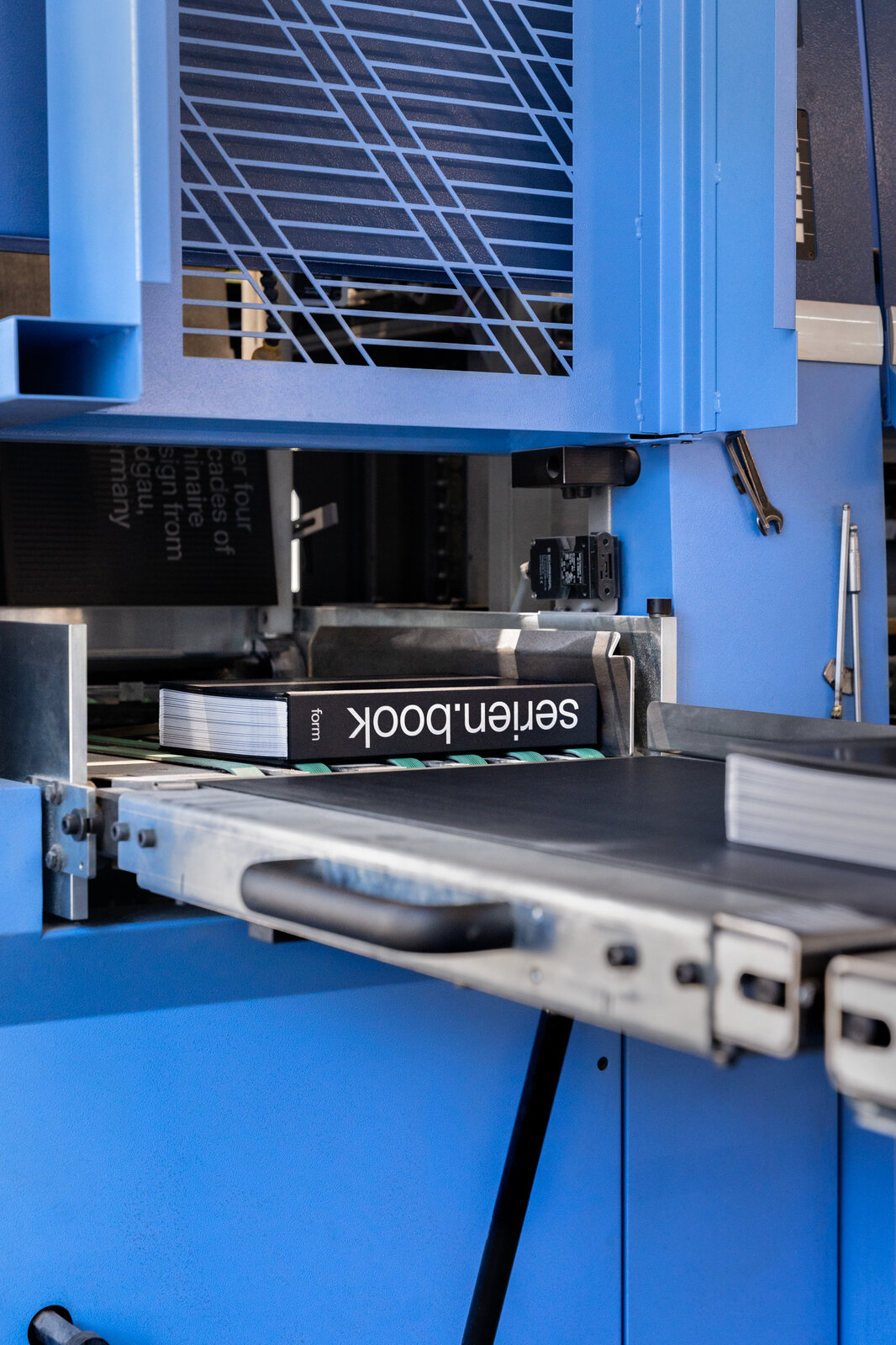
In the final stage of book production, the book block and cover are joined together. The fully prepared book block is precisely cased into the cover and permanently bonded in place. This final step completes the book.
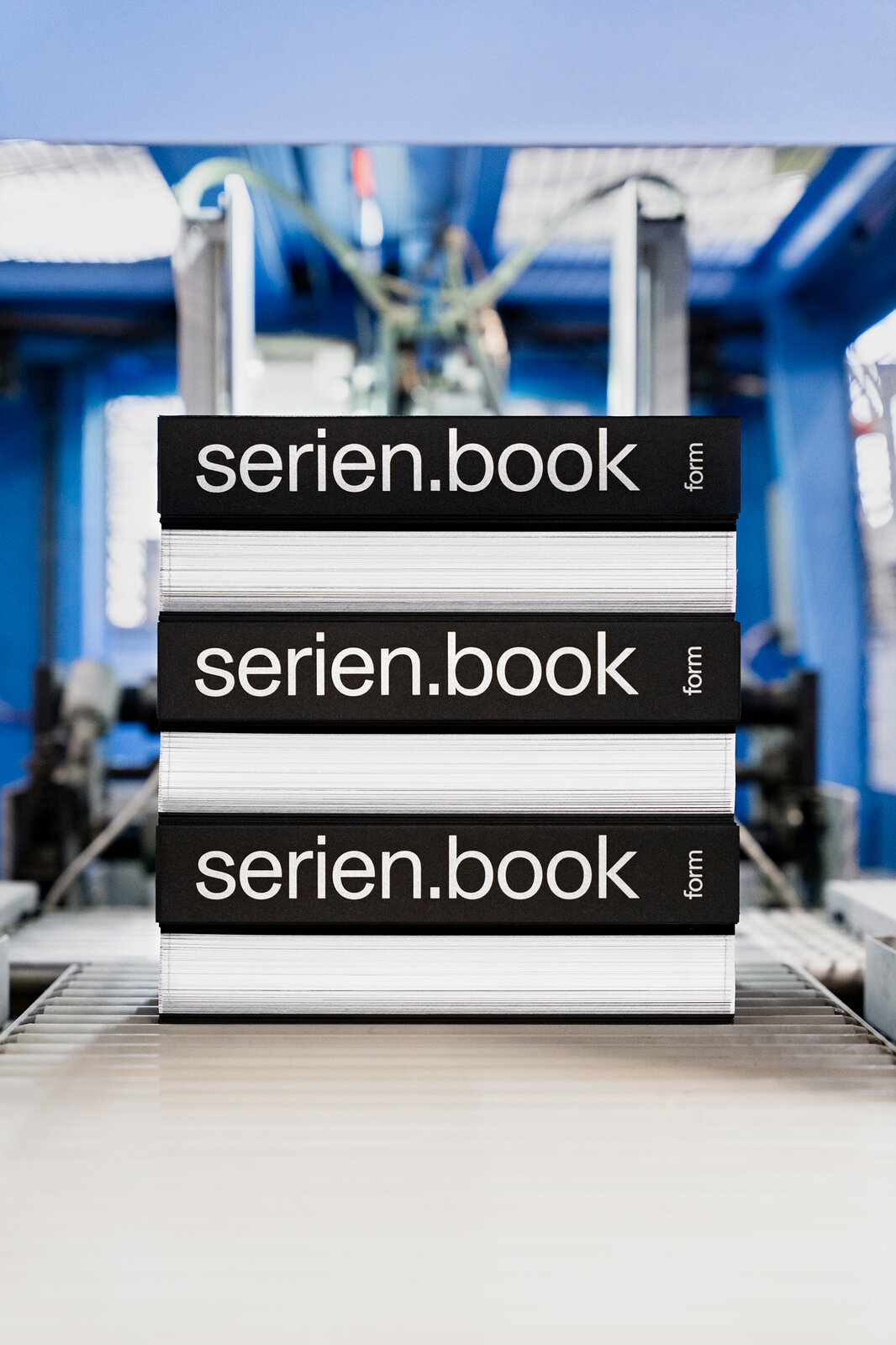
serien.book was produced by DZA Druckerei zu Altenburg. For more than 430 years, the printing house has specialised in producing high-quality art books and exhibition catalogues. Printing, finishing and bookbinding are all carried out at a single location, allowing every stage of production to be closely coordinated and directly monitored.
Despite the use of state-of-the-art technology, the expertise of the people involved remains essential. They oversee the entire production process, inspect the print results and apply their craftsmanship to ensure that every detail meets the highest standards of quality.
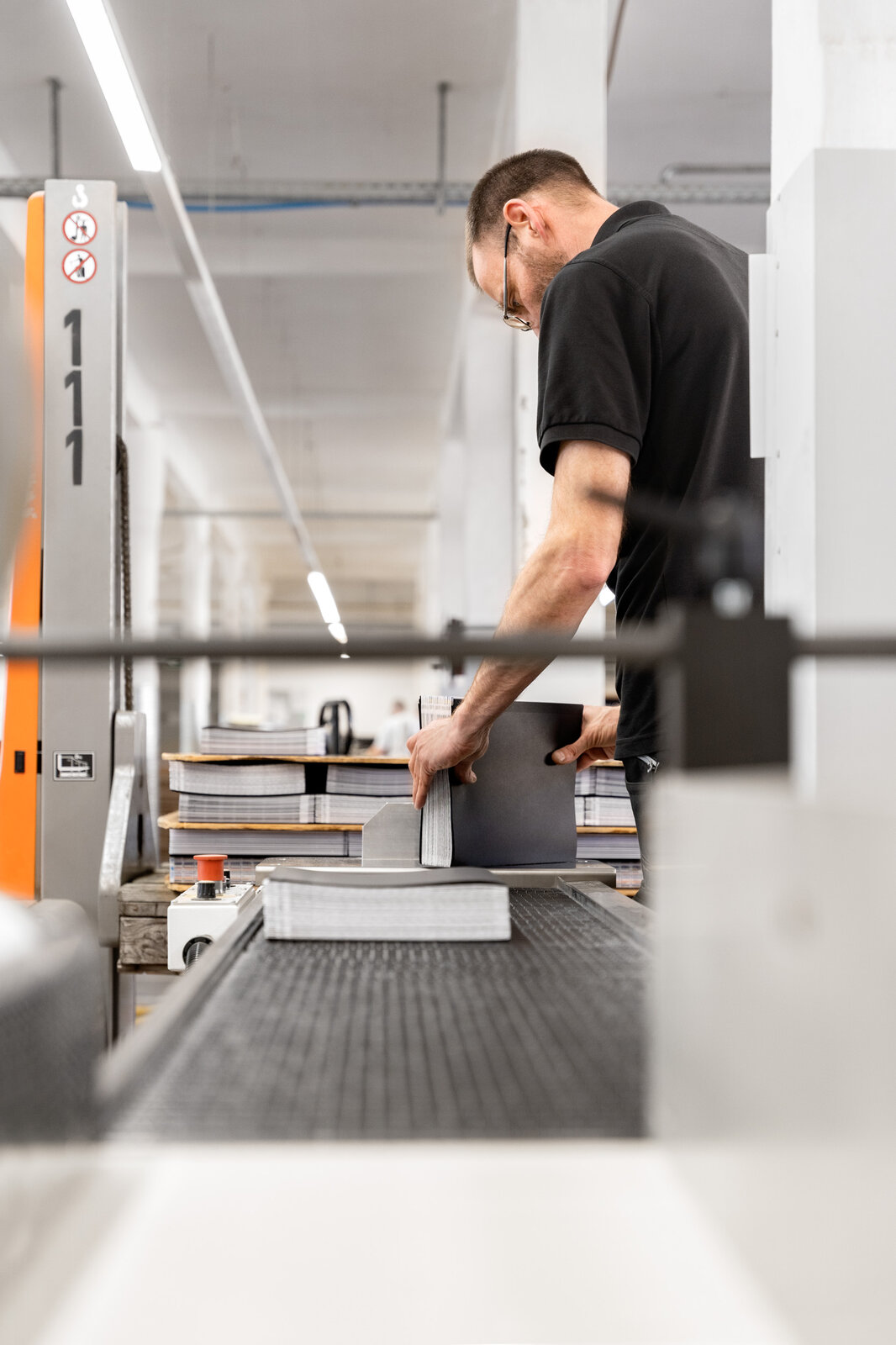
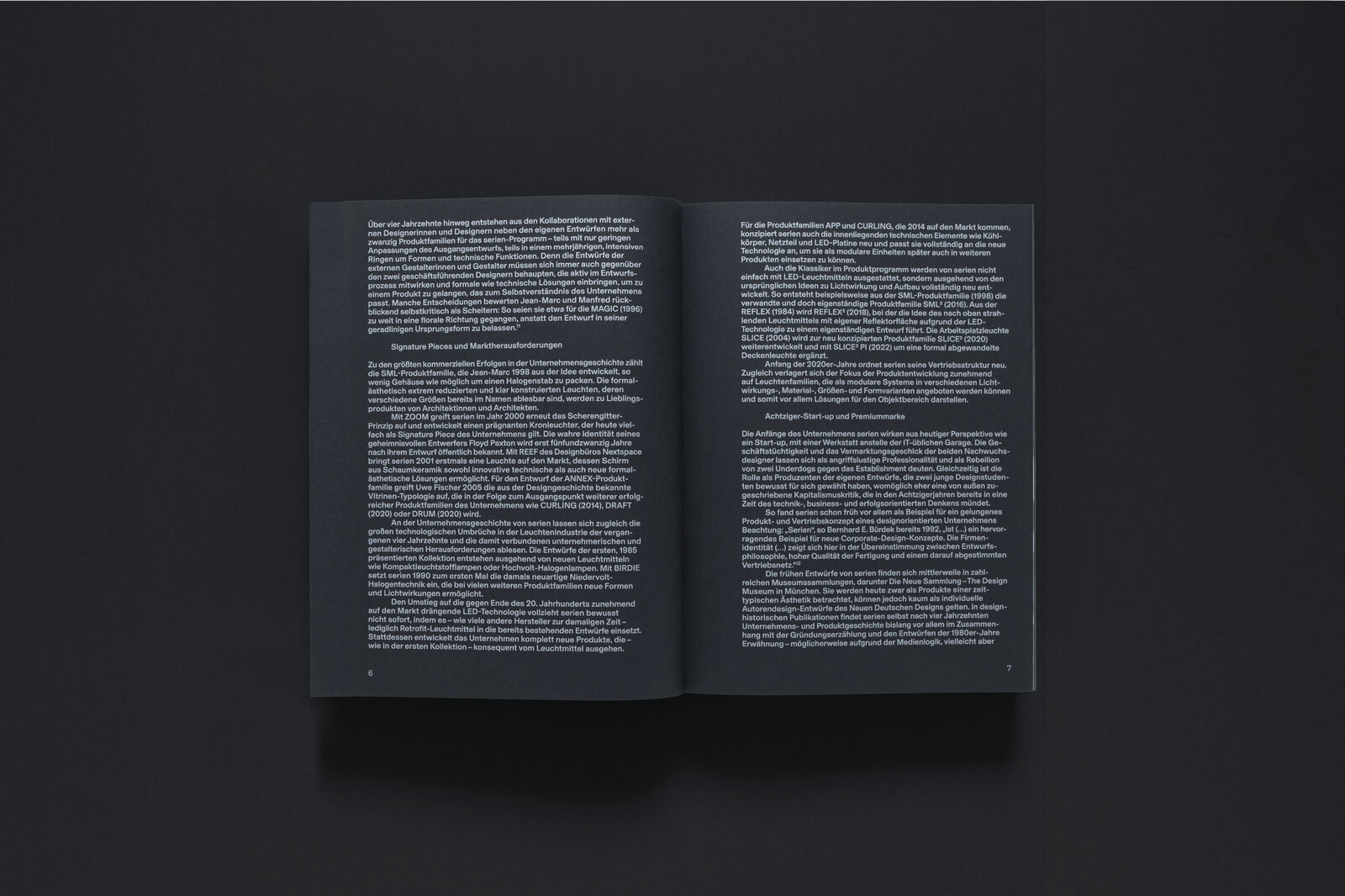
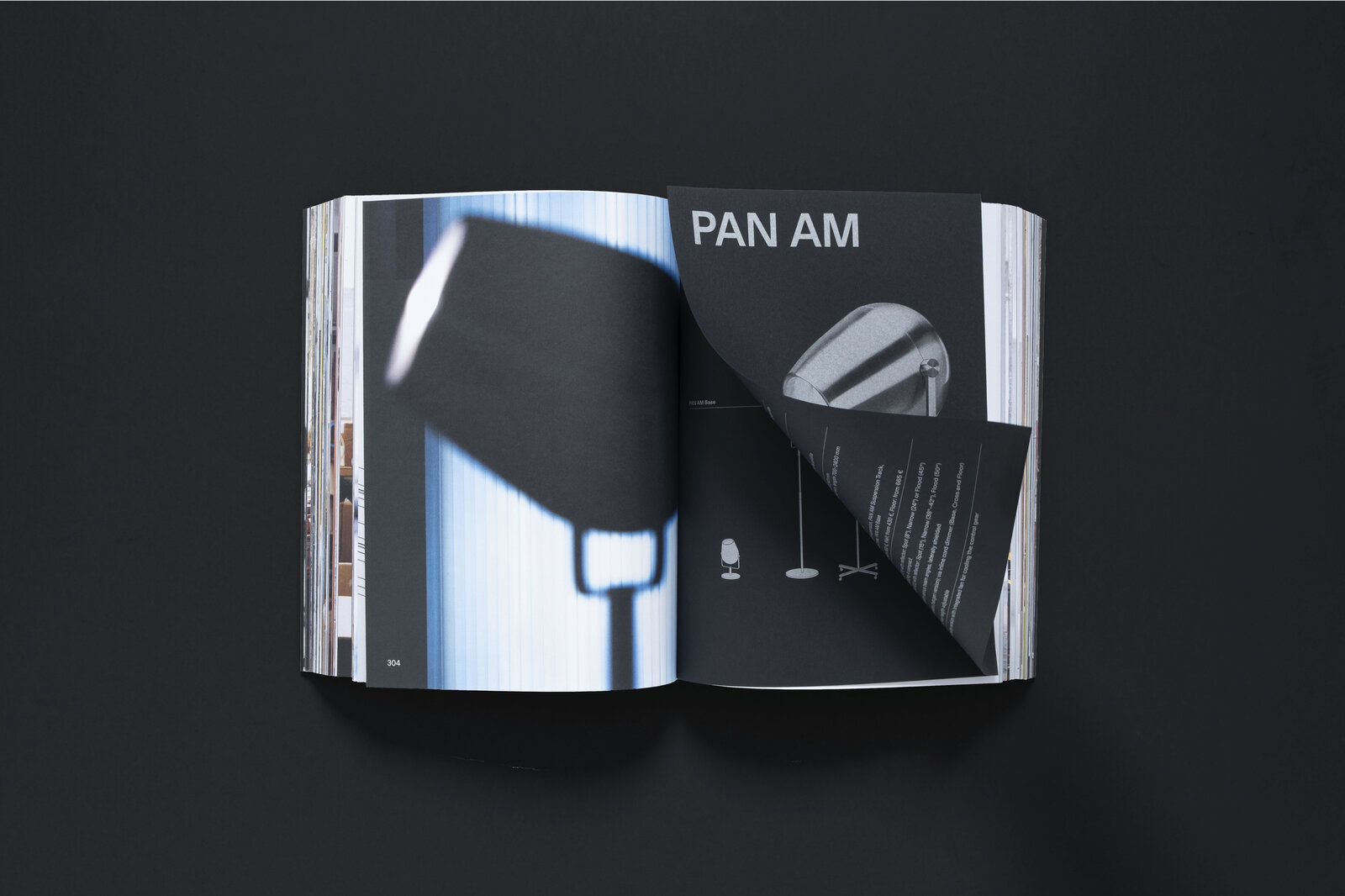
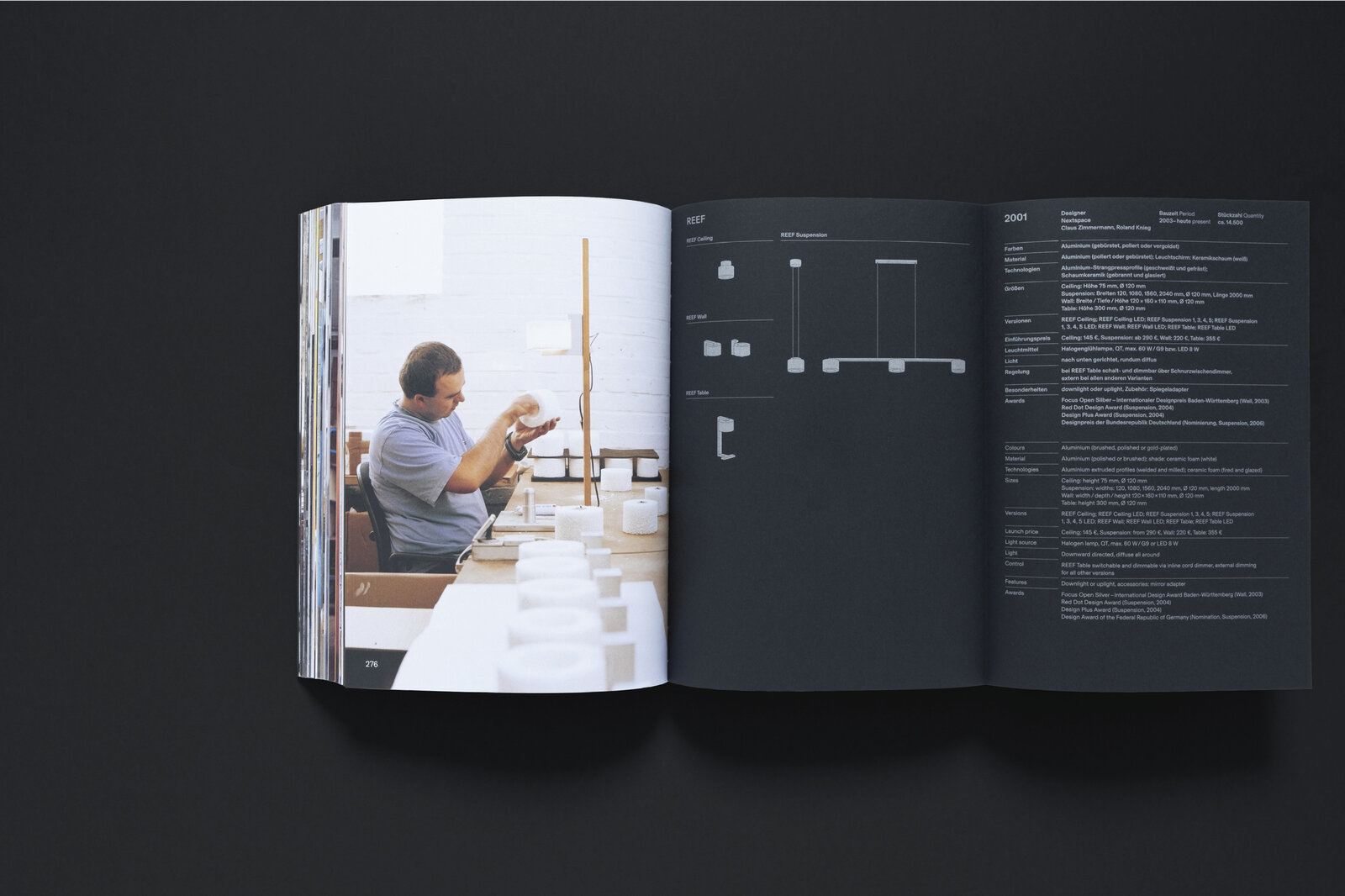
For the first time, serien.book comprehensively documents the full history of serien.lighting in a complete catalogue of works – not only the evolution of its luminaires, but also the people, ideas and decisions that have shaped the company.