Fertile Ground for World Design Capital
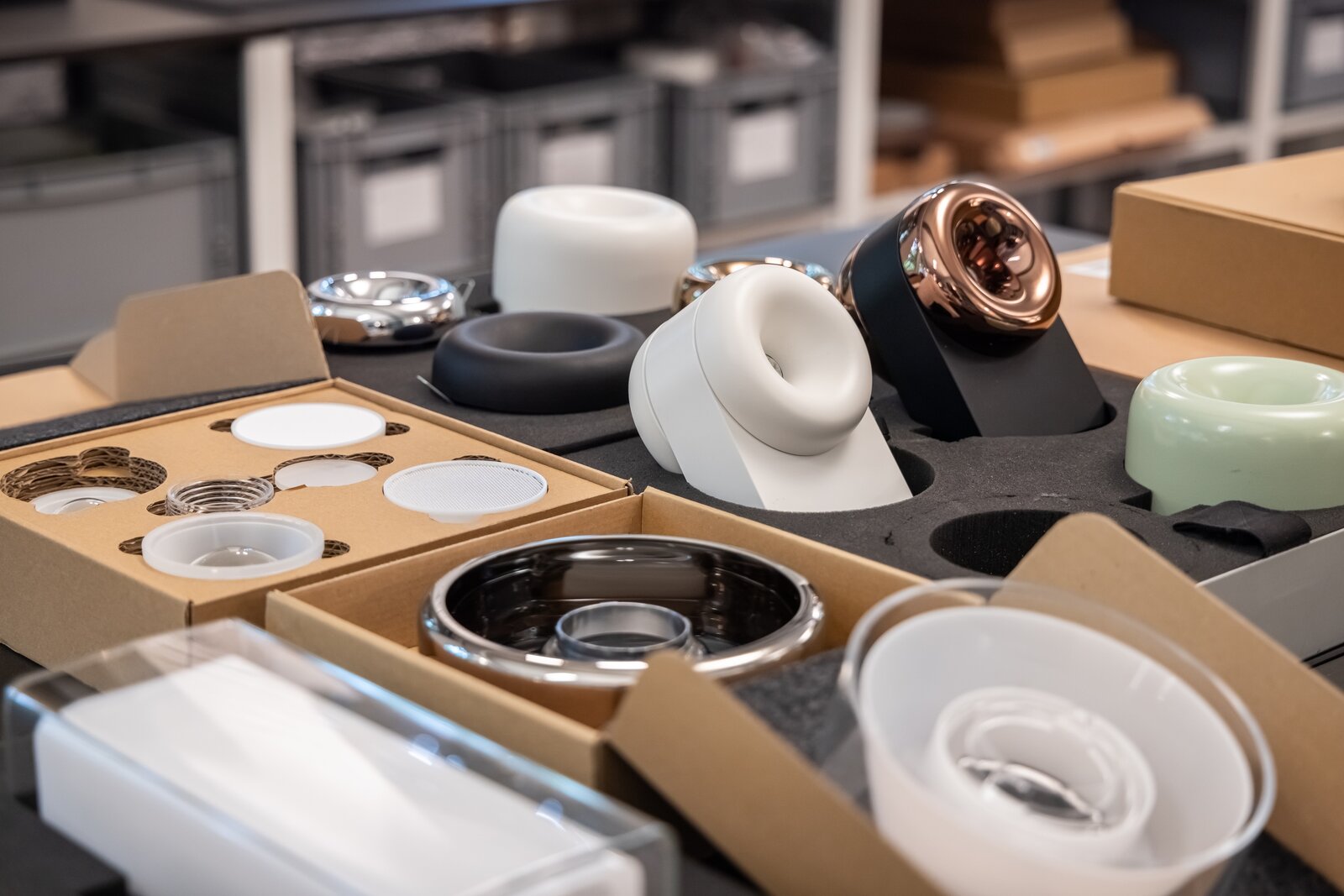
For its 40th anniversary, the serien.lighting team brought a number of treasures out of the archives. A highlight of the celebrations was the “In Serien” exhibition at the Museum Angewandte Kunst in Frankfurt, which presented both current and historical designs. The company’s history is closely intertwined with the region’s design scene. serien.lighting is a good example of why Frankfurt Rhine-Main provides such fertile ground for design companies – something that will become particularly visible in 2026, when the region hosts the World Design Capital programme.
Working with Metal
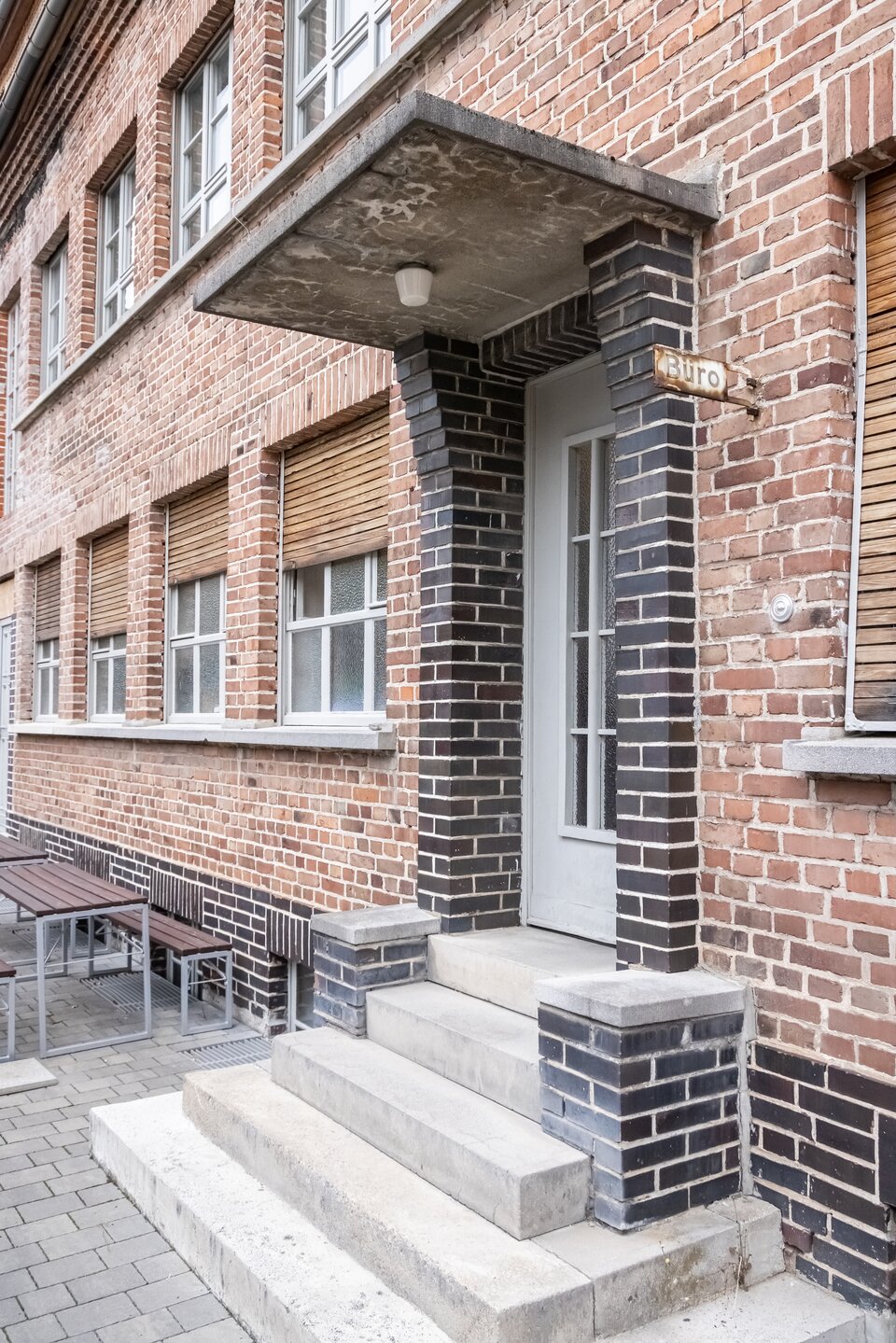
Marc da Costa’s professors at the Hochschule für Gestaltung Offenbach were not exactly convinced that serien.lighting would become a success. For his final project in product design, he explored how to set up a design company – and almost failed as a result, recalls da Costa, the son of an architect, with amusement today. Back in the 1980s, it was unusual for designers to establish their own companies; instead, they generally worked as service providers, designing for other businesses. Wolf and da Costa took the opposite approach. They met at university and soon found themselves in the workshop of the metalworking company in Rodgau, run by Manfred Wolf’s parents as a second-generation family business. It was there that the two began experimenting, pressing, bending, welding and soldering metal.
“Our strength lies in the flexibility of our in-house production and our expertise in metalworking.”
— Jean-Marc da Costa and Manfred Wolf
Understanding Light
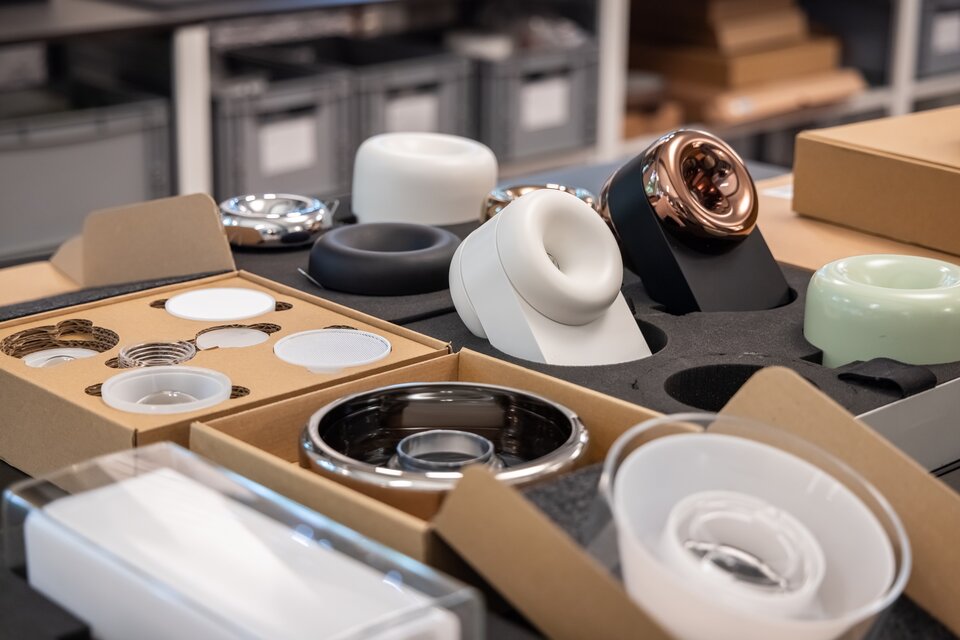
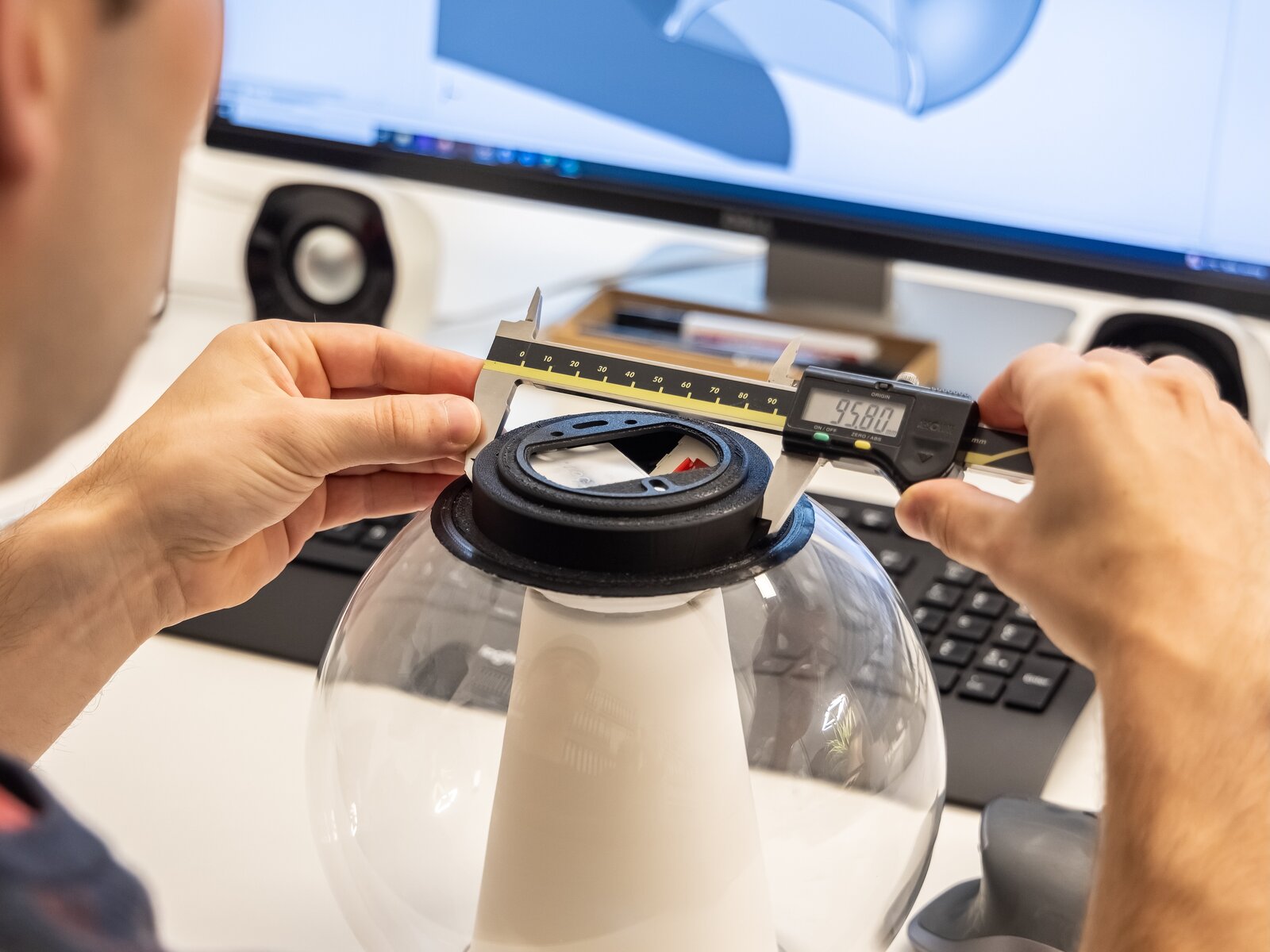
The transition from halogen, fluorescent and incandescent lamps to LED technology in the 2000s was one that the company successfully mastered. LED technology naturally opened up new possibilities – as demonstrated by the REFLEX² luminaire family (pictured right), which, like the original REFLEX from the company’s early years, explores reflected light. Slim LEDs are integrated into the delicate frame of a cube, directing light towards the upper surface and ceiling of the luminaire, from where it is reflected back into the room.
“For a long time, we didn’t really understand light and focused primarily on form and material,” da Costa admits with a laugh. It was only much later that the designers began to explore light itself and its effects in greater depth.
Alongside its range of series-produced designer luminaires for residential and contract applications, serien.lighting also regularly develops bespoke solutions – including for synagogues. Most recently, the company designed and manufactured a menorah, the seven-branched candelabrum of Jewish tradition, for the new synagogue in Dessau, inaugurated in 2023.
Working with Social Enterprises
It is precisely this down-to-earth approach, the strong commitment to the local area, and the passion for manufacturing and contemporary design that have enabled the business partners and their team of 35 employees to navigate every crisis. Relocate the company or outsource production? “No, that was never something we considered. We are still both 50 per cent shareholders today,” they explain.
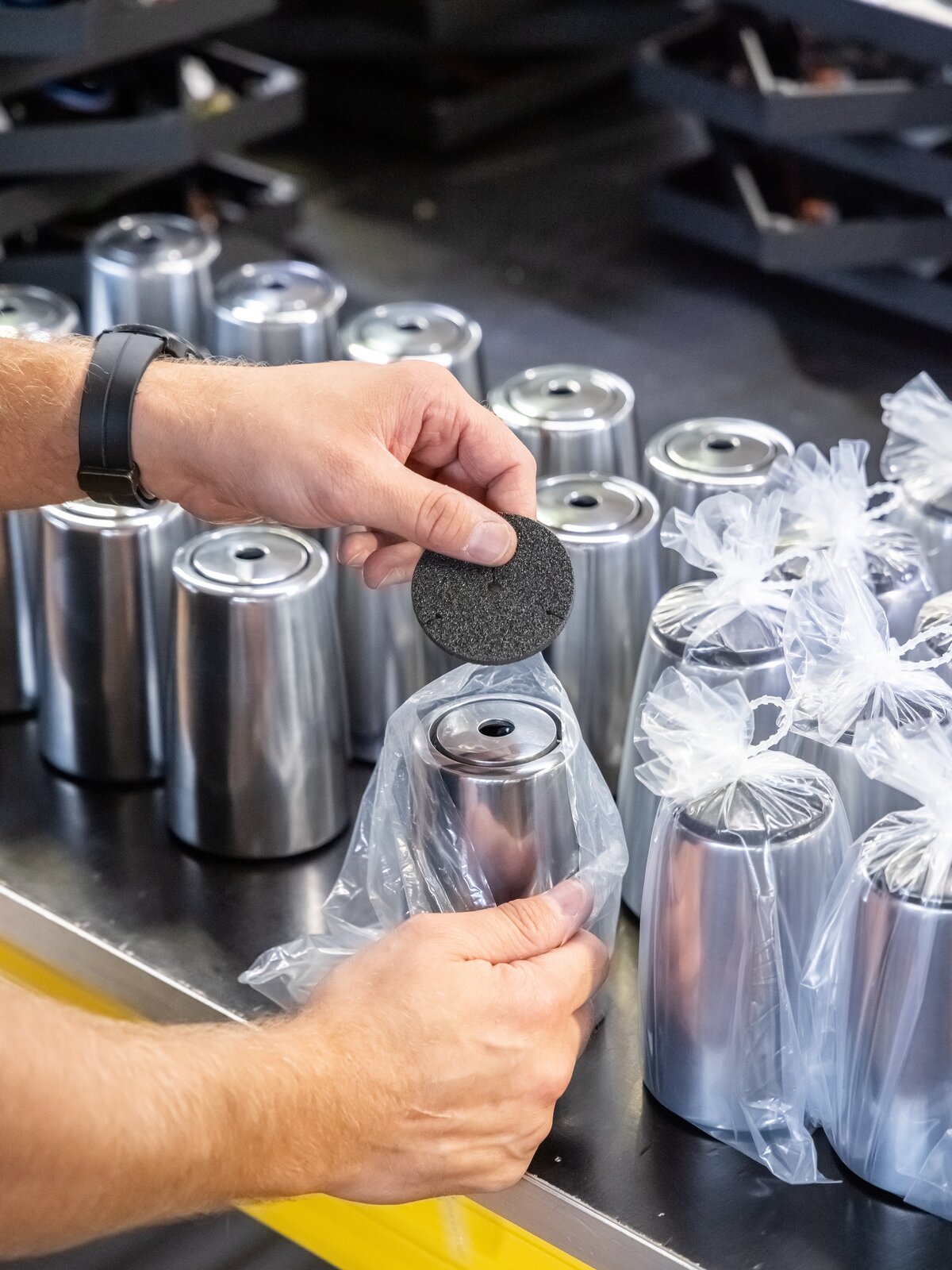
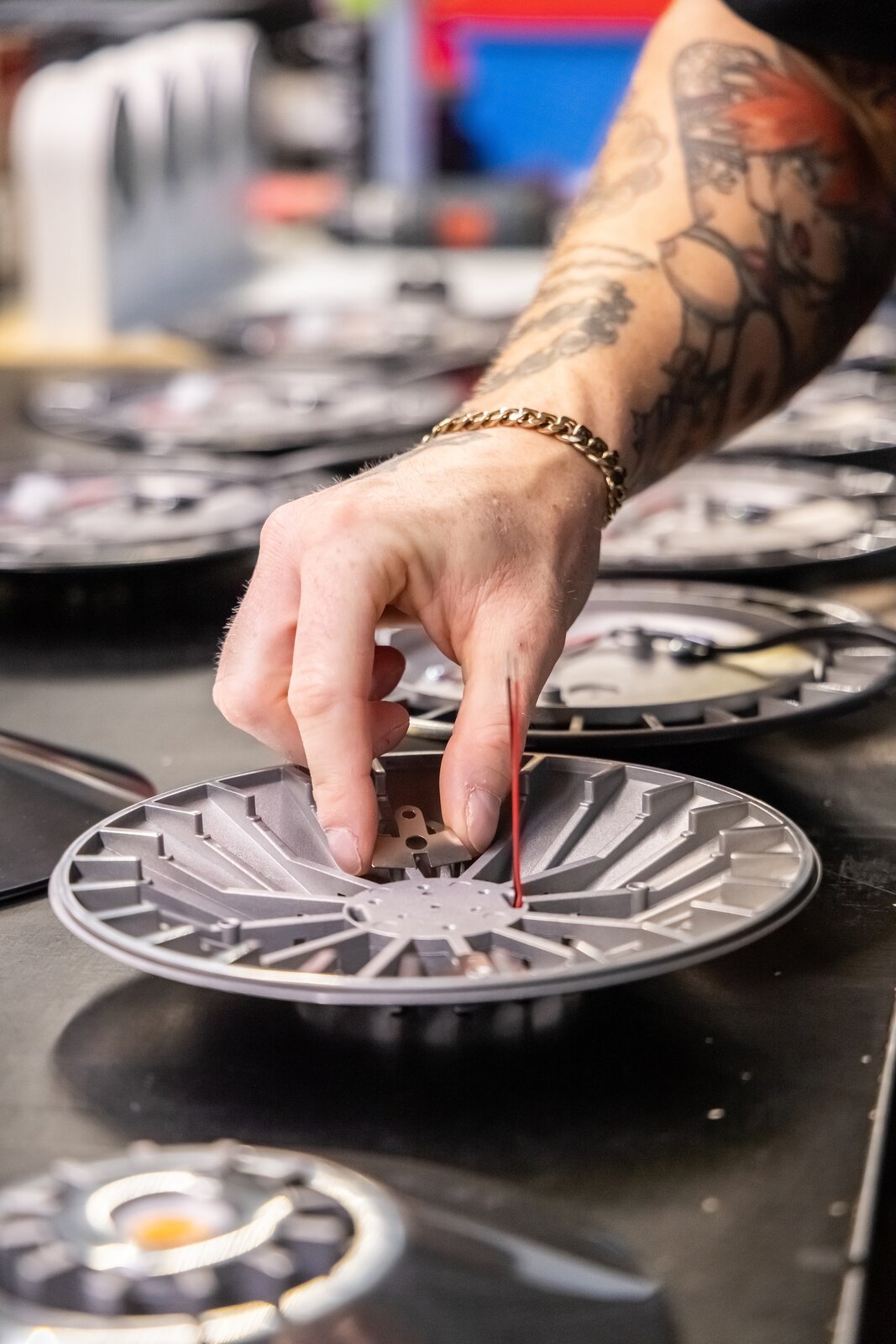
In Rodgau, serien.lighting operates its own facility for assembly and quality control and also works with a local social enterprise that supports the vocational integration of people with mental health conditions. Many components are now sourced as finished parts from Germany, Eastern and Southern Europe, as well as Asia, before being assembled in Rodgau.
They still make many decisions and work on many aspects of the business together. Da Costa’s partner Nina works at the company, as does Manfred Wolf’s son Leo. Wolf and da Costa, who both live in nearby Frankfurt, value the city’s central location and proximity to the trade fair – as well as being able to commute against the traffic each morning, with the sun on their faces as they drive to work in Rodgau.
Respect and Friendship
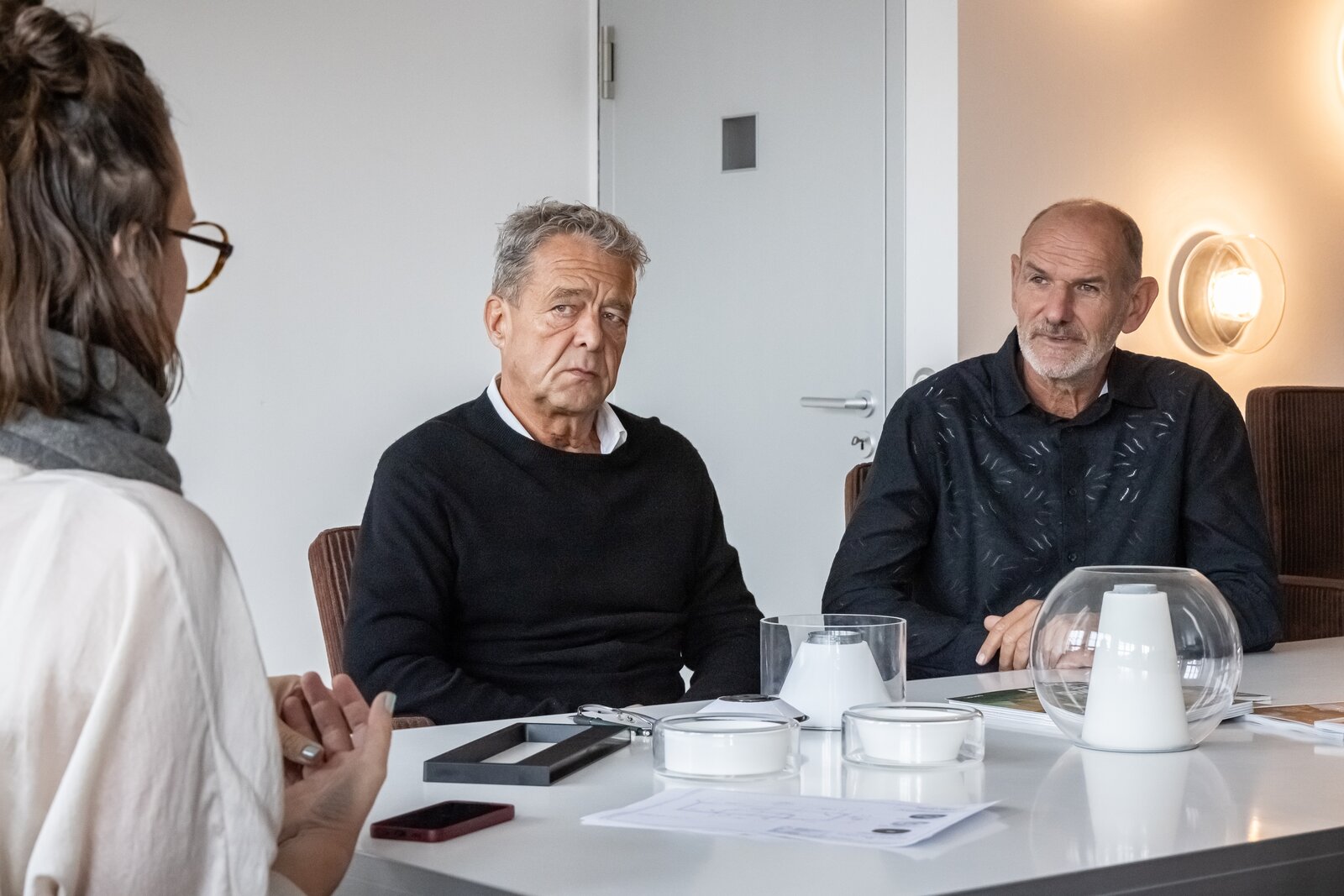
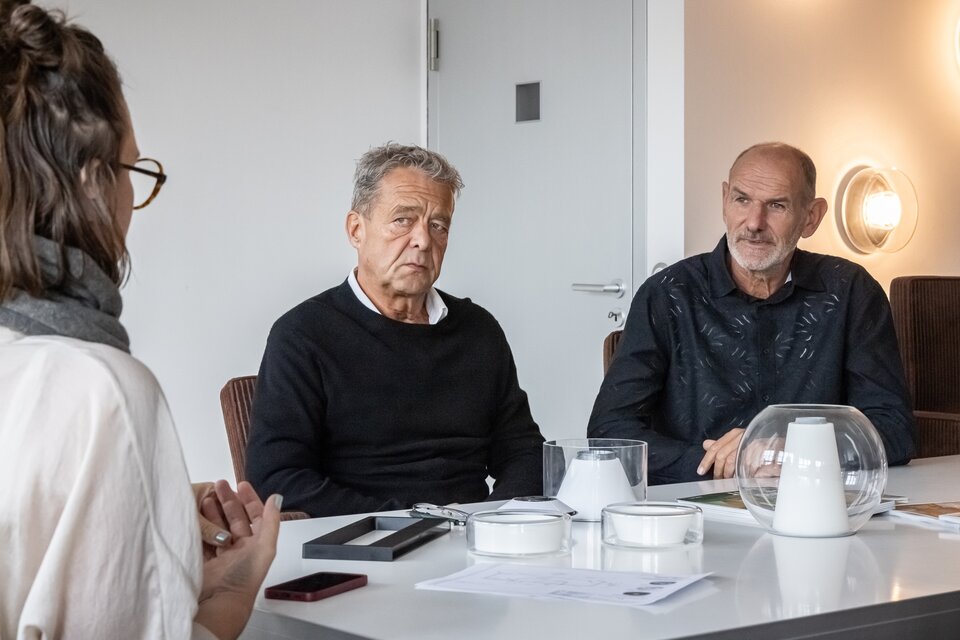
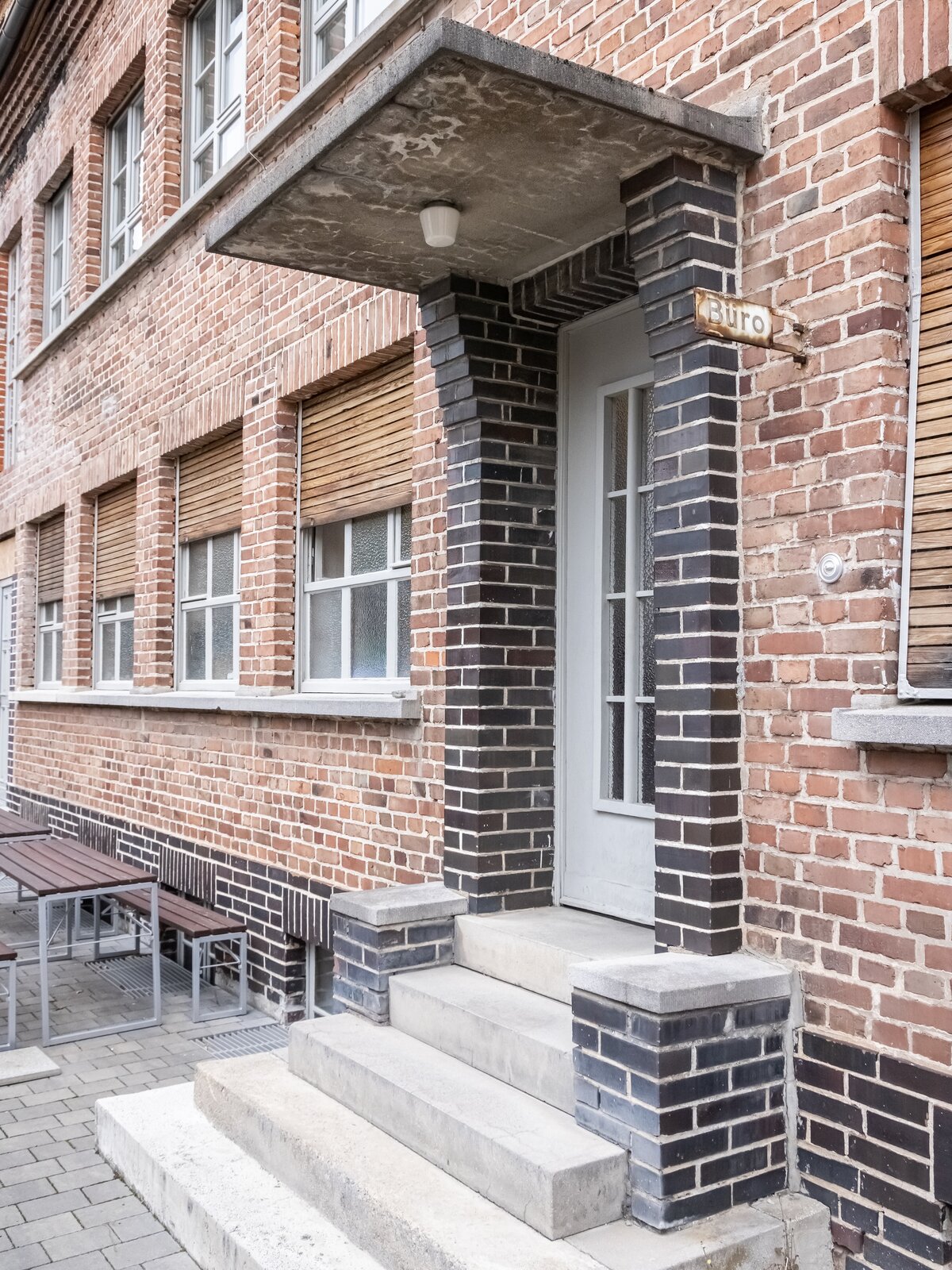
Forty years as business partners – longer than many marriages last. Manfred Wolf and Jean-Marc da Costa reveal their secret: “Simply let the other person be who they are.” They still share an office – one side tidy, the other with a considerably larger desk and far more things on it. What do they appreciate about each other? “Manfred’s perseverance. And his wisdom in knowing that sometimes things resolve themselves if you leave them long enough,” says da Costa. Wolf adds: “Jean-Marc goes on sales trips with our agents. That’s not really my thing.”
They still work on and decide many things together. Da Costa’s partner Nina works at the company, as does Manfred Wolf’s son Leo. Wolf and da Costa, who both live in nearby Frankfurt, value the city’s central location and proximity to the trade fair – as well as being able to commute against the traffic each morning, with the sun on their faces as they drive to work in Rodgau.
And what might serien.lighting’s 80th anniversary look like? “We’ll be sitting here for a long time yet, designing and manufacturing luminaires with the same passion,” da Costa replies spontaneously. Wolf brings the same enthusiasm to the vintage serien.lighting luminaires that are sent in for repair, which he still works on personally: “I’m the only one in the company who still knows how to deal with them.”
Beyond that, the two remain relaxed even in turbulent times. While Wolf takes great pleasure in his classic cars, da Costa, who grew up with German and Portuguese roots, enjoys the Portuguese sun and likes to spend time there.